Chinese shipbuilders widened their lead over South Korea in global LNG carrier orders during the first half of 2026, increasing competitive pressure in a segment long dominated by South Korean yards.
According to the “First Half of 2026 Market Report” from Besson Nautical, 90 LNG carriers were ordered worldwide during the period. Chinese shipbuilders secured 52 vessels, representing 57.8% of the total, while South Korean yards won 37 vessels, or 41.1%.
The gap was significantly wider than in the first half of 2025, when Chinese shipbuilders received orders for 15 LNG carriers and South Korean yards secured 13. That period marked the first time South Korea had lost the top position in LNG carrier orders.
Besson Nautical noted that the figures cover LNG carriers of all sizes, ranging from large vessels to smaller ships designed for inland waterways.
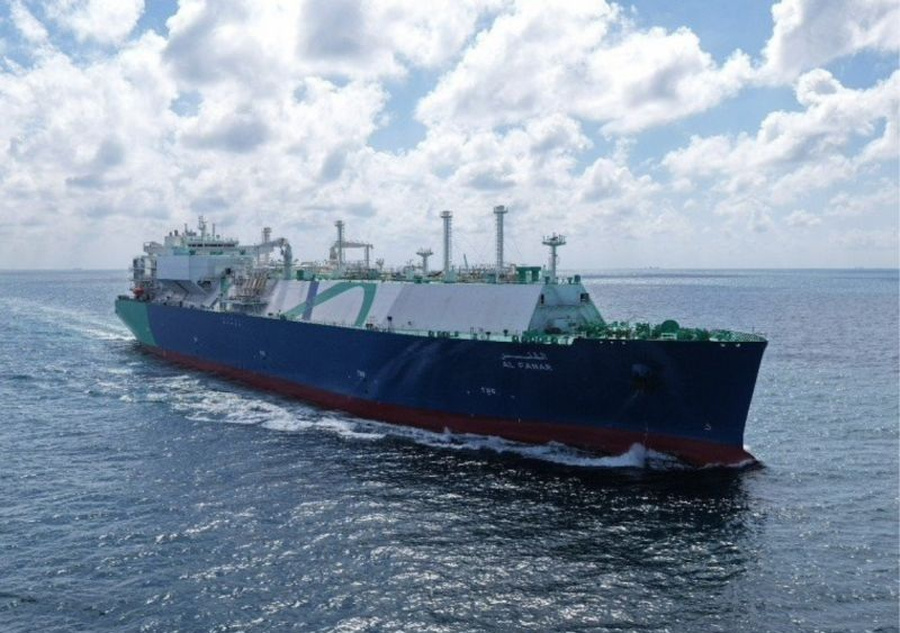
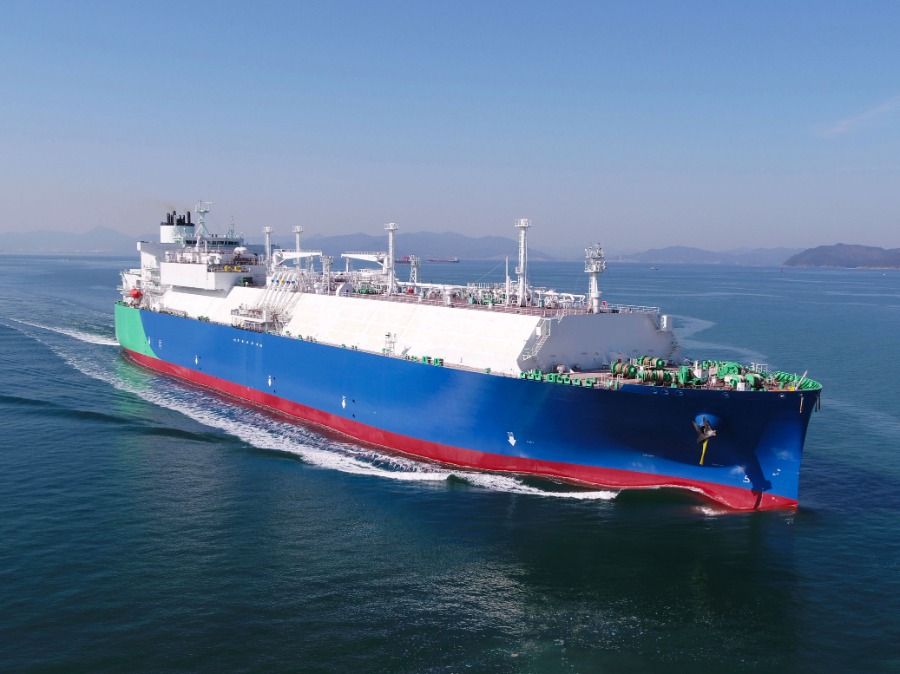
LNG carriers transport liquefied natural gas at -163°C and require advanced cargo containment systems, thermal insulation design and stability during long-distance voyages. The technical requirements have made the vessel type an important high-value segment for major shipbuilding nations.
Japanese shipbuilders held most global LNG carrier orders from the mid-1980s to the early 2000s, with much of their construction focused on vessels using Moss-type cargo containment systems.
South Korean yards expanded into the market from the mid-2000s. HD Hyundai Heavy Industries, Hanwha Ocean, Samsung Heavy Industries and HD Hyundai Samho subsequently became major builders of LNG carriers.
Chinese shipbuilders entered the segment later and began expanding their presence. Hudong-Zhonghua Shipbuilding became the first Chinese yard to deliver a large LNG carrier when it handed over Dapeng Sun in April 2008.
Five Chinese shipbuilders are currently constructing large LNG carriers: Hudong-Zhonghua Shipbuilding, Jiangnan Shipyard, Dalian Shipbuilding Industry Corporation (DSIC), China Merchants Heavy Industries Haimen shipyard (CMHI Haimen shipyard) and Yangzijiang Shipbuilding. Hudong-Zhonghua Shipbuilding has delivered nearly 70 large LNG carriers in total.
In early 2025, Hengli Heavy Industries signed a patent cooperation agreement with GTT covering membrane containment systems. The agreement positioned the yard to become China’s sixth builder of large LNG carriers and the second privately owned Chinese shipyard in the segment.
Japan, which had previously been a leading LNG carrier builder, completed its final orders in 2019 before leaving the market. Plans to resume LNG carrier construction were announced for 2026 after a seven-year absence.
More than 70% of LNG carriers currently in service worldwide were built by HD Hyundai Heavy Industries, Hanwha Ocean and Samsung Heavy Industries, according to the data provided in the source.
South Korean shipbuilders, however, are also dealing with limited production capacity as orders for crude oil tankers, container ships and other vessel types fill their schedules. Major South Korean yards have largely secured work through 2029, with some deliveries extending into 2030.
Expanding domestic capacity on a large scale remains difficult because of limited land resources and existing order backlogs. South Korean shipbuilders are also cautious about adding LNG carrier capacity because of the shipbuilding industry’s cyclical nature and the fixed costs that could remain during a downturn.
To address these constraints, South Korean builders are using overseas shipbuilding bases while concentrating domestic production on LNG carriers and other higher-value areas.
HD Hyundai Heavy Industries and Samsung Heavy Industries, among other South Korean builders, are using shipyards in Southeast Asian countries including Vietnam and the Philippines for oil tankers and conventional commercial vessels. Domestic yards are focusing on LNG carriers as well as floating data centers, autonomous ships and smart shipyards.
Chinese shipbuilders are also expanding production capacity. Hudong-Zhonghua Shipbuilding has launched a project involving new specialized assembly lines and supporting facilities. The project is focused on increasing production capabilities for large LNG carriers and ultra-large container ships while establishing a coordinated dual-site production model.
South Korean industry insiders acknowledge that Chinese shipbuilders are accumulating LNG carrier technology and construction experience, narrowing the gap with their South Korean competitors. They say South Korean yards can no longer rely solely on order volumes and need to develop next-generation high-value sectors beyond LNG carriers to maintain a competitive edge.