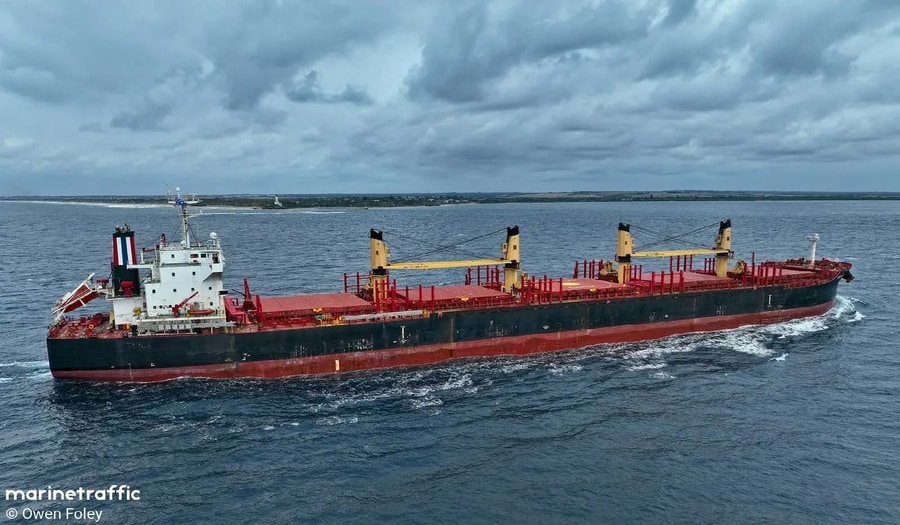
A New Zealand investigation found that poor planning, weak risk control and damaged lifting gear contributed to a serious injury aboard the Thor Nitnirund in Cook Strait on 20 March 2025.
The bulk carrier was drifting in Cook Strait while waiting for a berth in Wellington. Heavy weather in the preceding days had washed two cargo lashing chains over the side, and the crew set up an improvised recovery system using a mooring winch.
One chain was brought back on board. During the recovery of the second chain, a web sling holding the lifting arrangement failed. Parts of the system struck an able seaman, causing serious head injuries. The crew member was later evacuated by helicopter.
TAIC found that the sling failed at less than half of its expected minimum breaking load. Its webbing was damaged and in poor condition. The sling was not included in the ship’s lifting gear register and had likely been inherited from a previous operator without inspection or maintenance under the vessel’s safety management system.
The crew did not properly identify what could happen if the arrangement failed under load. The task was not adequately planned, risk-assessed or supervised.
The ship’s safety management system required risk assessments and toolbox meetings, but those controls were not applied effectively. The toolbox meeting was held in the cargo office rather than at the worksite, limiting the crew’s ability to review the job, identify hazards and consider safer methods.
The case underlines the need to keep personnel clear of danger zones during lifting work, especially areas where equipment failure could release stored energy. TAIC also stressed that non-routine deck tasks require proper planning, direct supervision and equipment suited to the job.
The report said lifting and hazard-control equipment must be inspected, maintained and documented within the safety management system. Equipment outside that control can remain in use with hidden defects.
TAIC issued no new recommendations. The operator, Thoresen & Co (Bangkok) Limited, had taken action to address the safety issues identified in the inquiry. Measures included stronger lifting gear inspection and maintenance, unique equipment identification, color-coding, inventory controls and standardized fleet-wide management processes.
The operator also strengthened requirements for worksite toolbox meetings, task supervision, risk assessment and audits of onboard practices.