Norwegian developer LH2 Shipping has secured new Enova funding for two additional liquid hydrogen-fuelled bulk carriers, expanding its project pipeline to six vessels.
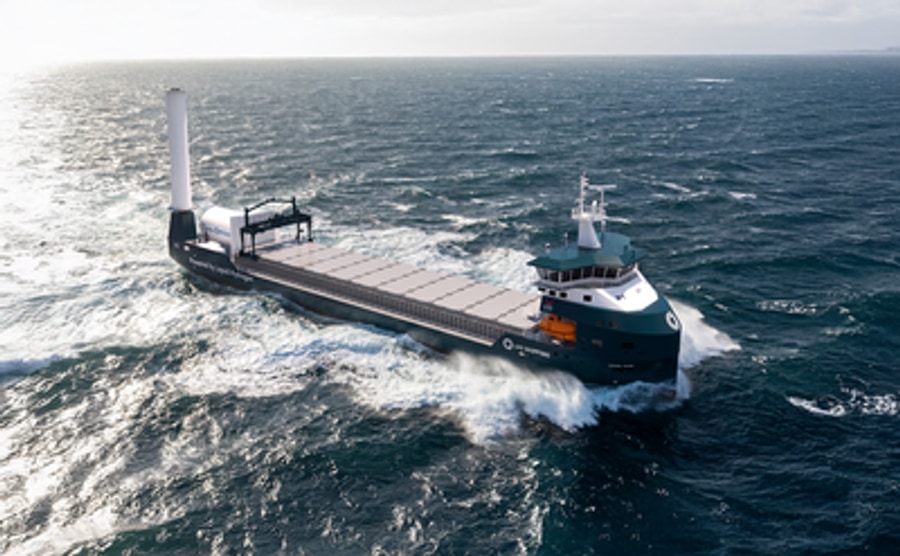
The Bergen-based company was awarded NOK 344.3 million, or $36 million, to develop and build two 7,700 dwt shortsea bulk carriers. The vessels are designed to operate mainly on liquid hydrogen.
The latest award raises total public support for LH2 Shipping’s hydrogen shipping programme to more than NOK 800 million, or $74 million. It also adds momentum to Norway’s efforts to bring zero-emission shipping technologies into commercial use.
The vessels will operate in shortsea trades between Norway, continental Europe, and the Baltic region. Around half of their port calls are expected to be in Norway, with about 65% of sailing time taking place in Norwegian waters.
LH2 Shipping said the ships will be able to operate emission-free throughout the year using liquid hydrogen as their primary fuel. Bunkering is planned through hydrogen producer Gen2 Energy’s facility in Mosjøen.
Each vessel will measure 108.2 m in length and 18.1 m in beam. The design includes a 17-tonne liquid hydrogen storage tank, 3,400 kW of PEM fuel cells, and a 3 MWh battery pack. Shore power capability and a backup diesel generator able to run on diesel or biodiesel will also be installed.
The company said the ships are being designed to consume at least 30% less energy than conventional vessels of similar size, supported by hull optimization, propulsion efficiency measures, advanced energy management systems, and solar panels on cargo hatch covers.
The project supports LH2 Shipping’s strategy to move hydrogen-powered shipping from pilot and demonstration projects into commercial operation.
Founded in 2023 and headquartered in Bergen, LH2 Shipping draws on experience from the development and commissioning of MF Hydra, widely recognized as the world’s first liquid hydrogen-powered ferry.
Enova hydrogen and ammonia initiatives head Elin Ulstad Stokland said companies that move early with new technologies will be important for reducing emissions in the maritime sector.
The two newbuildings are part of the Strandbulk project, with LH2 Shipping acting as project owner and developer. The company said tightening emissions rules, including EU ETS and FuelEU Maritime, are expected to improve the business case for zero-emission vessels over the coming decade.