Sinotrans completed the full logistics program for the Huaneng Shandong Peninsula North offshore wind project, which reached full-capacity grid connection on 7 April 2026.
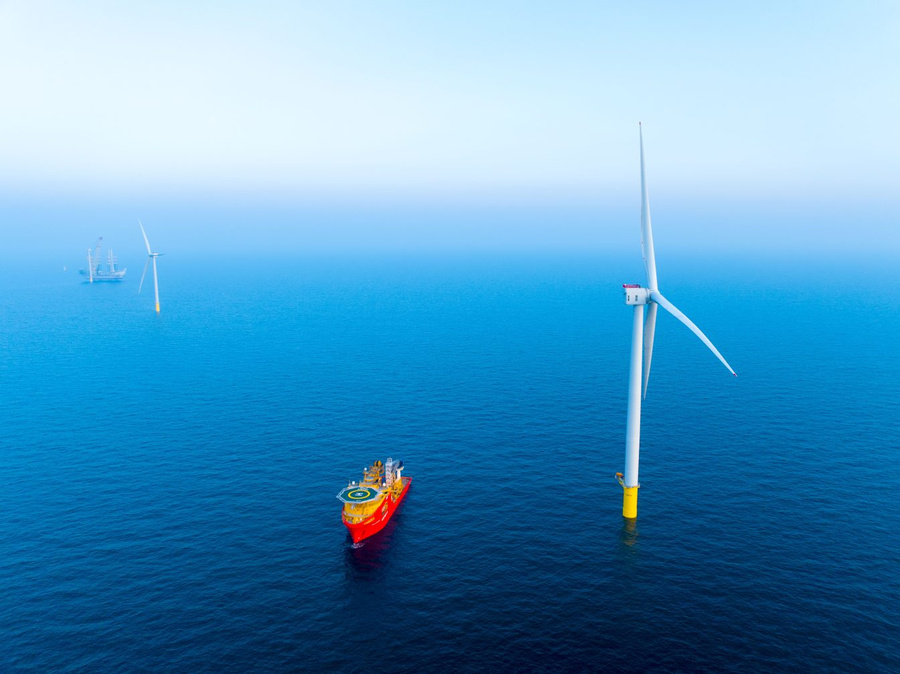
The project has a total installed capacity of 504 MW from 42 turbines rated at 12 MW each. Located about 70 km offshore in water depths of 52 m to 56 m, it is identified as China’s deepest offshore wind power project. Annual generation is estimated at 1.7 billion kWh, with expected savings of around 500,000 tonnes of standard coal and annual carbon dioxide cuts of about 1.35 million tonnes.
The logistics work began on land. Nacelle modules built at a Rushan factory were more than 8 m wide and reached a transport height of 9.3 m. Moving them 15 km to Rushan Port required passage through urban roads with traffic lights, guardrails and overhead cable barriers. Sinotrans used drone surveys to collect aerial data, built 3D route models, and ran CAD simulations for turning points and road gradients. Project staff then checked the route on site. According to the company, more than ten obstacle points were reduced to five, lowering road modification costs for the client by about 60%.
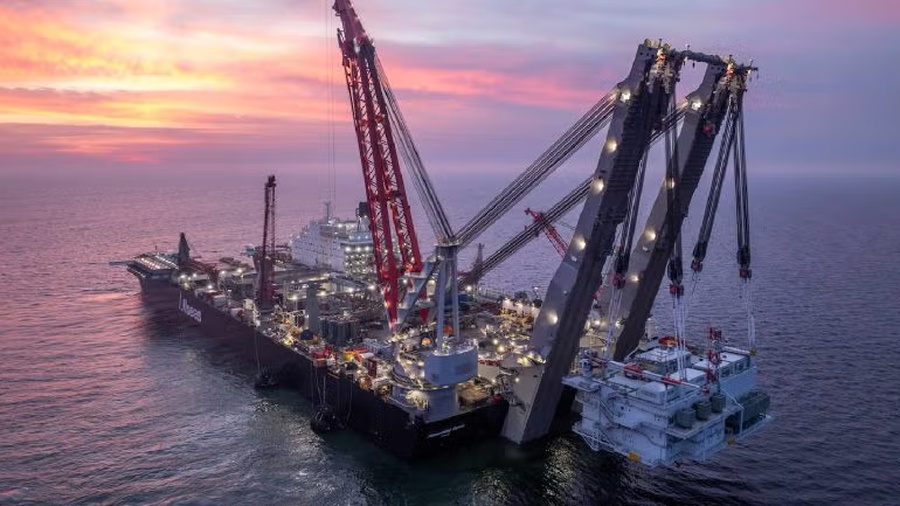
Engine room units weighing up to 300 t were transported from the factory to the port by axle vehicles and SPMTs. At Rushan Port, a 1,600 t crawler crane handled major lifts and loaded engine rooms, hubs and other large components onto deck barges with capacities from 5,000 tonnes to 12,000 tonnes.
Part of the assembly scope was transferred from offshore works to the terminal yard. Engine rooms, side cabins and water-cooling packs were pre-assembled ashore before shipment. Sinotrans said that the move improved overall construction efficiency by about 20% and reduced idle time for installation vessels. For storage and inspection, Sinotrans and Rushan Port allocated 30,000 sq m of dedicated yard space for the project.
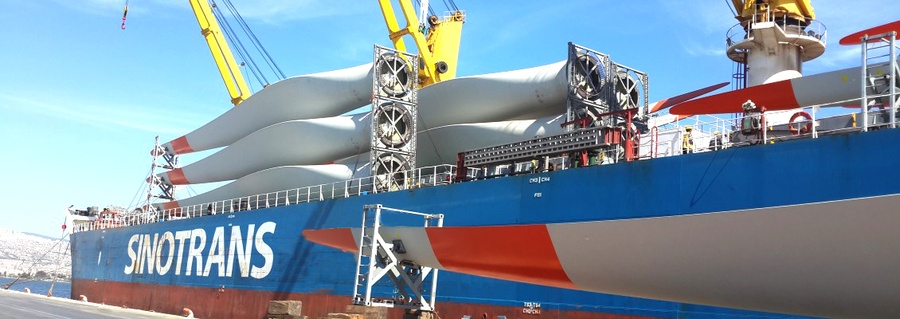
Blade transport required a separate long-distance solution. Blades exceeding 120 m in length were produced in Yangzhou and shipped from Yangzhou Port over a distance of nearly 700 nautical miles to the offshore site. Instead of using one full deck position for each blade, Sinotrans adopted a double-blade stacking method. The company used custom marine brackets designed for blade types from 8.5 MW to 14 MW, increasing cargo capacity per voyage.
To keep deliveries on schedule amid congestion at Yangzhou Port and tight factory output timing, Sinotrans organized a three-port logistics network linking Yangzhou Port, Rushan Port, and Penglai Port. This arrangement supported the continuous supply of all 42 blade sets during the construction period. Across the full land, port and sea transport scope, Sinotrans reported zero safety incidents and zero equipment defects.
The project shows how transport planning, port handling and marine delivery are becoming more critical as offshore wind projects move farther from shore and into deeper water.
Source: BREAKBULK NEWS