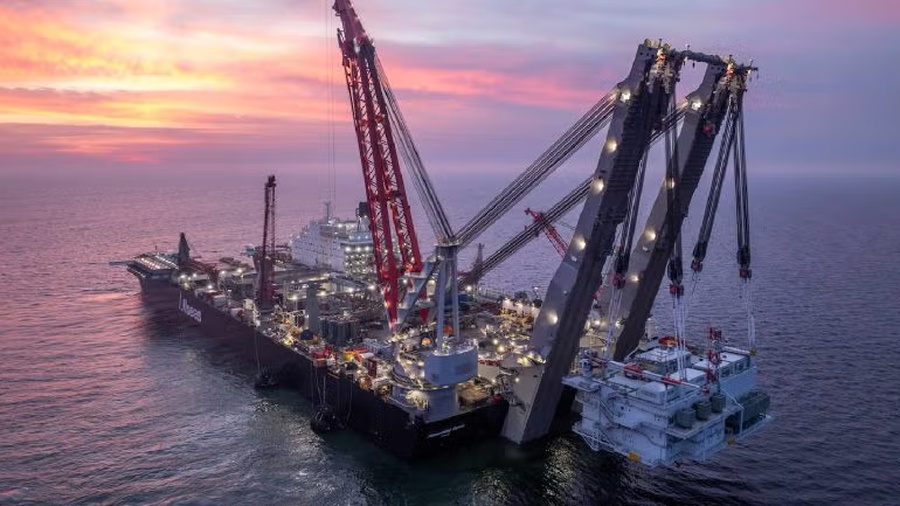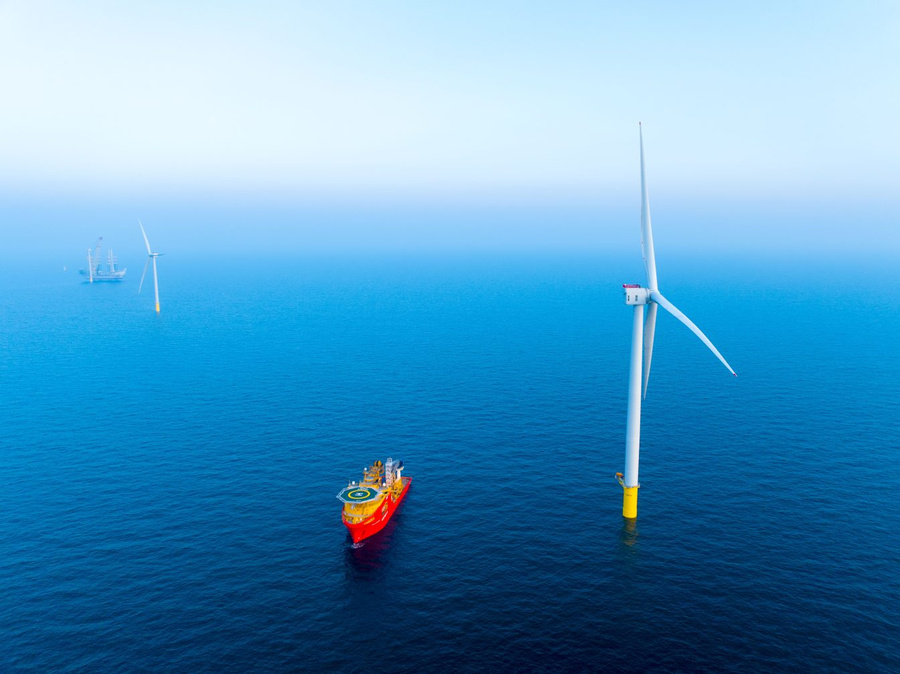
Foundation installation at Ørsted’s Hornsea 3 offshore wind farm is set to begin in April, with Cadeler’s Wind Ally and Wind Orca and the service operation vessel Esvagt Froude preparing for mobilisation from ports in the Netherlands and the UK.
According to a recent Notice to Mariners cited in the source text, Wind Ally will mobilise from Rotterdam for XXL monopile installation, with offshore work planned from 12 April. Wind Orca will depart from the Port of Tyne for secondary structure installation and is scheduled to begin work at the site on 19 April. Foundation commissioning support will then be provided by Esvagt Froude, which will mobilise from the Port of Hull, with operations expected to start on 24 April.
Noise monitoring systems will also be deployed during the foundation installation campaign. Contractor Seiche will carry out that work using the vessel BB Ocean.
The installation phase follows the recent arrival of the first six monopiles at Steel River Quay in Teesside Freeport from Haizea Wind Group’s facility in Bilbao, Spain. The offshore wind farm will include 197 monopiles in total.
Supply arrangements for the monopiles have shifted since Ørsted signed contracts in 2022 with SeAH Wind and Haizea Wind Group. The developer and SeAH Wind later agreed to terminate the contract by mutual agreement after ongoing production challenges at the company’s new Teesside facility. Ørsted then reassigned SeAH Wind’s scope to other supplier(s).
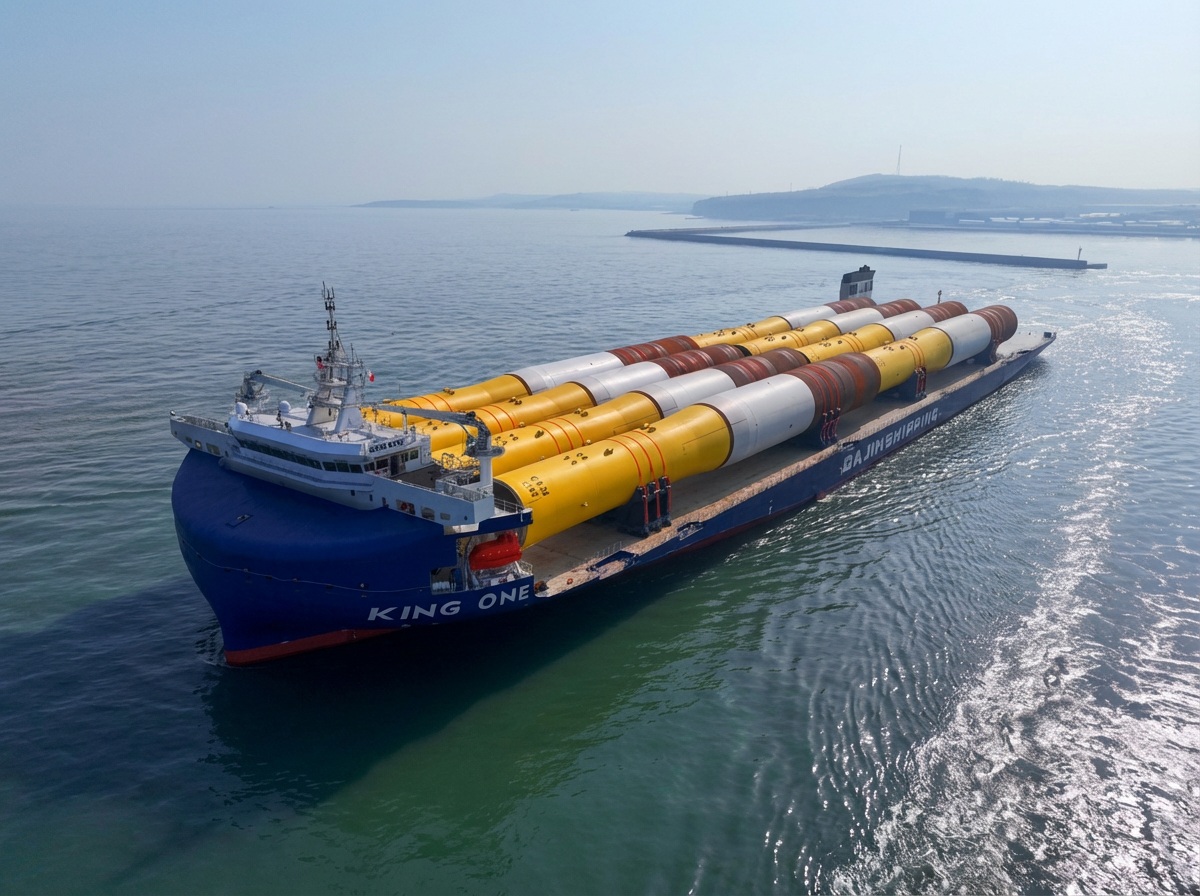
At the beginning of March, Dajin Heavy Industry said it had shipped the first Hornsea 3 monopiles from China to the UK on board its heavy-cargo deck carrier King One.
Hornsea 3 is Ørsted’s third gigawatt-scale development in the Hornsea zone of the North Sea. The project will use 197 Siemens Gamesa 14 MW turbines installed about 160,000 m off the Yorkshire coast. With total capacity of 2.9 GW, Hornsea 3 is expected to be operational in 2027. Ørsted says it will be the world’s largest single offshore wind farm.