Japan and the United States have launched a joint AI shipbuilding R&D project covering robotic systems and production-process simulation technology.
The project is being conducted under the Memorandum of Cooperation Regarding the Shipbuilding Between the Government of Japan and the Government of the United States of America. Minister Kaneko and U.S. Secretary of Commerce Lutnick signed the memorandum in October, including cooperation on advanced shipbuilding technologies.
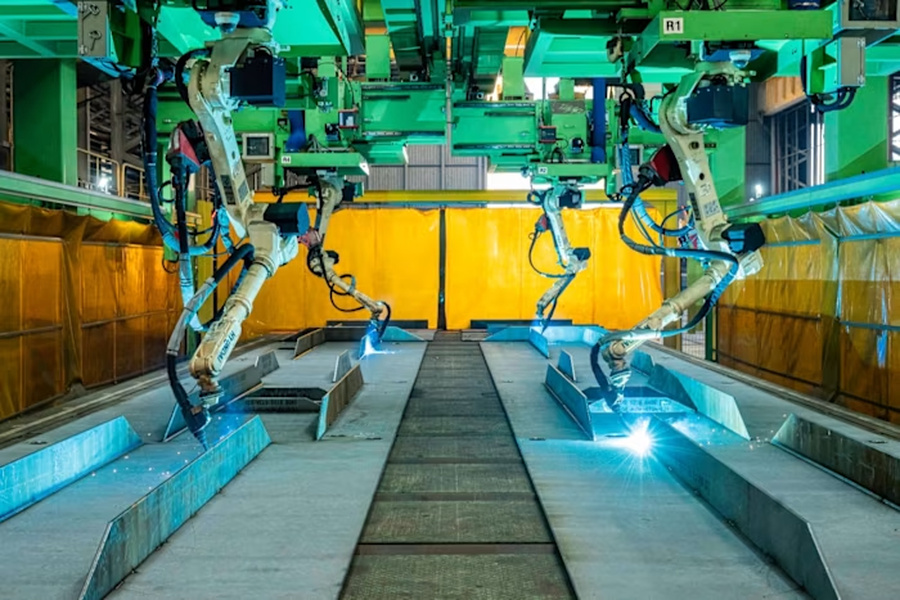
Japan’s Ministry of Land, Infrastructure, Transport and Tourism has been supporting the development of AI-based robotics for processes including plate bending and welding. The work also covers an AI simulation platform designed to evaluate robot operations and related shipyard processes.
The joint project started with a visit to Japan by the U.S. development team from 6–10 July. The team is responsible for developing the production-process simulation platform required for the operation of AI shipbuilding robotics.
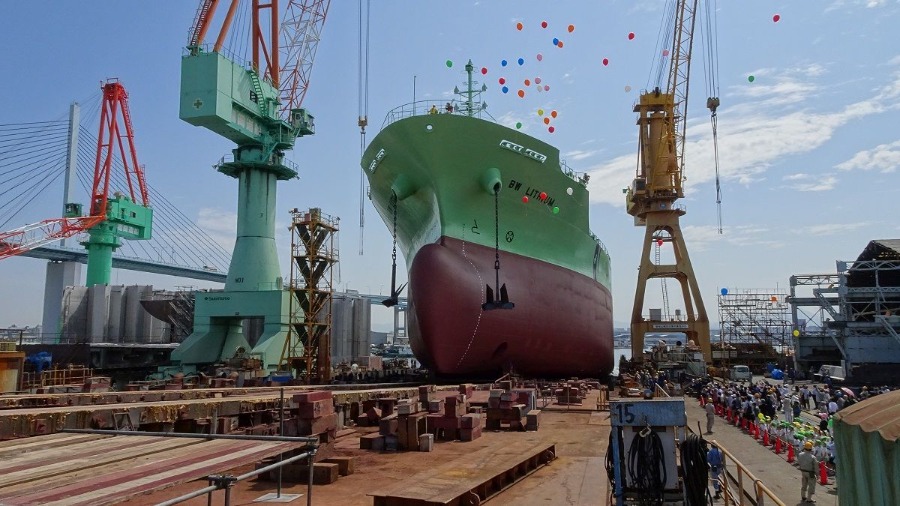
Participants visited shipyards operated by Fukuoka Shipbuilding and Japan Marine United to review site conditions and challenges associated with introducing robotic technologies.
The Japanese and U.S. teams confirmed the development schedule and their respective responsibilities. Their objective is to establish an AI simulation platform by the end of March that can incorporate actual hull blocks and shipyard environments.
The platform will be used to evaluate robot operations and related production processes. The teams also discussed methods for conducting demonstrations at Japanese and U.S. shipyards.
U.S. participants include the University of Michigan, Massachusetts Institute of Technology and American Bureau of Shipping. The Japanese team includes Osaka University, Yokohama National University, MTI, ClassNK, Namura Shipbuilding, Fukuoka Shipbuilding, MLIT and the National Maritime Research Institute.
The work is being implemented as MLIT’s Technology Development Project Contributing to the Realization of Next-Generation Shipyards through AI Utilization under the Cabinet Office’s BRIDGE Program.