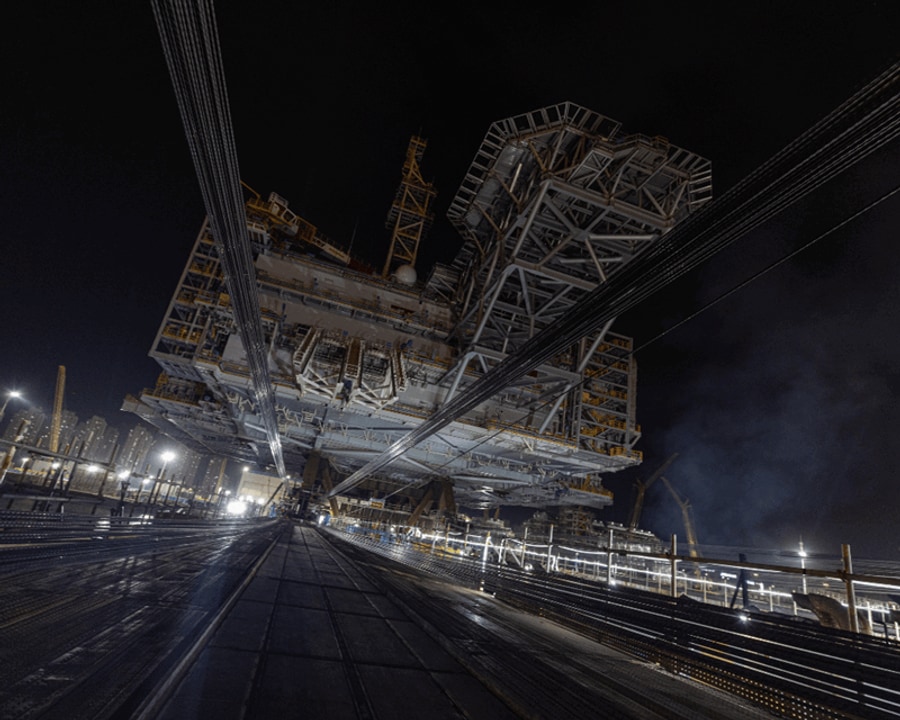
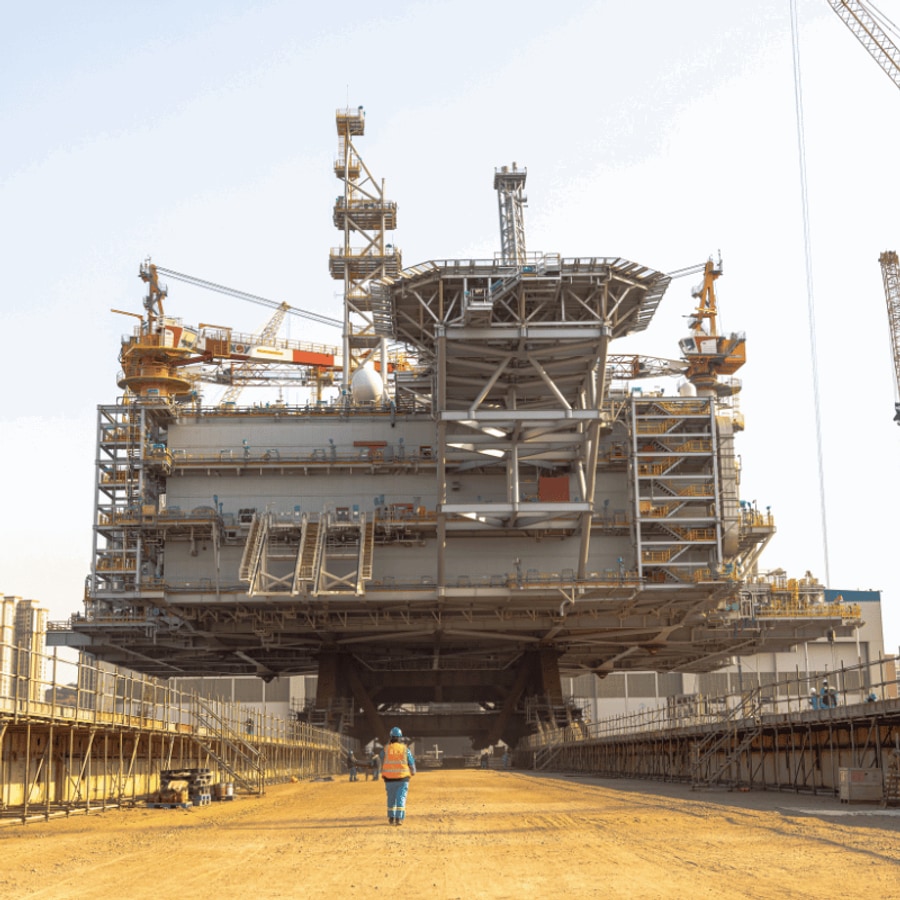
Mammoet has completed weighing, jacking and load-out work for the 33,000 tonnes floating production unit topsides of Woodside Energy’s Scarborough Project at Qingdao McDermott Wuchuan’s fabrication yard in China. The work used an integrated Mega Jack lifting and weighing setup that had been planned during early engineering, years before fabrication started.
The scope covered the topsides and its deck support frame. Early coordination allowed engineering, fabrication and heavy transport planning to be aligned before steel construction began.
The project dates back about eight years, when Mammoet joined the design team to review alternative construction methods. Instead of building the topsides directly on the support frame, engineers selected a lower-height fabrication method supported by an integrated jacking and weighing system.
This changed the project sequence. Building closer to ground level reduced elevated work areas and limited complex heavy crane operations at height. It also allowed topsides fabrication to progress before the deck support frame was completed.
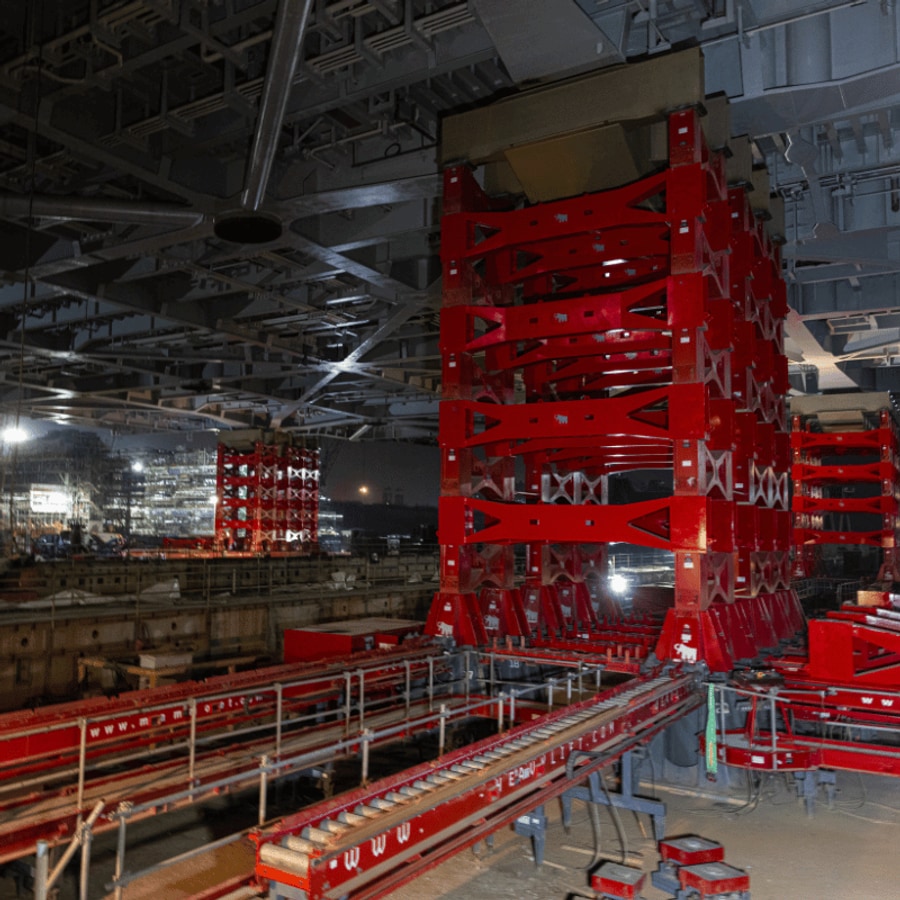
The operation marked the first use of Mammoet’s Mega Jack 10000 system, which was developed for higher lifting capacity from lower starting heights. Four Mega Jack towers were installed under key load points, while modular jacking bases distributed the load without expanding the working footprint.
The system included 80 load cells, each with 750 tonnes capacity, allowing the topsides to be weighed and lifted at the same time.
Richard Verhoeff, Sales Director at Mammoet, said using one system for both functions reduced the transition time between project stages. He explained that a more conventional method would have required separate load cells and hydraulic cylinders at several positions beneath the topsides.
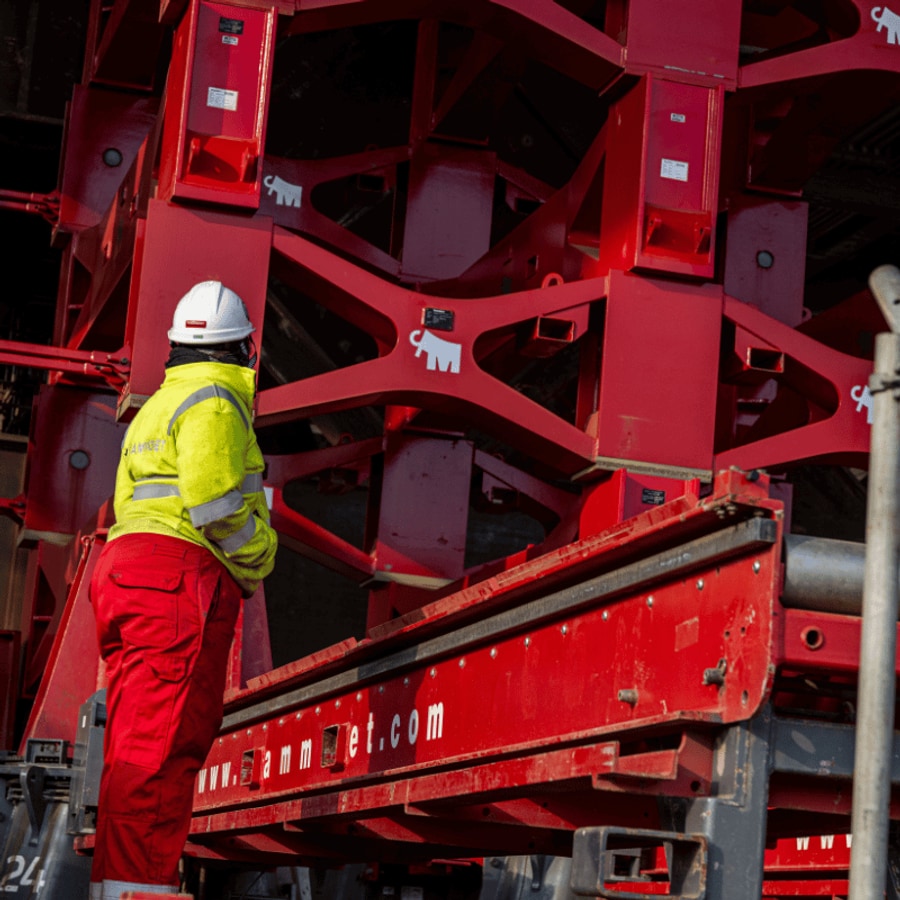
Mammoet also engineered a load-spreading starter beam that was built into the underside of the topsides during fabrication. The beam supported construction work and later allowed the structure to stand on four lifting points during load out without extra load-spreading steel.
After final weight verification, the topsides were raised to 16 m so the deck support frame could be moved underneath and connected.
The completed structure was then moved onto an installation barge using eight SJ850 strand jacks and a skidway system. Mammoet also handled barge ballasting to maintain stability as the load moved across the deck.
According to the company, the integrated setup reduced steel consumption, cut back on ground preparation work and decreased equipment mobilization at the yard.