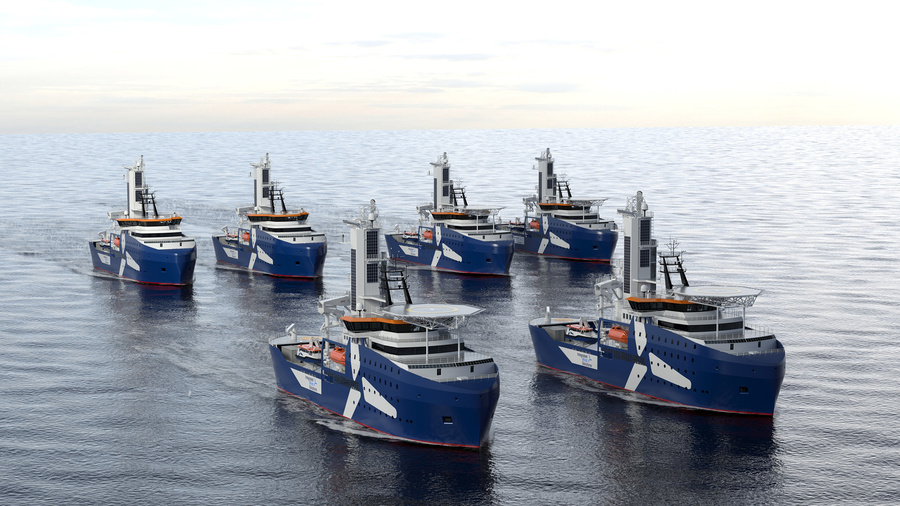
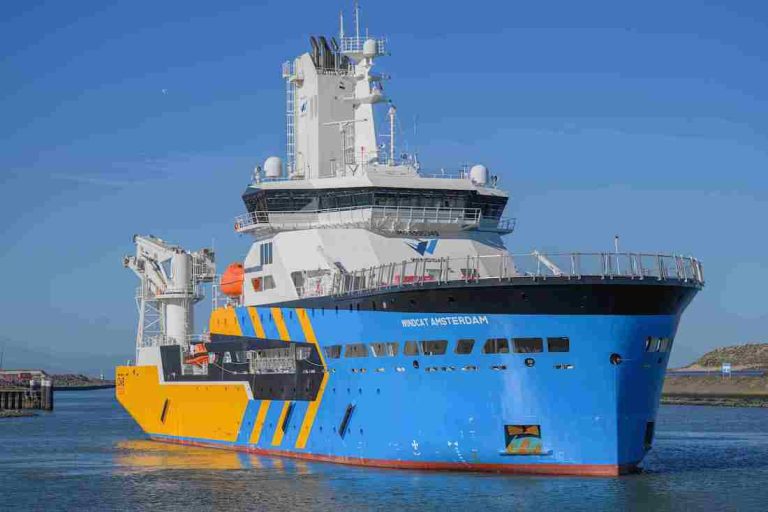
The first Elevation series commissioning service operations vessel has entered European waters, as Windcat Amsterdam begins deployment to support offshore energy projects. The vessel, developed jointly by Windcat and Damen, was constructed at Ha Long Shipyard in Vietnam and is designed to serve as a long-stay offshore support platform.
Built to accommodate up to 120 personnel, the vessel is intended to function as a central offshore hub, supporting installation, commissioning and maintenance activities. It enables technicians and equipment to remain closer to offshore assets, improving access and operational continuity across project phases.
A key focus of the design is emissions reduction. The vessel integrates a hybrid battery-electric propulsion system with an energy network configured to operate as a unified system. Four 360-degree rotating thrusters enhance positioning control and efficiency during offshore operations. These combined technologies are expected to lower CO2 emissions by around 30%.
Preparation for hydrogen adoption has also been incorporated. Drawing on operational experience from hydrogen-powered crew transfer vessels, Windcat plans to introduce a dual-fuel hydrogen engine for auxiliary power generation. The associated hydrogen genset, storage and fuel supply systems have been designed for installation once regulatory approvals are completed, aligning the vessel with anticipated requirements for hydrogen use in medium-sized ships.
Operational reliability in offshore conditions was another priority. The vessel is designed for campaigns of up to 30 days, with equipment aimed at maintaining safe performance in challenging environments. A 3D motion-compensated gangway supports personnel transfer between vessel and offshore structures, while a 10 t 3D motion-compensated crane is configured to handle heavier lifts under variable sea conditions, helping to limit weather-related interruptions.
Accommodation standards were developed to support extended offshore stays. The vessel includes single and double cabins, along with fitness, catering and recreational facilities. Interior arrangements were designed with specialist input to improve onboard living conditions for personnel working offshore.
Willem van der Wel, Managing Director at Windcat, said the vessel represents an important step in expanding the company’s offshore support capabilities in Europe. Joost van der Weiden, Sales Director at Damen, said the project reflects close collaboration across partners and noted that the CSOV series is expected to contribute to improving efficiency in offshore energy operations.