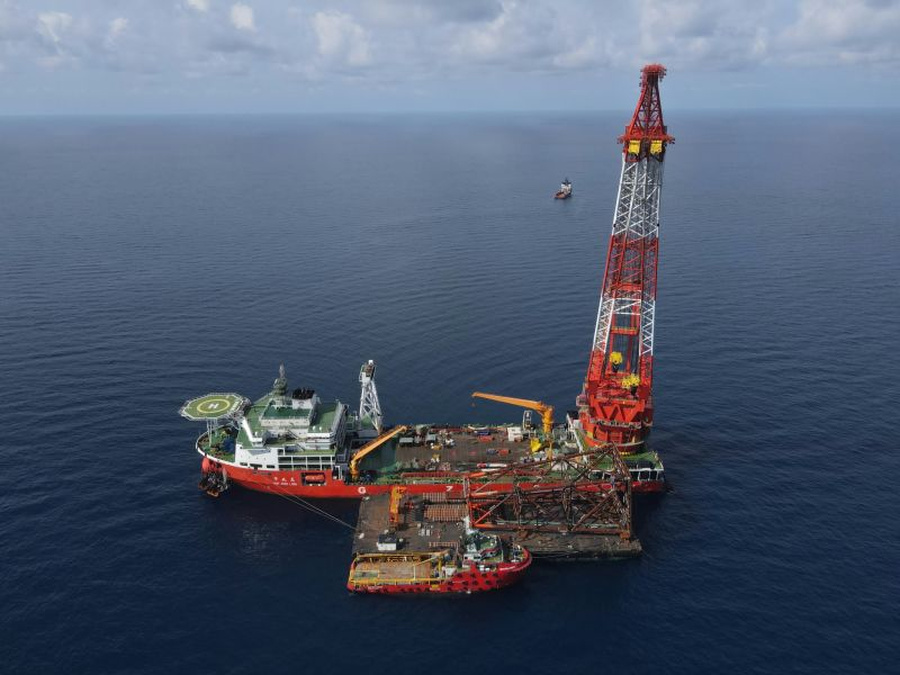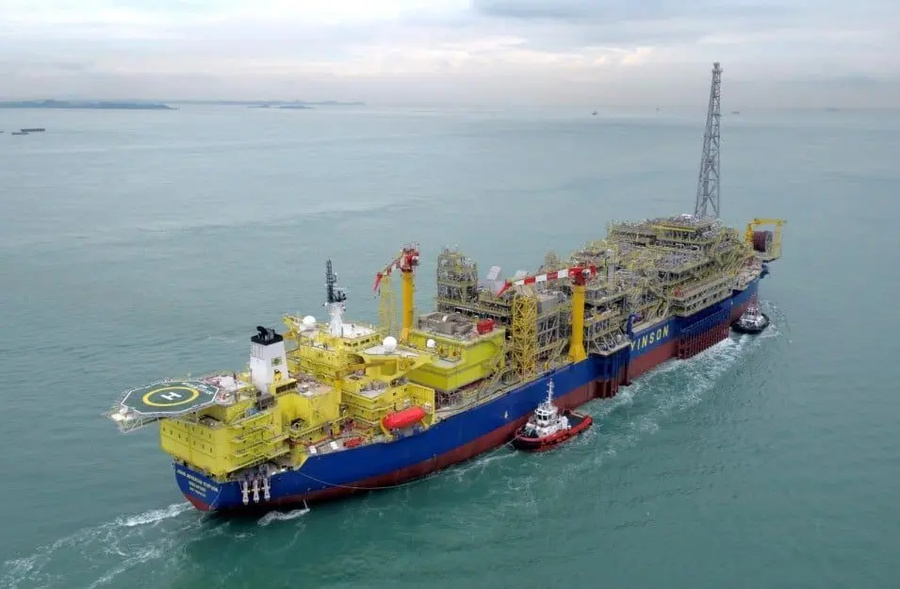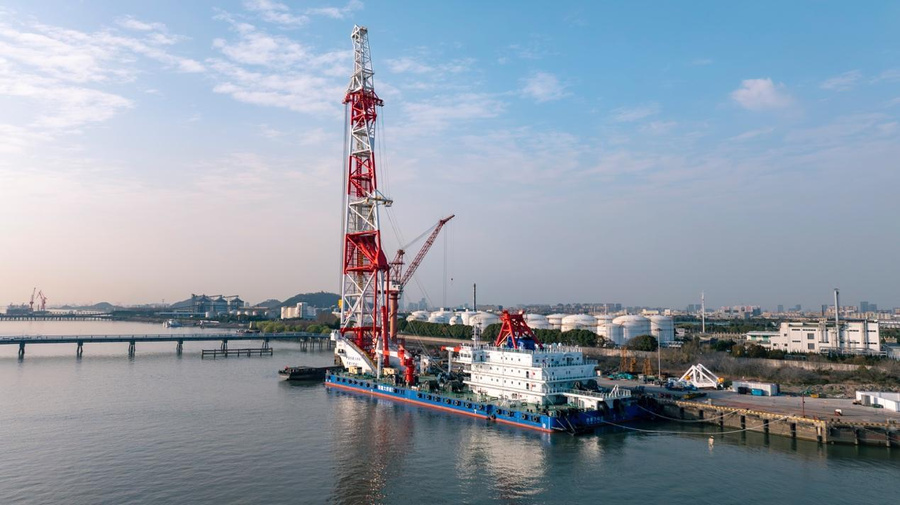
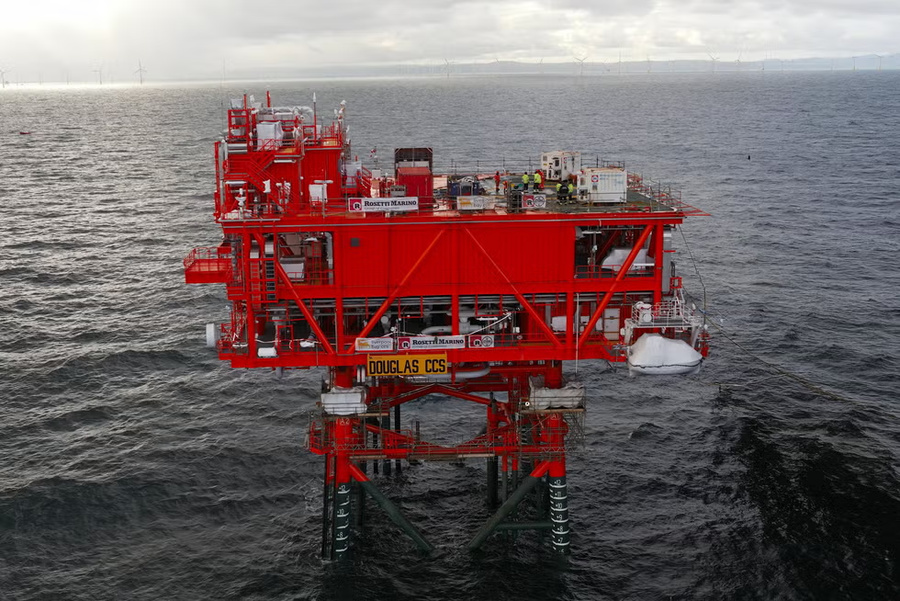
Liverpool Bay CCS has completed installation of the Douglas CCS platform, according to Eni CCUS Holding, adding the offshore hub for the CO₂ transportation and storage system serving the UK’s HyNet industrial decarbonisation cluster.
The platform consists of a 1,885 t topside and a 1,755 t supporting jacket. Eight foundation piles, with a total weight of 730 t, secure the structure to the seabed.
In its installation announcement on 8 October 2026, Eni said delivery took less than 18 months from contract award. The work covered engineering, procurement, construction and commissioning.
Douglas CCS will handle CO₂ captured at industrial facilities in North West England and North Wales. From the platform, the gas will travel through existing offshore pipelines being converted for CO₂ transport to depleted natural gas reservoirs for permanent storage.
Eni describes the facility as the world’s first offshore platform built specifically for carbon capture and storage (CCS) supporting industrial decarbonisation. Its role is to receive and distribute captured CO₂, with capture taking place at the industrial facilities.
The installation forms part of the wider Liverpool Bay CCS construction programme, which is approximately 50% complete. The network combines new infrastructure with reused offshore assets and knowledge of the depleted reservoirs.
Eni said around 60% of overall project expenditure goes through UK-based supply chains. Construction supports more than 2,000 jobs, with approximately 200 to 300 long-term roles expected during more than 25 years of operation.
Eni CCUS Holding is jointly owned by Eni and Global Infrastructure Partners, part of BlackRock.