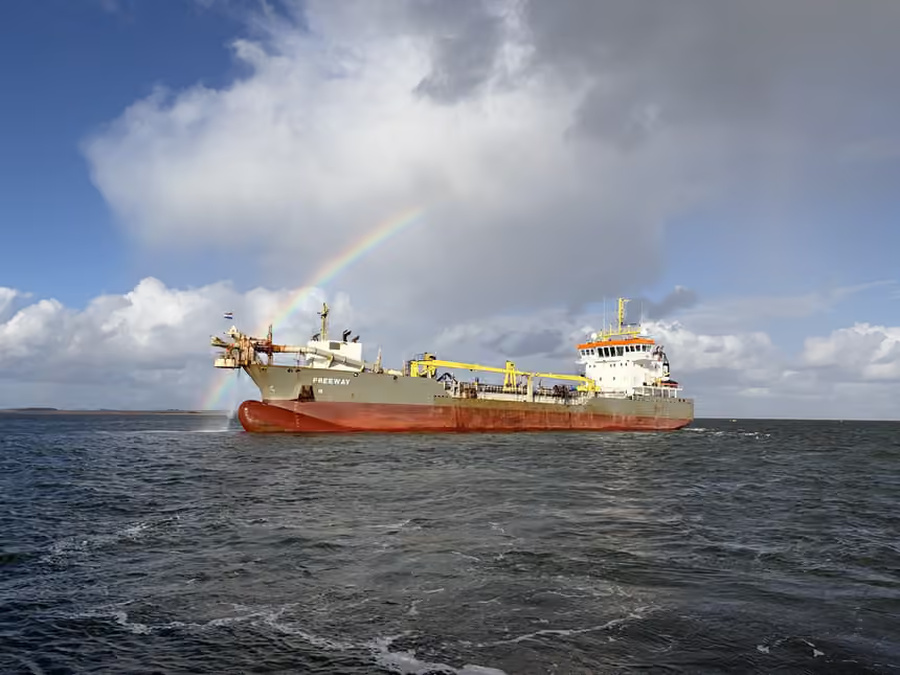
Boskalis Nederland has begun the Galgeplaat sand replenishment project in the Netherlands, with the trailing suction hopper dredger Freeway supporting work at seven sites in the Eastern Scheldt. The scheme also covers Slikken van den Dortsman and is scheduled to finish in late March 2027.
The launch took place on 8 October 2026. Sand will be added to raise sections of the intertidal flats, extending the time they remain above water at low tide. The aim is to retain feeding areas for birds and places where seals can rest.
Freeway is among the equipment being used to supply the sites. Boskalis says the material will be obtained through navigation channel dredging and extraction from a borrow area. Reusing sand removed during channel upkeep connects the habitat work with the maintenance of navigable waterways.
According to the government’s PAGW project announcement, the works will raise 261 hectares. The Ministry of Infrastructure and Water Management is contributing EUR 26 million, including provision for ten years of management and maintenance.
The intervention addresses sediment losses that developed after the Oosterschelde storm surge barrier was built. Sand moves into deeper water without enough replacement reaching the flats, reducing their height and extent. Rising sea levels add to that pressure.
Among the birds feeding on the exposed ground are curlews, bar-tailed godwits and oystercatchers. The project is intended to sustain those habitats for decades; the government expects the restored areas to retain their feeding and resting functions for at least 25 years.
Experience from the earlier Roggenplaat replenishment has informed the design, including methods for spreading sand and supporting recovery of organisms in the seabed.
The work falls under the Programmatische Aanpak Grote Wateren (PAGW) programme. Rijkswaterstaat, the Netherlands Enterprise Agency (RVO), Zeeland province and Natuurmonumenten are responsible for implementation, with Boskalis carrying out construction.