The arrival of a COSCO Shipping Asphalt Hainan tanker in Connecticut has brought new attention to the Trump administration’s temporary Jones Act waiver.
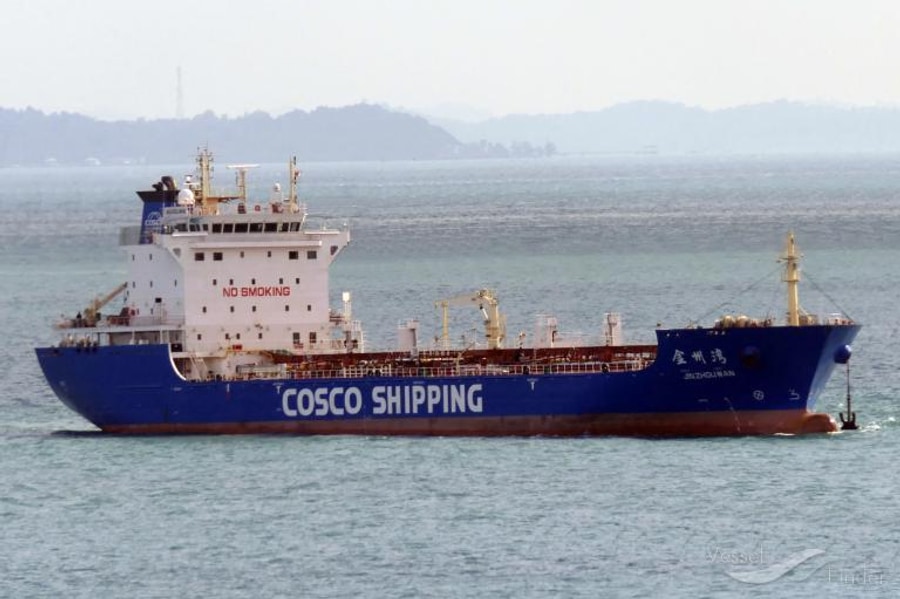
The Chinese-flagged JIN ZHOU WAN (IMO 9802580) recently transported asphalt from New Orleans, Louisiana, to New Haven, Connecticut. Vessel tracking data cited in the source shows the tanker left New Orleans on 21 May 2026 and reached New Haven on 28 May 2026.
The American Maritime Partnership (AMP) criticized the use of the national security exemption for the movement. The group said the shipment involved a Chinese-operated vessel carrying cargo between two U.S. ports and questioned how the voyage met an immediate defense need.
The movement was conducted under a 150-day Jones Act waiver introduced in March after the Strait of Hormuz crisis and later extended through mid-August. The waiver allows selected foreign-flagged vessels to carry cargo between U.S. ports, a trade normally limited to vessels built, owned, flagged, and crewed in the United States.
Shipping database information identifies JIN ZHOU WAN as a 13,265 dwt asphalt and bitumen tanker built in 2017. The vessel is registered under the Chinese flag and is owned, managed, and operated by COSCO Shipping Asphalt Hainan, part of the state-owned China COSCO Shipping Corporation group.
AMP has made opposition to the waiver a central part of a national advertising campaign launched this week. The organization argues that the exemption reduces work for American mariners while offering little measurable benefit to consumers. AMP President Jennifer Carpenter said the waiver has not reduced fuel prices and instead allows foreign operators and crews to take business from the U.S. maritime sector.
AMP also points to its public dashboard, which estimates that waiver-related shipments have moved about 14.9 million barrels of fuel since 17 March. The group says that the volume equals around 17.7 hours of total U.S. fuel consumption.
The case has also renewed attention on China COSCO Shipping Corporation’s appearance on previous U.S. Department of Defense lists of Chinese military companies operating in the United States. The effect of such designations on commercial shipping subsidiaries remains legally and politically disputed.
The Trump administration has defended the waiver as a short-term emergency step to support domestic energy supply after the Middle East conflict disrupted global oil and product flows.
Industry analysis cited in the source says at least 60 waiver-approved voyages have carried crude oil and refined products between U.S. ports since March. Foreign-flagged tankers have been used on routes serving California, the East Coast, Florida, and Puerto Rico.
The asphalt shipment to Connecticut is now becoming a fresh point of dispute over how broadly the national security waiver should be applied and whether foreign shipping companies should be allowed to take a larger role in U.S. domestic maritime trade.