BBC Chartering has signed a compliance agreement with Ahti Climate, purchasing 5,000 tonnes of CO2 equivalent through the Ahti Pool to meet part of its obligations under FuelEU Maritime. The companies announced the agreement on Wednesday.
The deal adds BBC Chartering to the group of shipowners using the pooling model under FuelEU Maritime, the European Union regulation that entered into force this year and requires ships to reduce the greenhouse gas intensity of energy used on board.
Under the Ahti Pool structure, ships that exceed the required standard by using lower-emission fuels can generate surplus credits. Those credits can then be transferred to vessels that do not meet the threshold, allowing operators to manage compliance exposure across participating ships and avoid penalties without retrofitting every vessel in a fleet.
Risto-Juhani Kariranta, Chief Executive Officer at Ahti Climate, said the pool currently manages hundreds of vessels from owners including Van Weelde Group, Bore, Spliethoff, Stenersen, and Neste, and administers more than €100 million of emissions exposure.
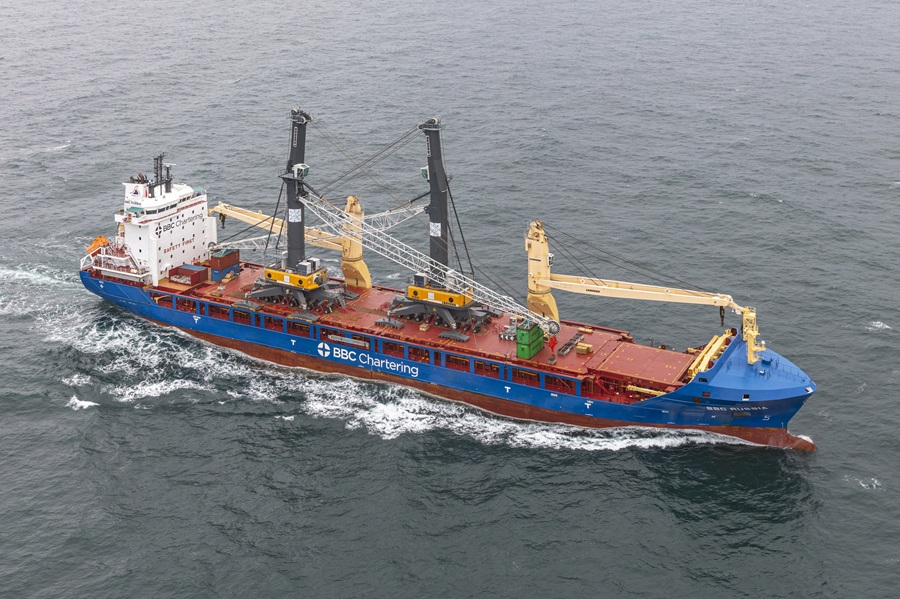
Ahti Climate estimates that a typical vessel will need about 150 to 200 tCO2e to meet its FuelEU Maritime compliance obligation in 2026. On that basis, BBC Chartering’s 5,000-tonnes purchase covers part of the Leer, Germany-based operator’s fleet of more than 140 multipurpose heavy lift vessels.
Christoph Deters, Chief Operations Officer at BBC Chartering, said the company reviewed available compliance options before deciding to enroll part of its fleet in the pool. He said participation in Ahti Pool would help the company optimize compliance costs, support its broader decarbonization strategy, and maintain its service model, “Any port. Any cargo.”
The company operates a fleet ranging from 4,000 to 40,000 deadweight tonnes, including vessels with lifting capacities of up to 800 t. Its ships serve energy, construction, and industrial manufacturing cargoes that cannot be containerized.
FuelEU Maritime applies to all ships of 5,000 gross tonnes and above calling at ports in the European Economic Area. The regulation covers energy used on voyages between EEA ports and 50% of the energy used on voyages entering or leaving the EEA.