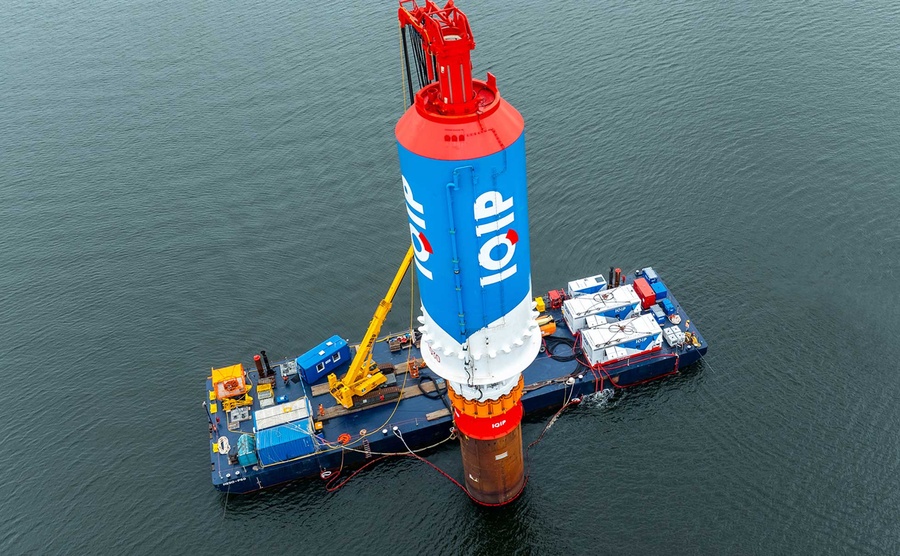
IQIP is preparing the first full-scale offshore installation of its EQ-Piling technology at EnBW’s Dreekant offshore wind farm site in German waters, working with EnBW and Vattenfall.
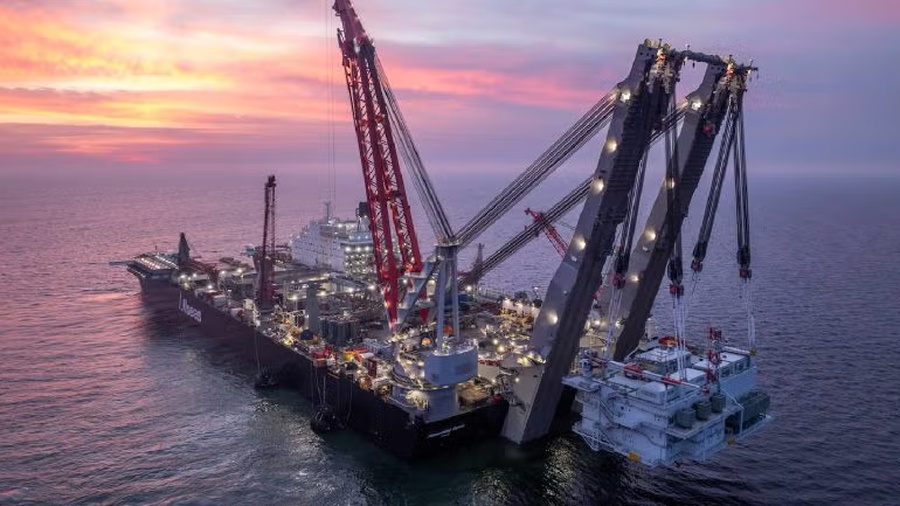
The demonstration monopile will be installed by DEME using the vessel Orion. The offshore campaign is expected to take place next month, subject to final permits.
IQIP said the installation is a major step toward commercializing EQ-Piling after earlier inshore testing at Maasvlakte 2 in Rotterdam.
According to the company, the method builds on experience with conventional impact hammers and noise mitigation systems, but applies force in a different way. A large water-filled tank holding up to 1,700 t of seawater is lifted by hydraulic cylinders and then released from a set height. The falling tank strikes buffer cylinders, which transfer force to the monopile over a longer period. IQIP said the impact lasts around 15 to 20 times longer than with traditional piling, allowing smoother energy transfer and significantly lower noise levels.
On 21 April 2026, IQIP said EnBW is enabling the full-scale trial at the Dreekant project site as part of efforts to support new foundation technologies. Vattenfall, also a partner in the EQ-Piling demonstration project, will use data from the installation to assess the system for future projects.
The partners said the offshore demonstration will test whether EQ-Piling can meet industry requirements for installation accuracy, noise limits and efficiency, while offering a scalable alternative to conventional piling methods with lower impact.
After the trial, the technology is expected to be ready for use in upcoming offshore wind projects.
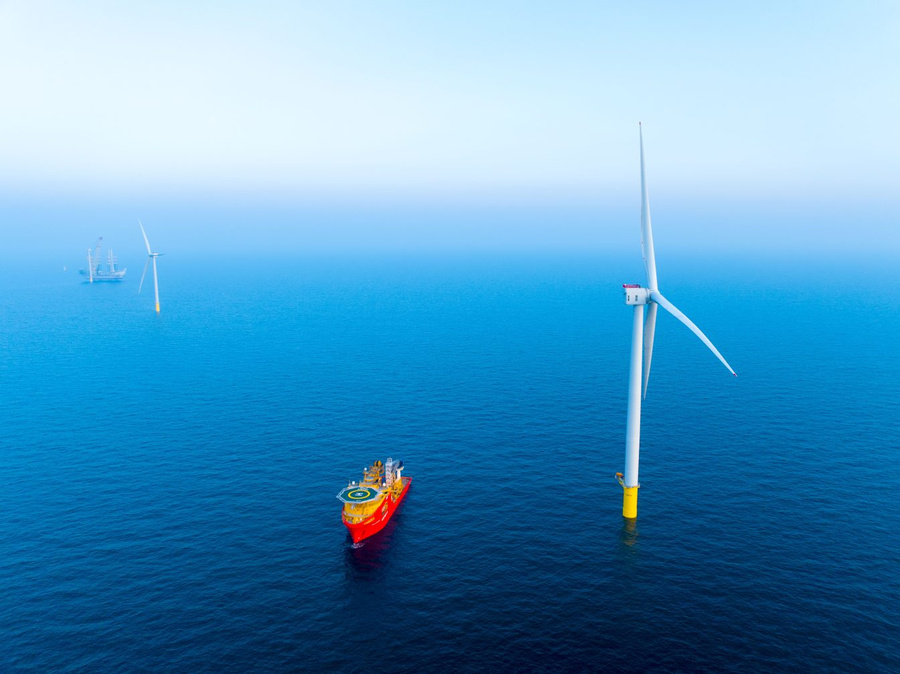
EnBW secured the rights to develop the 1 GW Dreekant offshore wind farm in the N-12.3 area in June 2024. The site is located 120 km northwest of Heligoland. The developer plans to submit its approval application in 2027, with FID expected in 2029 and operations planned for 2032.