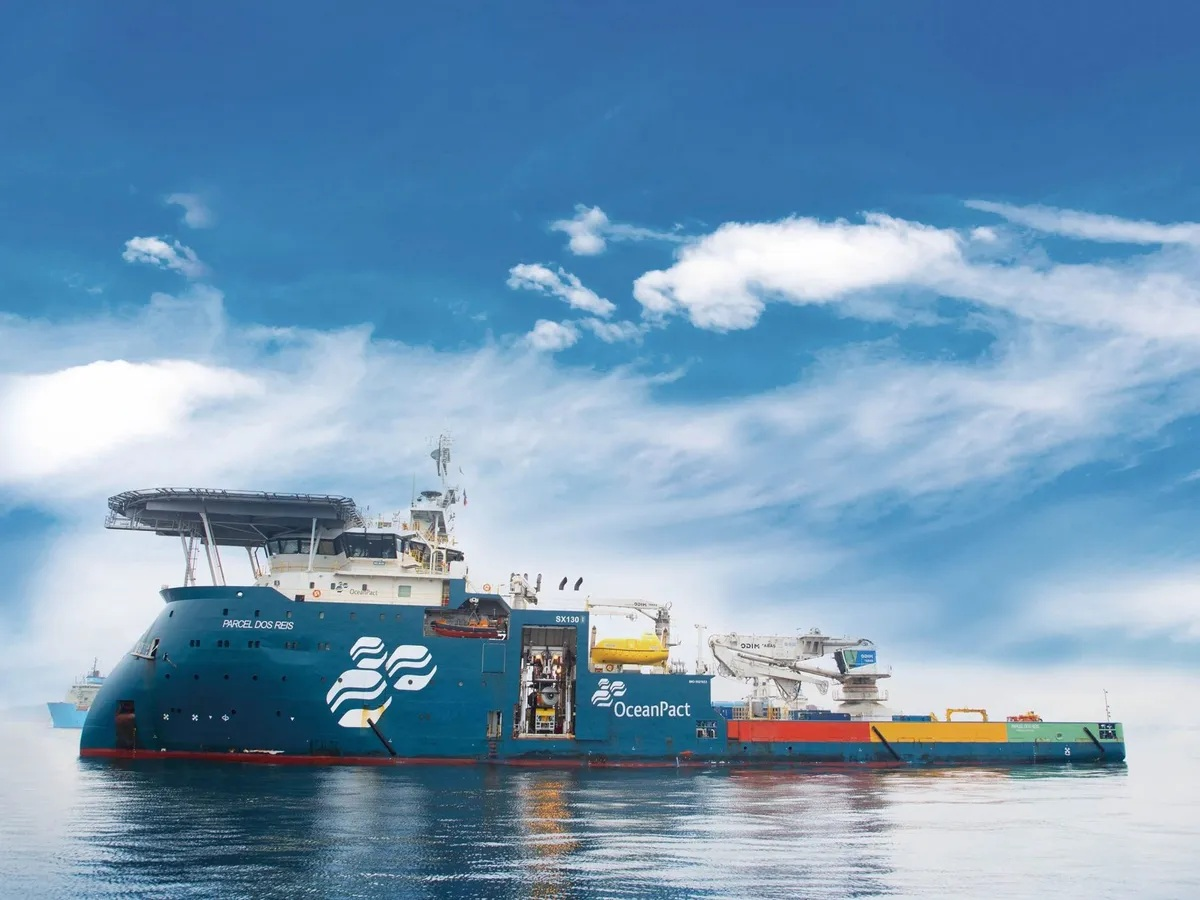
OceanPact and CBO have unveiled plans to combine their businesses, a move set to form one of Brazil’s largest integrated offshore support and marine services platforms.
After closing, the enlarged group is expected to run a fleet of 73 vessels and deliver annual revenue of more than $778 million (R$4 billion). The companies also disclosed a backlog of about $2.7 billion (R$14 billion), underlining the scale of contracted activity expected to sit within the merged platform.
The transaction will be carried out through the incorporation of CBO’s holding company into OceanPact. Completion remains subject to approval by Brazil’s antitrust authority CADE, shareholder approvals, and customary closing conditions.
Management said the combination is built to lift operating capacity through complementary fleets, sharper vessel allocation, and broader capability for technically demanding offshore work. The integration is also framed as a lever to grow subsea services, decommissioning activities, and environmental response work.
Leadership has been mapped out with Flavio Andrade continuing as CEO of the combined company, supported by Eduardo de Toledo as CFO and Marcos Tinti leading the vessels segment. Governance will be handled by a seven-member board, including independent directors and representatives of key shareholders.
The companies described four strategic pillars for the deal: stronger cash generation, a larger asset base, operational and commercial synergies, and enhanced fleet capability. They added that the combined fleet profile is expected to reduce average fleet age, expand client diversity, and improve flexibility for contract execution across Brazil’s offshore basins.
Brazil’s offshore oil and gas market continues to see sustained activity, with deepwater production, subsea operations, and field redevelopment supporting ongoing demand for offshore support vessel capacity. Against this backdrop, the OSV sector has seen faster consolidation in recent years as operators pursue scale efficiencies, higher asset utilization, and stronger balance sheets for long-duration contracts.
By combining scale with broader subsea and decommissioning reach, the new OceanPact–CBO platform is positioned to support continued offshore production activity in one of the industry’s most strategically important deepwater markets.