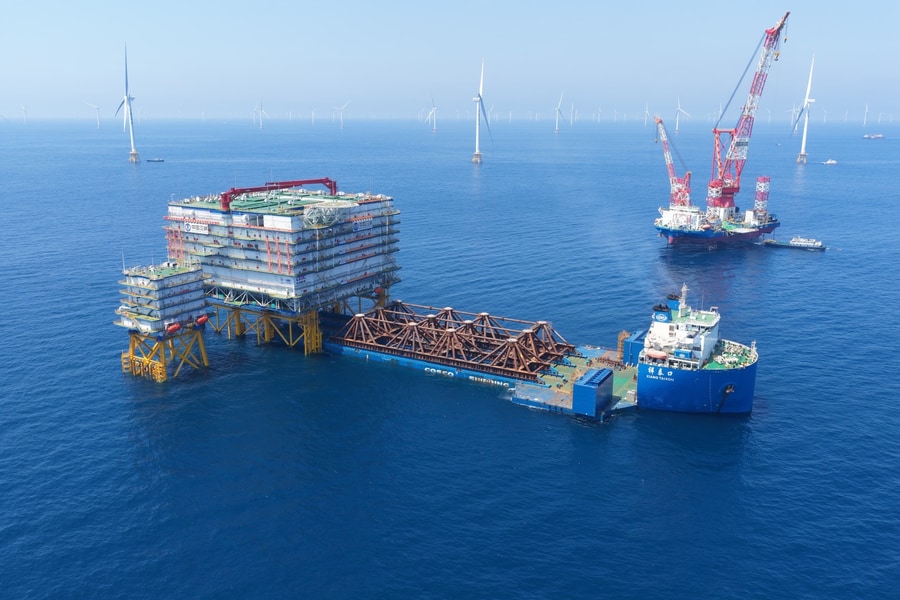
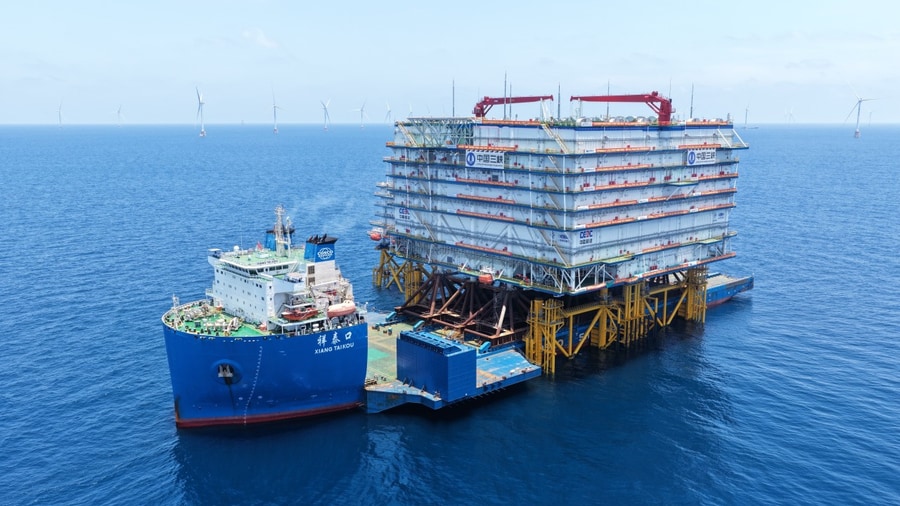
COSCO Shipping Specialized Carriers has completed the integrated transport and float-over installation of the offshore converter platform for the Qingzhou V & VII offshore wind project in Yangjiang, China.
The project incorporates the world’s first 2 GW offshore HVDC transmission system. Once fully commissioned, Qingzhou V & VII is expected to generate approximately 7.7 billion kWh of clean electricity annually. The project is forecast to supply power to more than 1 million households while reducing carbon emissions by around 6.3 million tonnes each year.
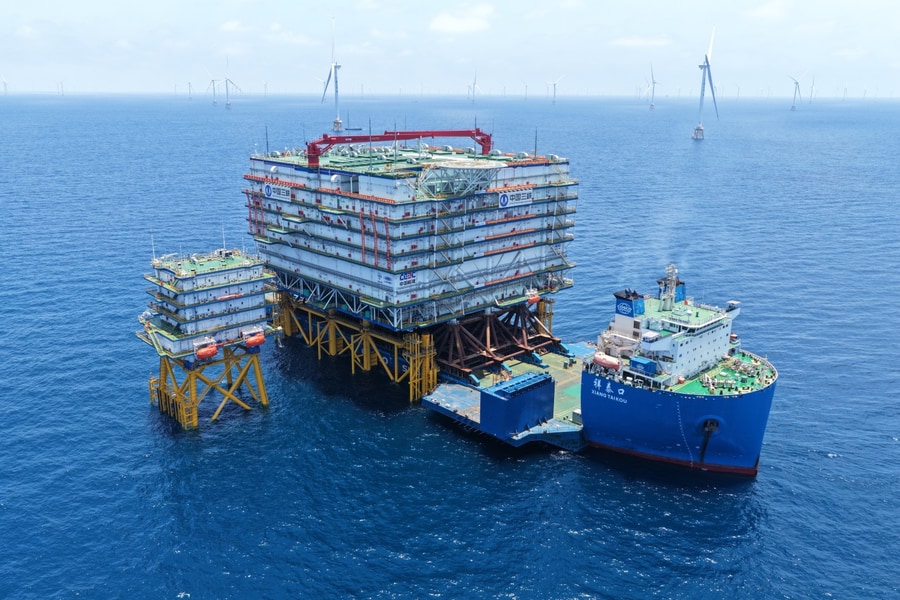
Weighing approximately 25,000 tonnes, the offshore converter platform is among the largest and most complex structures installed in the offshore wind sector. COSCO Shipping Specialized Carriers delivered an integrated transportation and float-over installation solution covering the entire operation from load-out to final offshore placement.
The project required close coordination between transportation and installation activities, supported by real-time operational control throughout the campaign. The company said the successful execution highlights its capability in managing ultra-heavy offshore transportation and installation projects.
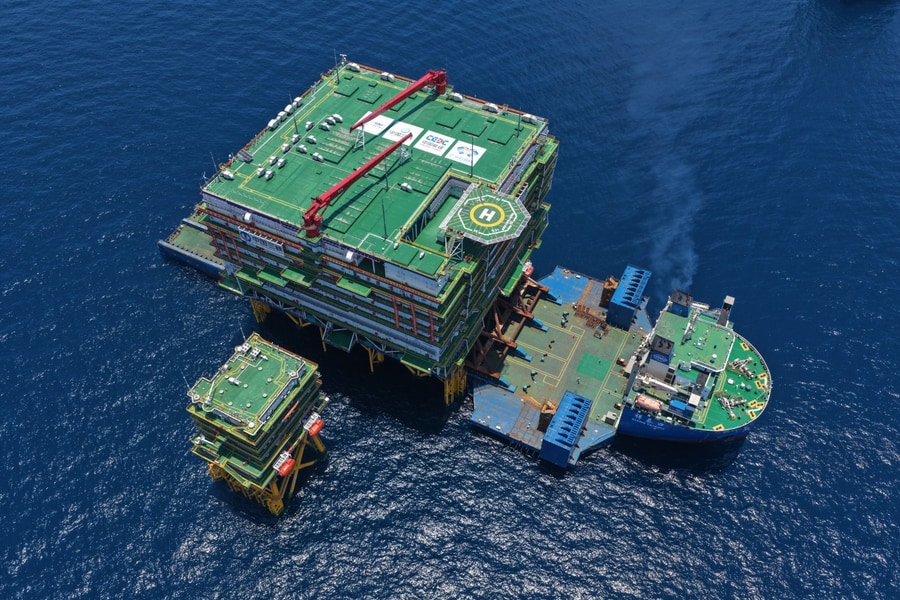
The operation was carried out using XIANG TAI KOU, a DP2-class 65,000 DWT semi-submersible vessel designed to perform both heavy transport and offshore installation work. The vessel’s ballasting system and dynamic positioning capabilities enabled precise platform positioning and controlled submergence during the float-over operation.
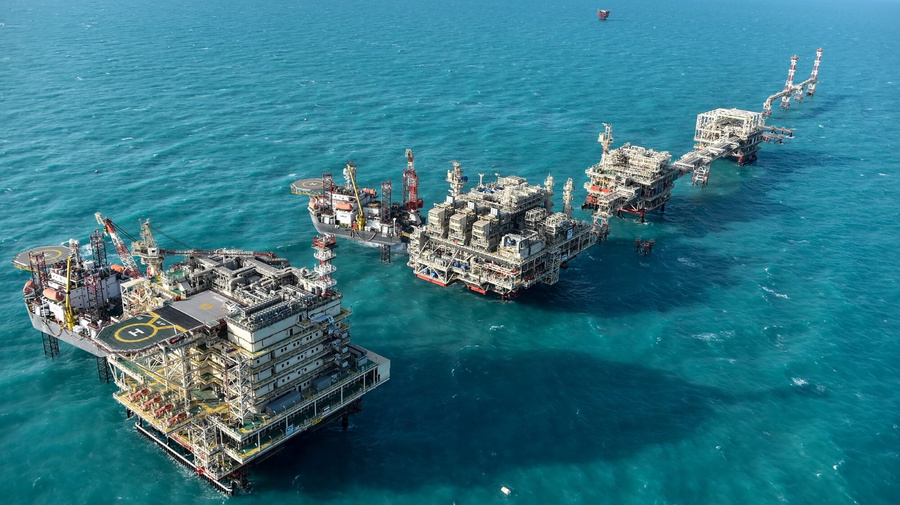
According to COSCO Shipping Specialized Carriers, the project further demonstrates the capability of XIANG TAI KOU to support the installation of next-generation offshore facilities, including HVDC converter stations, oil and gas topsides and other large-scale offshore energy assets.
The company is also expanding its offshore fleet to meet increasing demand from the global energy sector. A next-generation 70,000-tonne-class semi-submersible vessel is currently under construction and is expected to enter service in the near term.