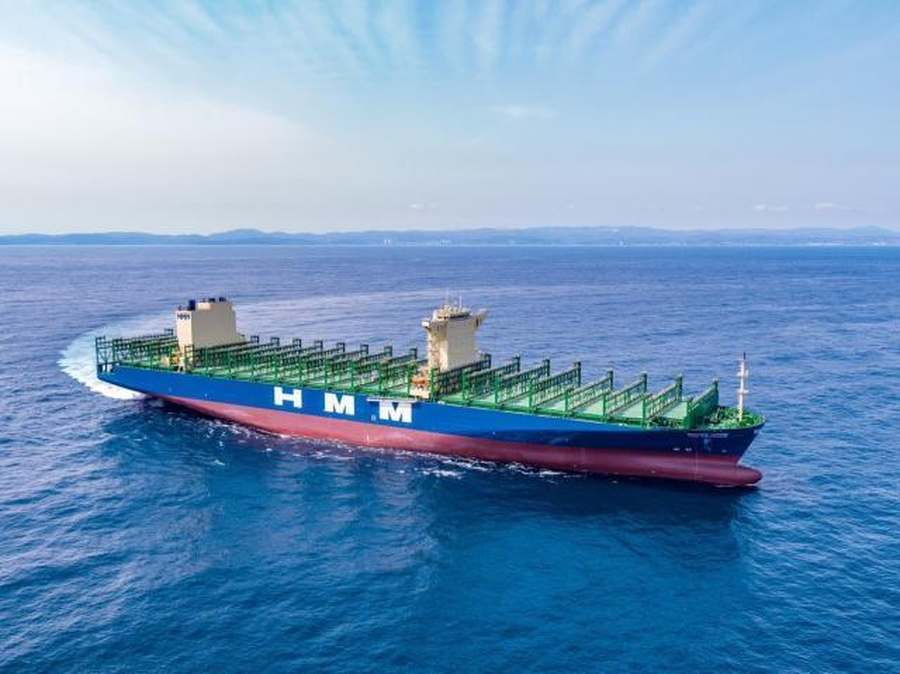
The United States remains a major source of maritime demand, but much of the capacity supported by that demand is being developed outside the country. Recent discussions at the Sea-Air-Space Conference focused heavily on improving shipyard efficiency, output, and resilience. Yet the broader question is not only how existing yards perform, but what creates the need for more shipbuilding capacity in the first place.
Commercial cargo is central to that system. Private companies decide how goods move, which carriers receive contracts, and where long-term transport commitments are placed. Those choices influence fleet investment, and fleet investment eventually shapes shipbuilding activity. Today, China, South Korea, and Japan together account for about 90% of global shipbuilding output, showing where much of that capacity has accumulated.
However, demand alone does not guarantee domestic construction. U.S.-flag cargo demand can still be served by vessels built overseas, where shipyards often offer stronger cost and scale advantages. This means the United States is not short of cargo demand. The gap lies in its limited ability to direct a consistent share of that demand toward domestic maritime capacity.
Government demand, including cargo preference measures and naval shipbuilding budgets, supports national security needs. But it is smaller than commercial trade, which operates on a much larger scale. As a result, public-sector tools can help sustain parts of the maritime base, but they do not fully reshape how global cargo demand is allocated.
Under stable conditions, the system appears effective. Goods move, carriers provide capacity, and the U.S. benefits from access to global shipping networks. The weakness becomes clearer during disruptions, when cargo is delayed, rerouted, or repriced. In those moments, access depends less on demand itself and more on who controls usable capacity.
Over time, routine procurement decisions by U.S. retailers, manufacturers, and cargo owners have reinforced foreign maritime systems. Long-term contracts with global carriers help support fleet growth and indirectly strengthen the shipyards that supply those fleets. The result is a structural dependence in which American cargo demand supports capacity elsewhere.
Closing that gap would require closer alignment between commercial cargo flows and national maritime goals. Options discussed in the source include long-term cargo commitments, dedicated shipping lanes, and more deliberate use of U.S.-flag, U.S.-built, or U.S.-linked carriers.
The central issue is clear: shipbuilding capacity grows where cargo commitments are captured. Unless more U.S. demand is connected to domestic maritime capability, American cargo will continue to support industrial growth abroad rather than at home.