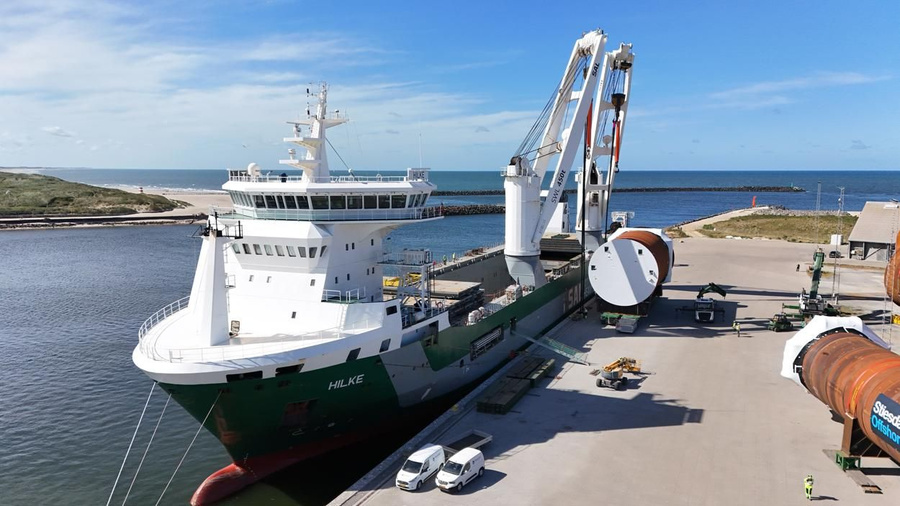
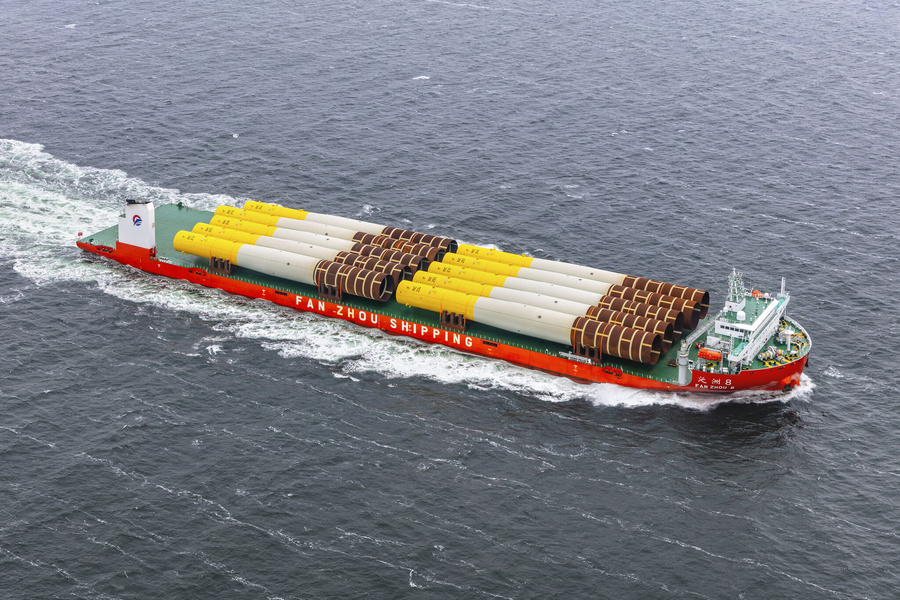
Dajin Heavy Industry has dispatched the first 10 monopile foundations and 10 main access platforms for the 900 MW Nordseecluster B offshore wind project in the German North Sea.
The shipment left the company’s Tangshan offshore manufacturing facility in China on 2 October 2026, bound for the Port of Eemshaven in the Netherlands, the designated European receiving port for the project.
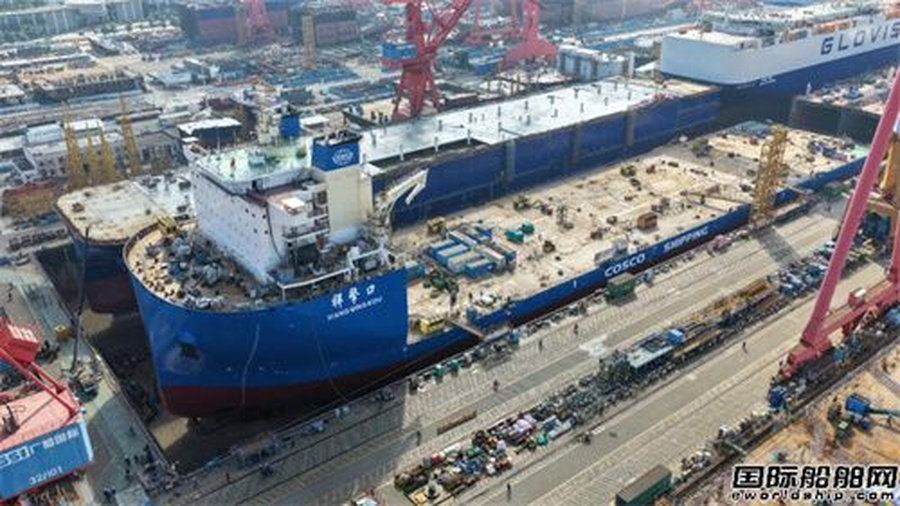
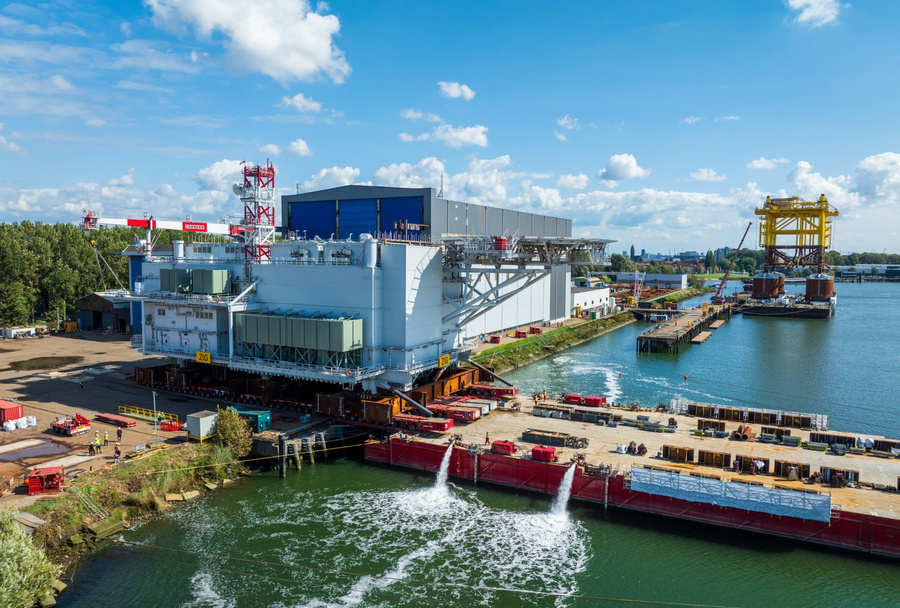
The delivery forms part of Dajin Heavy Industry‘s supply programme covering 60 monopile foundations for Nordseecluster B. The Tangshan facility will manufacture 50 monopiles and 30 main access platforms, while the company’s Penglai facility will produce and deliver the remaining 10 monopiles.
According to Dajin, the first shipment marks the beginning of a coordinated delivery programme involving both manufacturing facilities.
Nordseecluster B is the second phase of the Nordseecluster offshore wind development, located approximately 50 km north of the German island of Juist. The project is jointly owned by RWE, with a 51% stake, and Norges Bank Investment Management, which holds the remaining 49%.
The second phase will comprise 60 Vestas wind turbines with a combined generating capacity of 900 MW. According to RWE‘s official project update, foundation installation is scheduled for 2027, followed by turbine installation in 2028. Commercial operations are planned to begin in early 2029.
The latest delivery follows Dajin Heavy Industry‘s previous involvement in Nordseecluster A. The company completed deliveries of 45 monopiles for the first phase in August 2025.
All 44 wind turbine monopile foundations and their associated secondary steel structures were installed offshore by November 2025. The installation work was carried out by Van Oord‘s offshore installation vessel Boreas, as previously reported by HMT News.
Nordseecluster A has a generating capacity of 660 MW. As of 31 August 2026, 22 of its 44 wind turbines had been installed, with full commissioning scheduled for early 2027.
Together, Nordseecluster A and B will provide approximately 1.6 GW of offshore wind capacity. RWE is responsible for construction and operations across both phases of the development.