China urged all sides in the Middle East conflict to halt military operations, warning that continued use of force around the Strait of Hormuz could deepen instability, disrupt energy flows and increase pressure on the country’s export outlook.
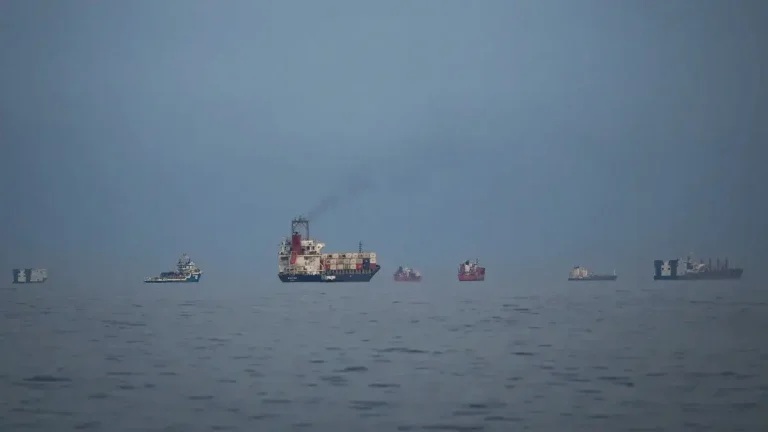
Beijing’s message came as shipping through the strait fell sharply. Before the conflict, the waterway handled more than 153 vessel transits a day. Since 1 March, only 78 vessels were detected passing through, or 13 per day on average. Around 400 vessels were also seen operating in the Gulf of Oman as congestion built near the chokepoint.
China’s special envoy on Middle East affairs, Zhai Jun, visited Saudi Arabia, the United Arab Emirates and Kuwait, saying de-escalation was essential to safeguard passage through the waterway. At a briefing after the trip, he said the party that created the problem should resolve it. Foreign ministry spokesperson Lin Jian separately warned that continued force would produce a vicious cycle and could push the wider region into chaos.
The shipping disruption has already changed Chinese market behaviour. COSCO Shipping suspended all new bookings for routes to and from the Middle East Gulf ports. From 1 March to 15 March, 11 China-linked vessels passed through the strait, mostly general cargo ships, while tankers operated by major Chinese owners continued to avoid the route. A senior insurance executive at one of China’s large state-owned shipping groups said daily internal meetings had exposed a divide between commercial teams seeking to capture high freight rates and safety teams insisting that vessel security must come first.
China’s oil supply pattern has also shifted. Before the conflict, the country received 5.35 million barrels per day via the Strait of Hormuz. That volume later dropped to about 1.22 million barrels per day, all carried by Iranian tankers. Many Chinese-owned VLCCs in the Middle East redirected toward alternative markets, especially Yanbu on the Red Sea. Vessel tracking data showed about 50 VLCCs gathered across the Red Sea and Gulf of Aden, including 17 owned by COSCO Shipping and China Merchants.
The fallout may spread beyond shipping and energy. Goldman Sachs economist Hui Shan said weaker growth among China’s emerging market trading partners would likely weigh on Chinese exports to those economies in the coming quarters. The bank also cut its forecast for China’s second-quarter growth and raised its 2026 inflation outlook. Although China is viewed as relatively better placed to absorb higher oil prices because coal accounts for about 60 percent of its energy mix and oil stockpiles are ample, Goldman Sachs’s chief China economist said rising energy costs could still push inflation higher and bring an end to producer price deflation.
When asked whether Beijing had pressed Tehran to guarantee safe passage for Chinese vessels, Lin said China remained in communication with all parties and was committed to easing tensions. China was also reported to be in talks with Iran over safe passage for crude oil and Qatari LNG carriers through the strait.