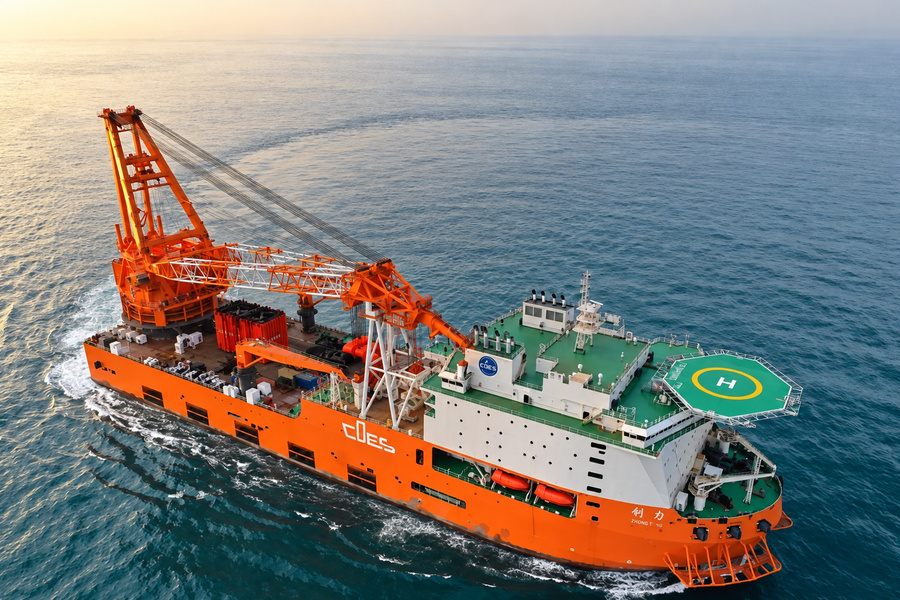
ZPMC has begun the Chuangli conversion to give the Shanghai Salvage Bureau’s heavy-lift and salvage vessel an S-lay pipelaying capability. An event in Qidong, Jiangsu, marked the start of the project on 27 October 2026.
The conversion is intended to allow pipeline installation at depths reaching 3,000 metres. Planned duties include repairing damaged deepwater oil and gas pipelines in emergencies and positioning equipment used to contain oil spills. The vessel would also be able to handle pipelines and cables precisely during recovery work involving large submerged objects.
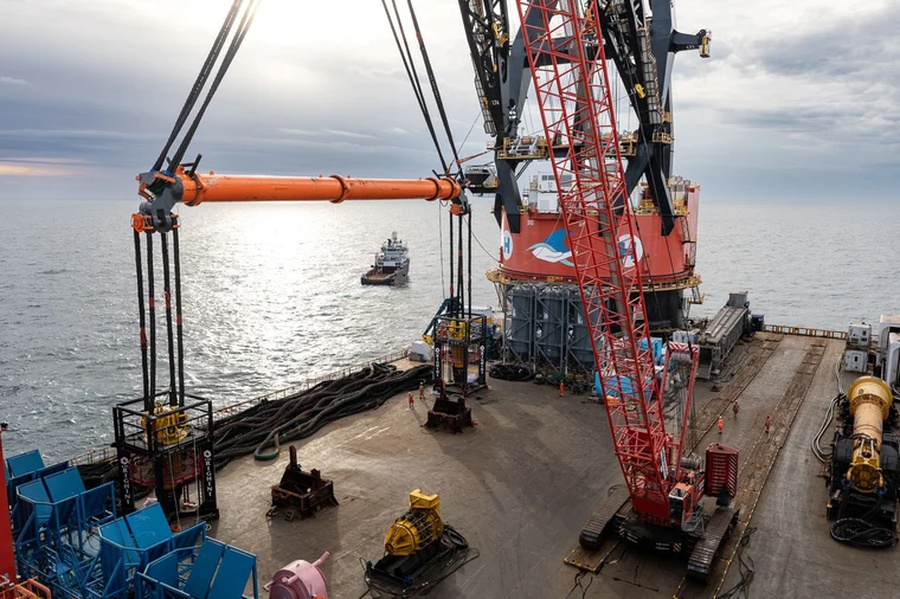
Shanghai Zhenhua Heavy Industries (ZPMC) is responsible for supplying the complete S-lay system, adapting the hull structure, installing and commissioning equipment, and integrating the systems. The core pipe-handling machinery and stinger system use Chinese designs and domestic manufacturing.
Eworldship reported that, once converted, Chuangli would be China’s first crane-pipelaying vessel to incorporate an entirely domestic package covering both pipelaying machinery and the stinger.
The work belongs to the Shanghai Salvage Bureau’s programme covering three newbuilds and one conversion. The bureau is part of China’s Ministry of Transport.
Delivery of Chuangli took place in January 2019. Equipped with DP3 dynamic positioning, the self-propelled vessel has undertaken offshore wind construction, salvage responses to emergencies and overseas oil and gas assignments.