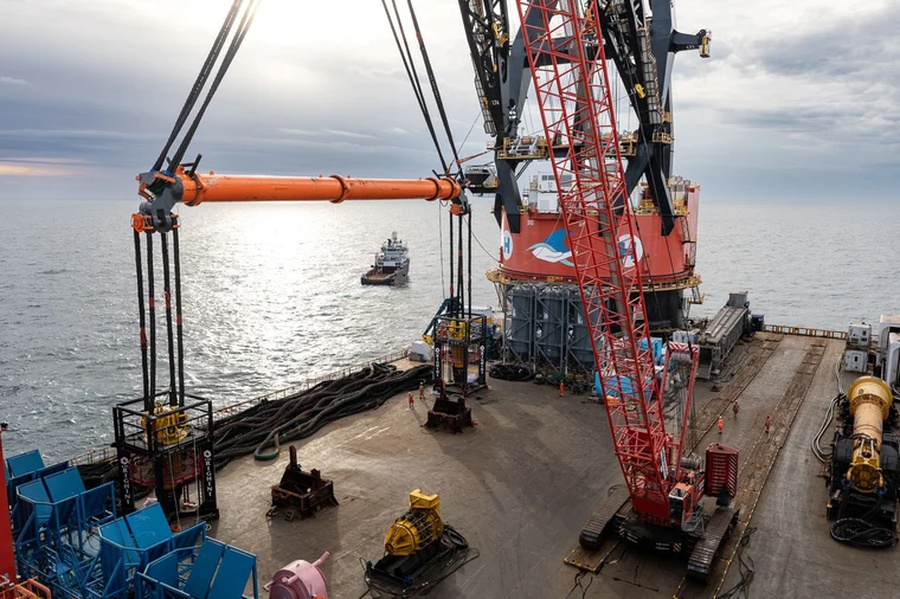
Two Heerema modular spreader bars, each designed to handle approximately 9,000 tonnes, have been used for seven lifts, the company said in its 27 October 2026 announcement. The equipment is designed for repeated use in offshore installation and removal work.
The bars comprise interchangeable modules, allowing their length and arrangement to be changed for subsequent assignments. Crews can insert or remove sections and alter their sequence to meet the rigging requirements of different structures.
Spreader bars share loads through a lifting rig and control the arrangement of slings, including the space needed for their paths. Requirements vary with the dimensions of the lifted structure, the positions of its lifting points, its weight distribution and the required sling angles. Applications include converter stations, jackets, topsides, bridge sections and flare structures.
Heerema focused its design work on the connections between modules. Each interface has to transfer forces between interchangeable sections. As the assembly changes, the connections must accommodate axial loading, bending and shear while preserving the assembled bar’s strength and stiffness.
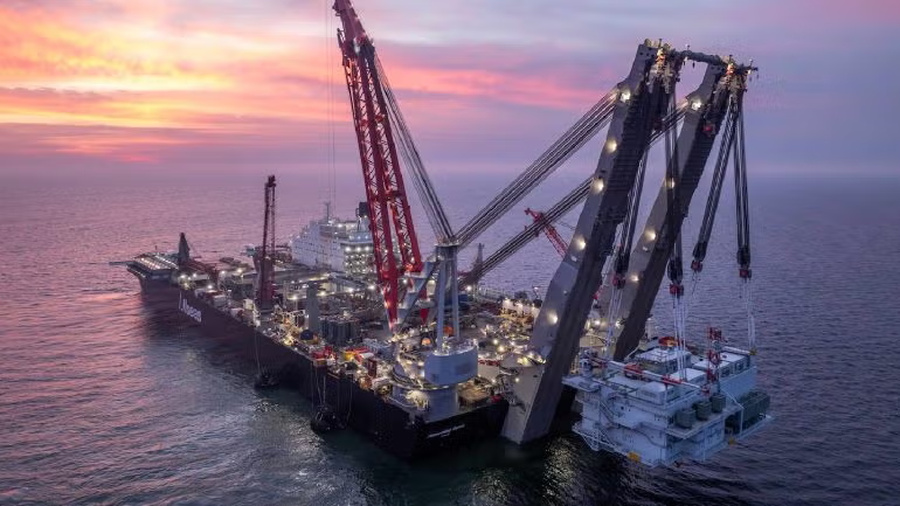
The company’s account illustrates deployments involving Sleipnir, including transport of the Heimdal topside, removal of the Veslefrikk jacket, installation of the Munin topside and the Hornsea 3 Link 02 jacket installation. These examples span both installation and decommissioning work.
According to Heerema, adapting existing sections for later assignments is intended to limit bespoke fabrication and modifications, along with the transport and steel these require. The company also expects reuse to lower emissions from these activities and envisages using the equipment over several decades.
The Netherlands Enterprise Agency (RVO) and the Dutch Ministry of Economic Affairs and Climate Policy supported the project, which was intended to demonstrate the reuse of large industrial lifting assemblies through changes to their configuration.