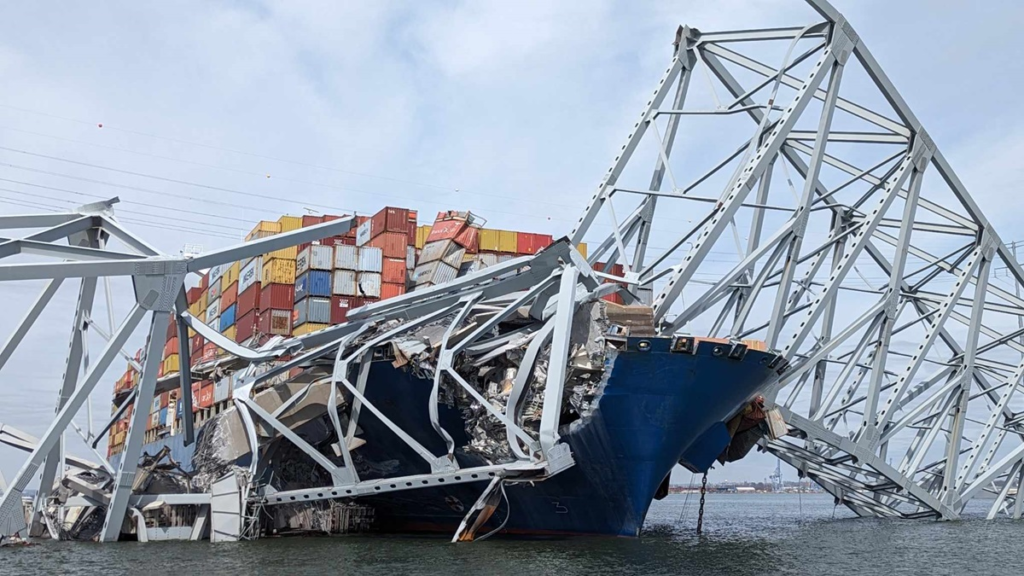
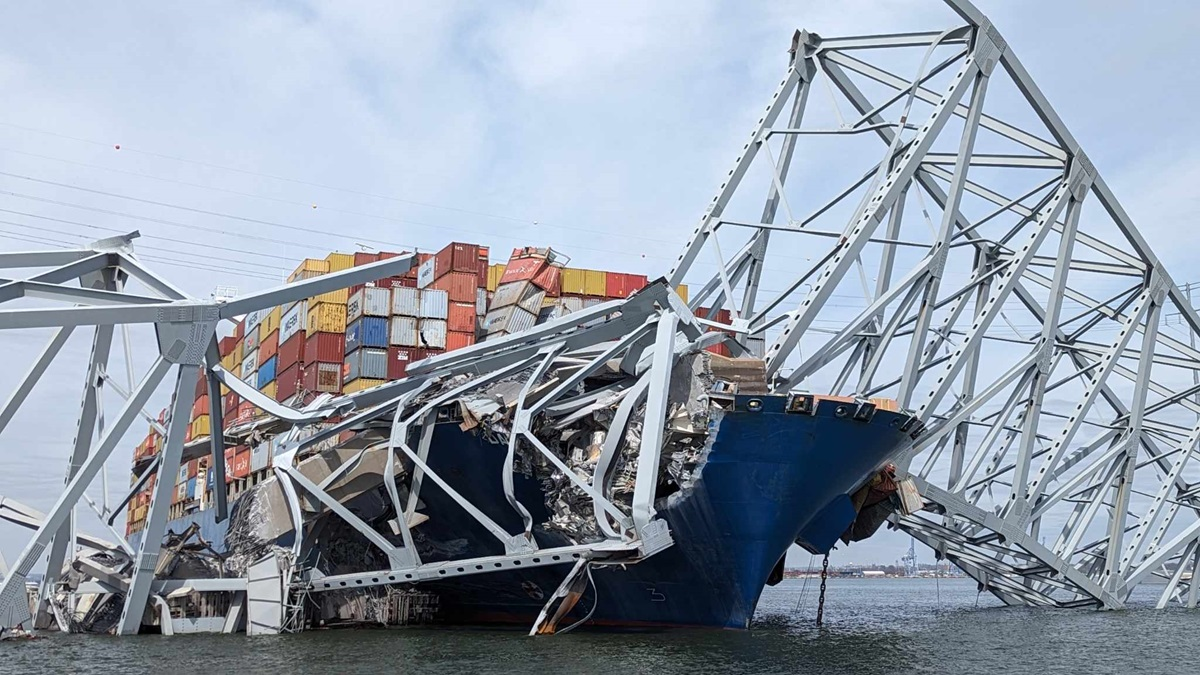
A district court in Maryland has dismissed most of the remaining economic loss claims linked to the Dali allision that destroyed Baltimore’s Francis Scott Key Bridge, while allowing several claims involving physical damage to continue.
Judge James K. Bredar issued the 75-page opinion on 25 August. The ruling applies the U.S. Supreme Court’s 1927 Robins Dry Dock & Repair Company decision, which generally bars recovery for economic losses caused by negligence when a claimant has no related physical property damage.
The owner of the Dali, Grace Ocean, and its manager, Synergy Marine, had sought since at least October 2024 to block economic damage claims based on the Robins Dry Dock ruling. In April 2024, they also filed a motion seeking to apply the Shipowners’ Limitation of Liability Act of 1851 to the economic claims.
One of the dismissed claims came from Star Bulk, which argued that its vessels were unable to reach a loading berth in Baltimore harbor after the bridge collapse, resulting in lost profits or earning potential.
The court also dismissed claims from a class of longshoremen who lost work, an insurance syndicate, Ports America Chesapeake, American Sugar Refining, and a broader group of businesses and individuals. Their claims were based on disruption caused by the blocked harbor and the loss of the bridge.
The Robins Dry Dock issue had remained undecided earlier in the proceedings. Bredar said the 1927 decision had played a significant role in the case and noted that nearly a century of subsequent case law had developed exceptions to the general rule.
The court addressed the issue after the remaining claims were delayed by agreement in June. The companies and their insurers had already settled major parts of the civil litigation, including all wrongful death and personal injury claims and the claims brought by the state of Maryland.
Of the 54 claims initially filed in the civil case, all but 10 have been settled or voluntarily dismissed.
The 1927 Supreme Court case involved a vessel whose propeller was negligently damaged during scheduled maintenance, delaying its return to service for two weeks. A claim seeking recovery of lost profits during that period was ultimately rejected by the Supreme Court.
Bredar reviewed the remaining Dali claims against that precedent and the exceptions established through later case law.
Several claims were allowed to continue. The City of Baltimore may proceed with its claim for physical damage to a water main located in the harbor beneath the bridge. The court, however, dismissed other city claims related to the loss of the bridge and damage to streets and other bridges.
The court found that the City of Baltimore had not established a sufficient proprietary interest in the Key Bridge to recover economic damages beyond the physical damage to the water main.
Baltimore County was also permitted to continue claims involving damage to its waterways. The county alleges that debris from the bridge reached its shoreline. Its claims concerning roadways were dismissed.
A class action filed by trucking company R.E. West also survives in part. The claim alleges physical damage to cargo belonging to various companies aboard the Dali. Although part of the action was dismissed, claims tied specifically to cargo damaged by the allision and the bridge collapse onto containers may proceed.
The ruling has significantly narrowed the remaining civil case against the Dali.