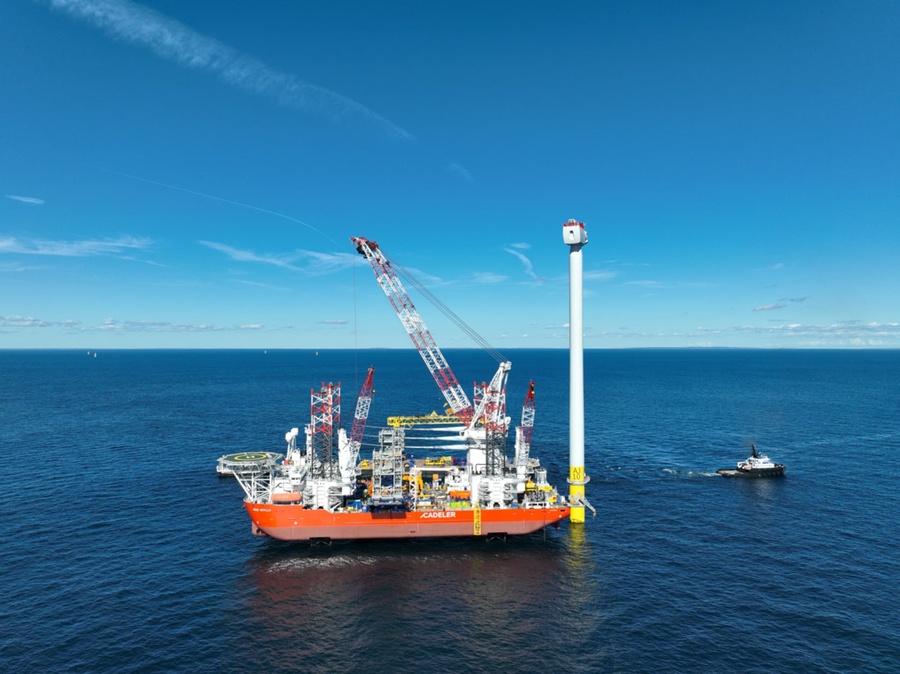
Offshore wind vessel demand is expected to recover in 2026 as installation activity accelerates across major markets in the UK, Europe and APAC, excluding mainland China.
According to Westwood, policy frameworks in these regions are becoming more supportive of project execution, creating a more stable market setting than in the US, where regulatory uncertainty continues to weigh on momentum.
Marketed utilization for wind turbine installation vessels involved in transport and installation work fell to 64% by the end of 2025, down from 70% in 2024. Westwood expects utilization to rise to around 79% in 2026, supported by higher turbine and foundation installation activity.
Installation volumes in 2026 are forecast to nearly double year on year, while cumulative installed offshore wind capacity is expected to exceed 236 GW by 2030.
Although the near-term project pipeline has softened slightly, Westwood said the medium- and long-term outlook remains firm, backed by continued capacity growth and policy support.
Heavy-lift vessel activity also became more exposed to offshore wind projects in 2025 than in 2024. Looking ahead, Westwood expects renewed oil and gas workscopes to support demand, with utilization projected to reach approximately 78%.
Fleet fundamentals point to a tightening market. At the end of 2025, the operational fleet outside mainland China consisted of 38 wind turbine installation vessels, 51 heavy-lift vessels and 87 CSOVs.
The orderbook remains limited for WTIVs and heavy-lift vessels, with only five WTIVs and seven heavy-lift vessels on order. The CSOV segment is expanding more rapidly, with 58 firm orders.
Based on the visible fleet, Westwood expects the WTIV segment to remain structurally undersupplied over the medium term, while the heavy-lift market is also showing signs of tightening.
Additional capacity may come from retrofitting mainland China vessels or redeploying vessels from the oil and gas sector. However, Westwood said these measures are expected to provide only limited relief and will depend on vessel suitability and regulatory compliance.