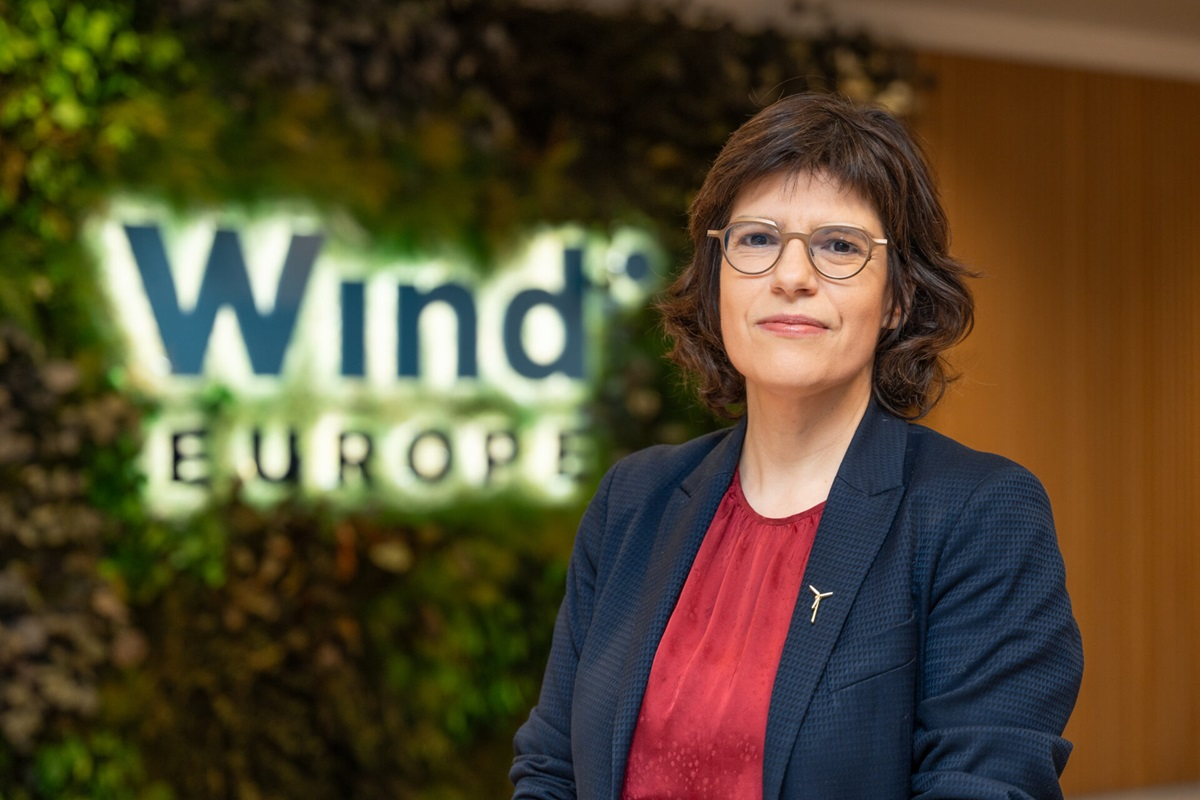
WindEurope has appointed Tinne Van der Straeten as its new Chief Executive Officer, effective 2 February 2026, as the association positions itself for a period linked to Europe’s energy security, industrial competitiveness, and climate commitments.
Van der Straeten previously served as Belgium’s Energy Minister from 2020 to 2025 and most recently as a Member of the Belgian Parliament. WindEurope said she brings experience shaping energy policy at the national and EU level, including overseeing Belgium’s wind expansion and helping build broad alignment on the country’s response to the 2022 energy crisis.
Her roles in European energy coordination include chairing the North Sea Energy Cooperation in 2020 and, at the start of 2025, chairing the European Energy Council in 2024, and vice-chairing the IEA Ministerial meeting in 2022.
Van der Straeten said she will take on the role at a “defining moment” for Europe and described wind as a scalable, home-grown technology that supports affordable power, energy independence, and an industrial base with high-quality jobs across Europe. WindEurope Chairman Henrik Andersen said she has consistently kept wind high on the political agenda, collaborating across industry and government to shape policy and long-term investment frameworks that support deployment.
The WindEurope Board also thanked former CEO Giles Dickson for 10 years of leadership, describing his contribution as central to the organisation’s development.
In outlining priorities, WindEurope said Van der Straeten will focus on maximising wind’s contribution to affordability, industrial competitiveness, and energy security as Europe seeks to reduce reliance on imported fossil fuels. The association stated that a renewables-based system with wind at its core could save Europe up to €1.6tn, including grid and backup costs, and argued this depends on accelerating the Clean Industrial Deal, scaling competitive renewables, and advancing electrification.
Wind currently generates 20% of Europe’s electricity consumption, according to WindEurope, which said this could rise to 34% by 2030 and exceed 50% by 2050 with the right policies. The group noted that the EU installed 13 GW of new wind capacity in 2025—less than half of what it said is required to meet 2030 energy security and climate targets—adding that permitting challenges and infrastructure delays remain key constraints. Van der Straeten said the sector is ready to accelerate and could support more than 600,000 jobs by 2030, but needs barriers removed.