Equinor says delays to US-built tugs and barges have pushed back the Empire Wind turbine installation schedule. The 810 MW project off New York now expects to generate its first electricity in the first half of 2027.
During its results update on 28 October 2026, the company said the project was around 80% complete. According to The Maritime Executive, Equinor linked a delay of several months to the outstanding vessels and said their construction schedule was beyond its control.
Most of the remaining project work involves installing the turbines, according to the published transcript of Equinor‘s earnings call. Chief financial officer Torgrim Reitan said total project capital expenditure had not changed, although some spending would shift into 2027.
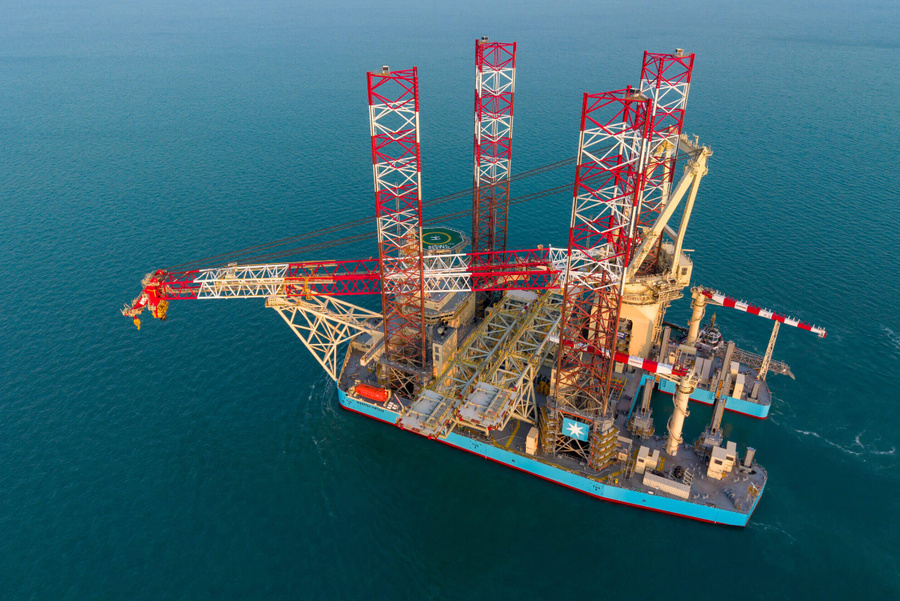
The installation arrangement depends on feeder vessels carrying turbine components from Brooklyn to Maersk Viridis, the WTIV built by Seatrium in Singapore. This allows the installation vessel to receive successive loads offshore without sailing back to port.
Maersk Offshore Wind describes its feeder system as an arrangement of articulated tugs and barges that dock with the WTIV. After a locking mechanism stabilises the barge, the cargo frame rises to deck level so the turbine components can be unloaded.
The Maritime Executive reported on 28 October that Maersk Viridis was undergoing tests and crew training for the barge system after reaching waters off Pascagoula, Mississippi, in August. The report also said an earlier shipyard dispute affecting the vessel’s construction had been resolved.
At the wind farm, foundations for all 54 turbines have been installed. Empire Wind’s official project information dates completion of the foundation campaign to autumn 2025 and installation of the offshore substation to early 2026. The Maritime Executive also reported that cabling work was complete, without specifying the individual cable systems covered.
The project is situated south of Long Island and will supply electricity through Brooklyn to the Con Edison network.
Reitan said construction had continued to advance despite federal stop-work orders. Equinor‘s official announcement records that the first order, issued on 16 April 2025, was lifted the following month. A further suspension in late 2025 was followed by a court injunction allowing construction to resume.