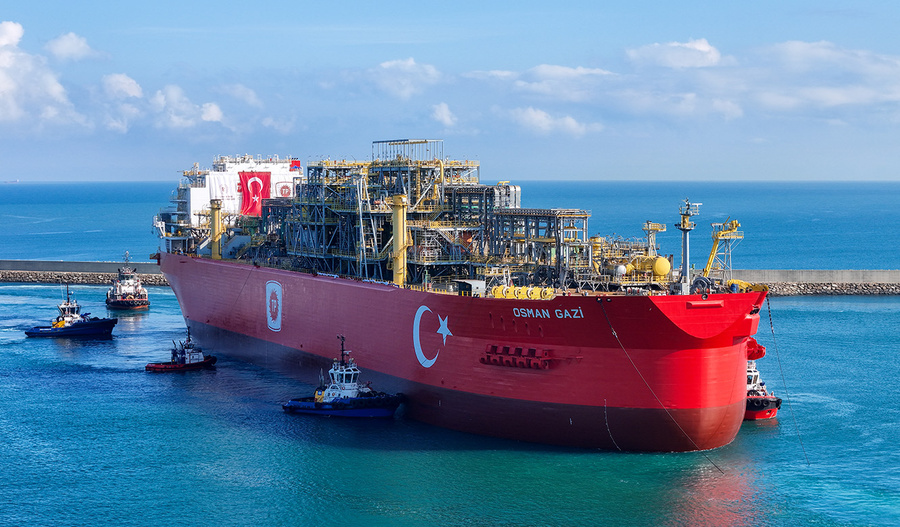
Subsea7 has secured an additional contract from Turkish Petroleum Offshore Technology Center AS (TP-OTC) covering floating production unit (FPU) work for the Sakarya Phase 3 gas development in the Black Sea, offshore Türkiye.
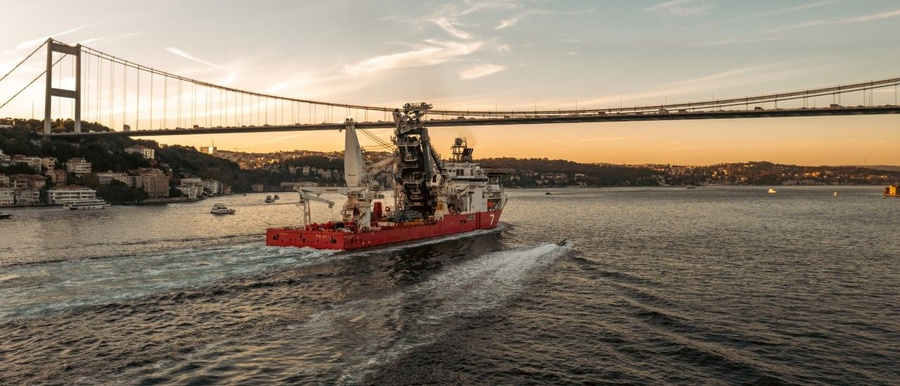
The extension covers towing of the FPU as well as installation and connection of its mooring lines. The work is linked to commissioning of the unit in 2028. Project management and engineering will be carried out from Subsea7’s Istanbul office, with activities starting immediately.
Subsea7 has classified the award as “sizeable.” Under the company’s contract classification, this category covers awards valued between $50 million and $150 million. The company did not disclose the specific value of the extension.
The latest award expands Subsea7’s scope on Sakarya Phase 3. TP-OTC awarded the company the main Phase 3 contract on 27 August 2025, covering engineering, procurement, construction and installation of subsea umbilicals, risers and flowlines. That contract was classified by Subsea7 as “major,” representing its $750 million to $1.25 billion contract category.
A further variation order followed on 4 March 2026 to connect the Goktepe field to the Phase 3 FPU. The work comprises EPCI of approximately 20 km of flexible pipelines, 120 km of umbilicals, a rigid production riser and associated subsea equipment at a water depth of 2,200 m. Offshore activities for this scope are scheduled for 2027 and 2028. Subsea7 classified the variation as “large,” its category for contracts between $300 million and $500 million.
According to TP-OTC, Sakarya Phase 3 includes plans for 27 new wells, new subsea production infrastructure, a second floating production platform and another pipeline to the onshore receiving facilities. The phase is planned to add 20 million m³/day of capacity. Across all three phases, TP-OTC is targeting approximately 40 million m³/day of net production capacity from 49 wells.
Türkiye’s Ministry of Energy and Natural Resources said the second floating production platform is planned for commissioning by mid-2028. The ministry said the ship-shaped unit will be 273 m long, 54 m wide and 26 m deep and will be stationed about 180 km offshore in approximately 2,200 m of water. It will process gas offshore before the gas is transported to shore through a subsea pipeline and transferred to the national transmission network.