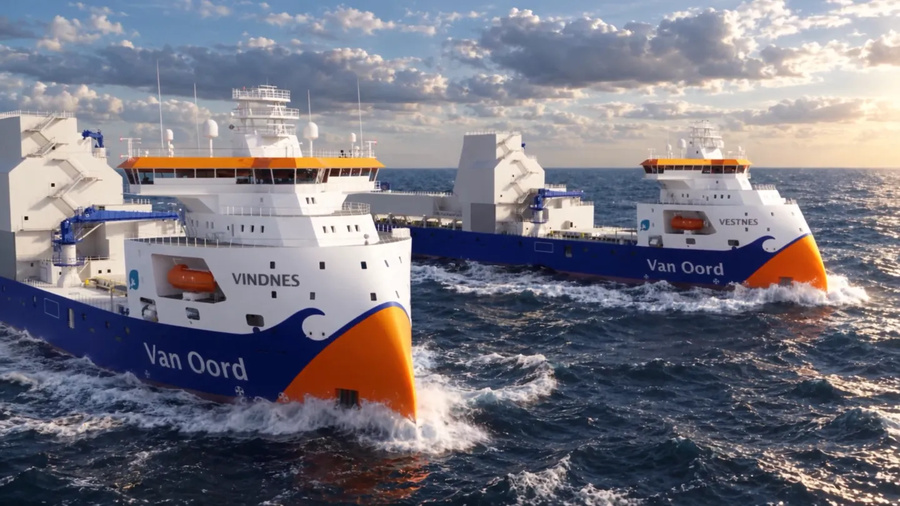
Van Oord has named its two new flexible fallpipe vessels Vindnes and Vestnes, with the vessels scheduled for delivery in 2028 and 2029.
The names were announced on 23 September 2026 during WindEnergy Hamburg. The vessels are being built to expand Van Oord’s subsea rock installation capacity for offshore wind, interconnector and energy infrastructure projects.
Each vessel will have a loading capacity of 35,000 tonnes. Unlike vessels developed through conversion, Vindnes and Vestnes have been designed specifically for subsea rock installation.
The design combines carrying capacity, installation performance, fuel efficiency and offshore workability. Automation, smart sensors and DP2 positioning will support accurate rock placement on the seabed.
The vessels will also be equipped with multi-fuel engines and battery storage. Their energy-efficient design is intended to reduce emissions during operations.
Subsea rock installation is used to protect and stabilise offshore energy infrastructure. Van Oord has carried out this type of work since the 1970s and operates dedicated vessels including Nordnes, Stornes and Bravenes.
The names Vindnes and Vestnes continue the naming convention used across the company’s subsea rock installation fleet.
Both vessels are currently under construction at Yantai CIMC Raffles Offshore in China. The first vessel is expected to be delivered in 2028, followed by the second in 2029.