India’s shipbuilding industry is expanding as naval demand, export orders and government backing support growth, creating room for Korean shipbuilders to explore lower-cost production and wider industrial cooperation.
Indian yards are posting stronger results. Garden Reach Shipbuilders & Engineers reported revenue of 64 billion rupees, about 1.0412 trillion won, for fiscal 2025–2026, up 26% from a year earlier. Mazagon Dock Shipbuilders recorded revenue growth of 25.9% in fiscal 2024–2025 compared with fiscal 2022–2023. Through 2028, its compound annual growth rate is expected to remain in the low-10% range, while its operating margin is forecast in the high-10% range.
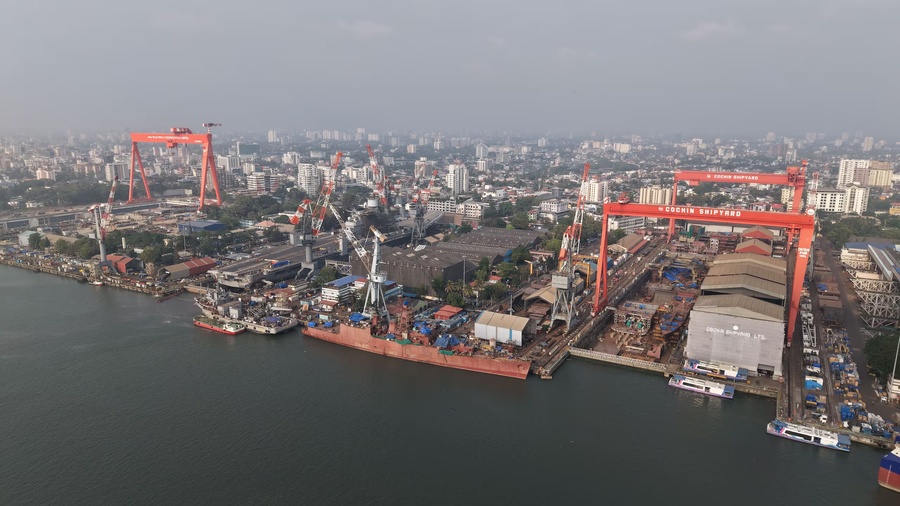
Order backlogs also remain substantial. As of the second quarter of fiscal 2026, Mazagon Dock Shipbuilders held an order backlog of 274 billion rupees, about 4.4552 trillion won. Cochin Shipyard Limited, India’s largest state-run shipbuilder and a partner of HD Hyundai, had an order backlog of 230 billion rupees, about 3.7421 trillion won.
Much of the growth is linked to naval expansion. In the last fiscal year, Garden Reach Shipbuilders & Engineers built and delivered eight warships ordered by the Indian Navy and is reported to be discussing additional contracts. India has also presented a roadmap to expand its fleet of warships and submarines from about 140 vessels to 200 by 2035.
Further orders are expected as competition in the Indian Ocean continues to intensify among neighboring countries, including China and Pakistan. The Indian Navy accounts for about 21% of total defense expenditure. Final talks are underway for three Scorpène-class submarines worth more than 100 billion rupees, about 16.24 trillion won. Projects for frigates, destroyers and landing ships are also planned, taking the scale of related projects over the next 10 years to more than 300 billion rupees, about 48 trillion won. In 2029, there is also a reported possibility of an order for a second aircraft carrier worth about 45 billion rupees, about 7.308 trillion won.
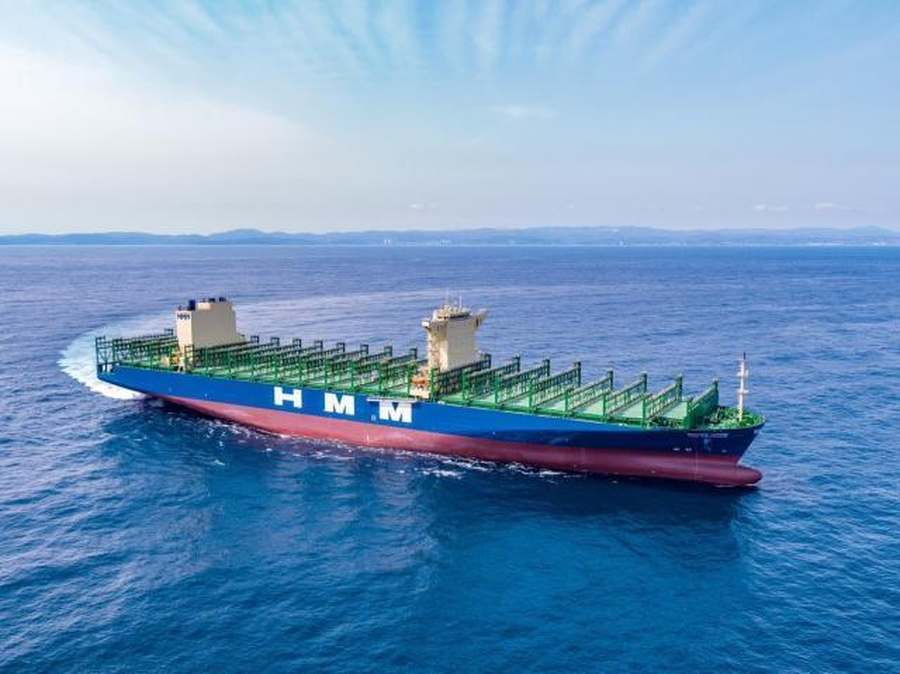
Commercial orders are rising as well. Cochin Shipyard Limited recently secured a contract worth 32.4 billion rupees, about 526.1 billion won, from CMA CGM to build six LNG container ships. HD Hyundai Heavy Industries is also said to have participated in that deal. Garden Reach Shipbuilders & Engineers is building 13 vessels for a German client, while Mazagon Dock Shipbuilders has signed memorandums of understanding with the Brazilian Navy and a French naval defense company.
Supply chain diversification is also cited as a factor behind India’s rise. As reliance on Chinese-built ships has increased, a number of countries, including those in Europe, are turning to India due to security concerns over China and India’s lower shipbuilding costs. Rodolphe Saadé, CEO of CMA CGM, said the group’s first ship order in India was intended to diversify shipyard supply chains to other countries and that India had proven it could serve as that option.
For Korean shipbuilders, India’s current global position remains limited. Last year, India accounted for 0.11% of global shipbuilding orders, ranking 17th in the world. Korea held 11.96% and China 39.32%, while Japan and the United States recorded 3.65% and 0.44%, respectively. Their market focus also differs. India is centered on smaller vessels, while Korea remains focused on larger, high-value-added ships.
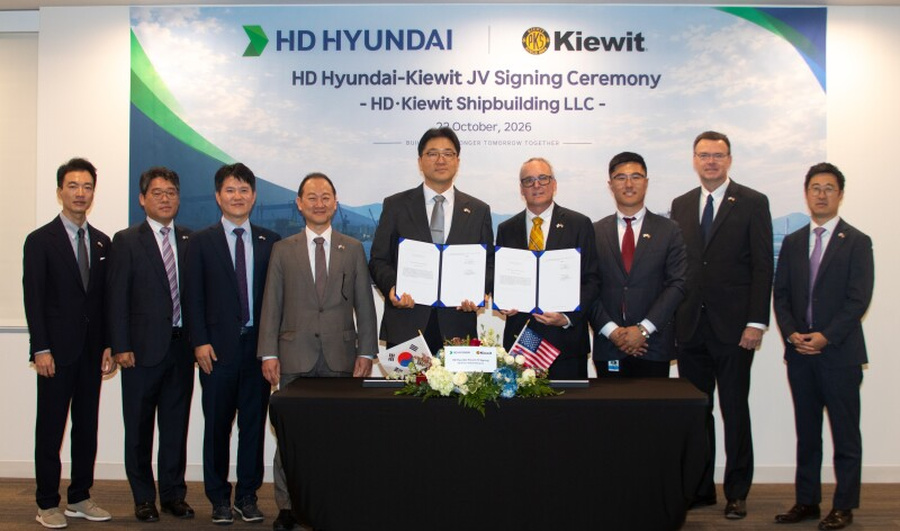
At the same time, cooperation between Korea and India is gaining pace. Last year, HD Hyundai signed an MOU with Cochin Shipyard Limited to join the Indian government’s Maritime Amrit Kaal Vision 2047 initiative. In January, Chairman Chung Ki-sun met Prime Minister Narendra Modi to discuss ways to expand cooperation. HD Hyundai is also pursuing the construction of a new shipyard in Tamil Nadu.
An industry official said India had expressed willingness to provide land equal to three to five times the size of existing Korean shipyard sites. The official added that Korean shipbuilders, facing limited production bases despite strong orders and high labor costs, could use cooperation with India to improve price competitiveness and secure new growth drivers.