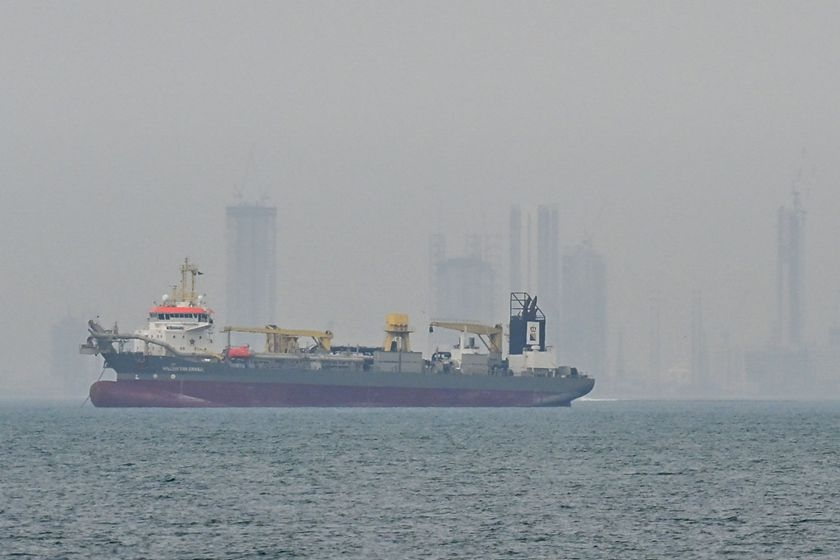
More than 1,000 vessels remain stranded across the wider Gulf region as normal commercial traffic through the Strait of Hormuz stays heavily restricted, according to the provided source.
The disruption began after hostilities broke out on 28 February. The source describes the situation as a dual blockade, with Iran said to be using mining threats, vessel boardings and toll demands to control movement through the Strait, while the United States maintains a counter blockade on Iranian ports.
The U.S. administration has framed its latest naval activity as a defensive escort mission to guide commercial vessels out of the Gulf. President Donald Trump has also warned that strikes on Iranian assets remain an option if convoys face interference.
Iran has described any expanded U.S. naval presence as a ceasefire violation. The source also says Iranian diplomats have circulated a 14-point proposal aimed at ending the conflict rather than extending the current truce.
The shipping impact remains significant. By early April, tracking data cited in the source showed close to 200 laden tankers among vessels held in or near the Gulf. A limited number of ships have since been escorted out or rerouted, but the wider backlog has changed little.
Insurance costs have also escalated. War risk premiums for Hormuz transit are reported to have risen to as much as 20 times pre-conflict levels, making some voyages commercially difficult even under military escort.
Cargo owners are facing rising demurrage charges, while rerouting container and general cargo flows away from Gulf-linked Asia-Europe services is adding transit time, fuel costs and strain on alternative corridors.
The source notes that the Strait of Hormuz carries a major share of global crude oil and LNG exports, leaving energy markets exposed to each convoy disruption, nearby attack or diplomatic setback.
Talks mediated by Pakistan and other back channels have produced only a fragile partial ceasefire so far. Washington is said to be seeking nuclear-related concessions and limits on Iran’s regional military activity, while Tehran is seeking a wider settlement within 30 days.
For shippers, the near-term outlook remains difficult while the dual blockade continues. Vessel queues, insurance costs and schedule disruption are likely to remain under pressure unless maritime access through the Strait improves.