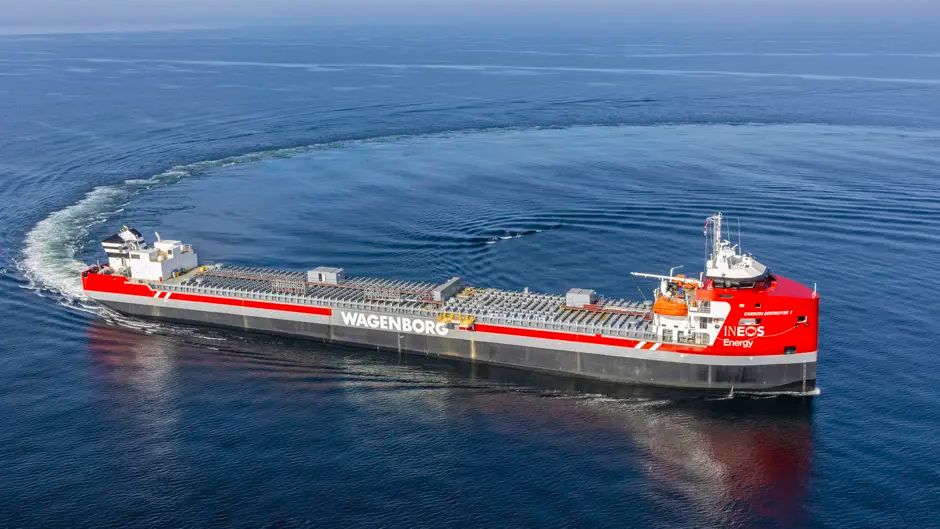
Carbon Destroyer 1 has completed two sea trials in the North Sea and departed Delfzijl, clearing the way for the vessel’s next phase ahead of service in Denmark.
The Wagenborg-operated ship is being readied for deployment on Project Greensand, led by INEOS Energy. After final inspections and operational preparations, the vessel will sail to Esbjerg for the last stage of commissioning alongside the project’s onshore and offshore systems. Once in operation later this year, it will begin regular shuttle runs between Denmark and the Nini field, Denmark’s first operational offshore CO₂ storage site.
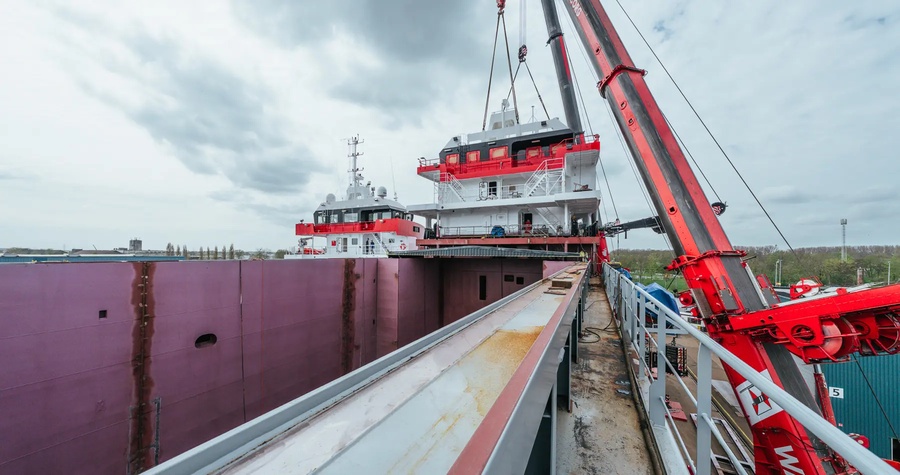
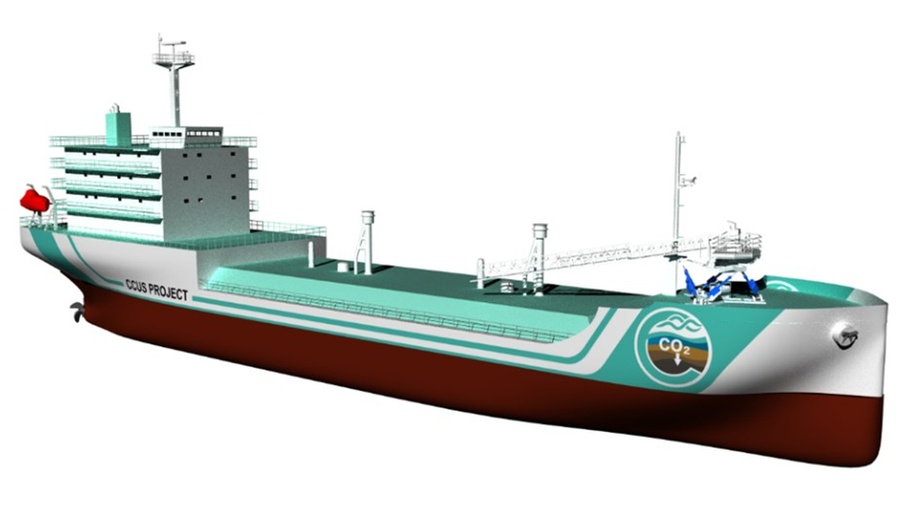
Built by Royal Niestern Sander, the 149.9 m DP2 CO₂ carrier was designed specifically for offshore CO₂ transport. It will shuttle between Esbjerg and the Nini field and support safe offshore positioning during CO₂ transfer operations, reflecting an important step in expanding carbon capture and storage infrastructure in the North Sea.
The sea trials were carried out off the Dutch coast to verify propulsion, manoeuvrability, DP2 performance and the operation of onboard systems and equipment. The programme also confirmed that the vessel’s dual-role concept worked as intended, combining offshore station-keeping with tanker-grade cargo management. During the trials, the DP2 system maintained position within the required tolerances, while the vessel showed stable behaviour under changing weather and load conditions up to the design thresholds.
With a cargo capacity of about 5,000 tonnes of liquefied CO₂ and a 36-hour shuttle cycle, Carbon Destroyer 1 will be able to transport around 600,000 tonnes per year. That gives the vessel a central operational role in supporting industrial-scale offshore CO₂ storage.
The ship represents a new vessel segment. Unlike conventional tankers, its design is based on the thermodynamic behaviour of liquefied CO₂, requiring specialised tanks, integrated safety zones and a high-redundancy energy and propulsion arrangement. Cargo handling, DP2 positioning, energy supply and control systems were developed as one integrated system.