Purpose-built CO2 carriers are continuing to emerge as carbon capture and storage projects move into commercial operation and prepare additional capacity. The new vessel segment is being developed to support the transport of captured CO2 to offshore storage sites.
Northern Lights was the first project to enter the segment, beginning commercial operations in 2025. The partnership between Equinor, Shell, and TotalEnergies was launched with an initial capacity of 1.5 million tonnes per year and has already announced expansion plans. It also became the first cross-border project, securing commercial contracts with Yara in the Netherlands, Ørsted in Denmark, Stockholm Exergi in Sweden, and Inherit in Norway.
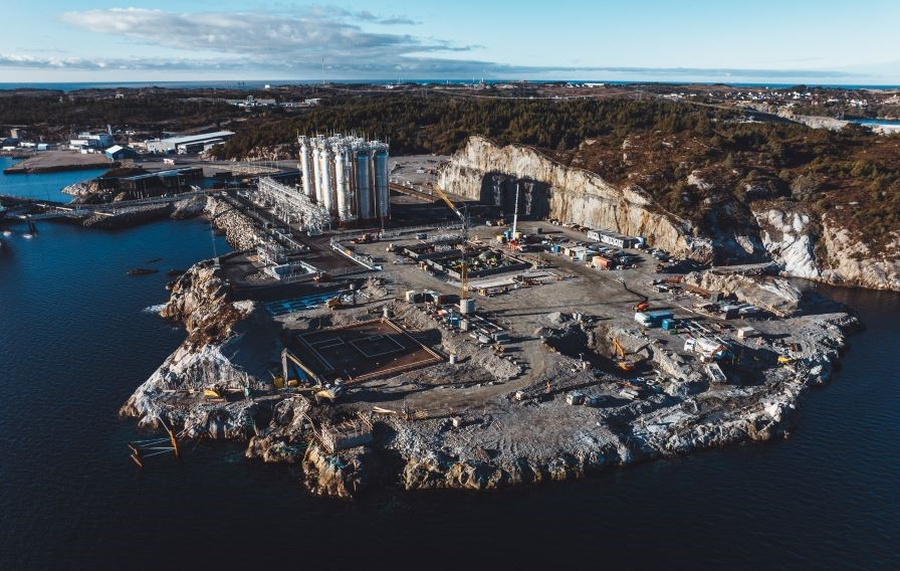
On 9 April, the project named its third vessel, Northern Phoenix, a 7,500 cbm gas carrier on long-term charter from Bernhard Schulte. The ships transport CO2 to the company’s facility in Norway, where it is prepared and then pumped offshore into permanent storage in a reservoir 2,600 m below the seabed. The first vessels are fueled by LNG and include a rotor for wind-assisted propulsion.
In the second phase, the project plans to expand capacity to 5 million tonnes of CO2 per year by 2028. To support that step, it announced new partnerships in January with Kawasaki Kisen Kaisha, MISC Berhad, and Mitsui O.S.K. Lines. MISC Berhad ordered one ship and plans a second, while Mitsui O.S.K. Lines is linked to two ships. The first three new vessels will each have a capacity of 12,000 cbm and are expected to enter service between the second half of 2028 and the first half of 2029.
The next entrant is nearing final commissioning for use in the offshore storage effort under Project Greensand, which is being developed by INEOS Energy in Denmark. The vessel is being developed by Royal Wagenborg. Named Carbon Destroyer 1, it was designed to shuttle between Esbjerg in Denmark and the Nini Fields on a 36-hour cycle.
The vessel is 150 m long and has cargo capacity for 5,000 t of liquefied CO2, giving it the ability to handle about 600,000 tonnes of CO2 per year. It is described as a DP2 CO2 carrier and is equipped with dynamic positioning to connect directly to the storage site. It also has tanks designed with consideration for the thermodynamic behavior of liquefied CO2.
Built by Royal Niestern Sander, Carbon Destroyer 1 recently completed sea trials off the Dutch coast. The trials covered propulsion, maneuverability, DP2 system performance, and onboard equipment. The vessel has now arrived in Port Esbjerg for final commissioning and is expected to enter service later this year.
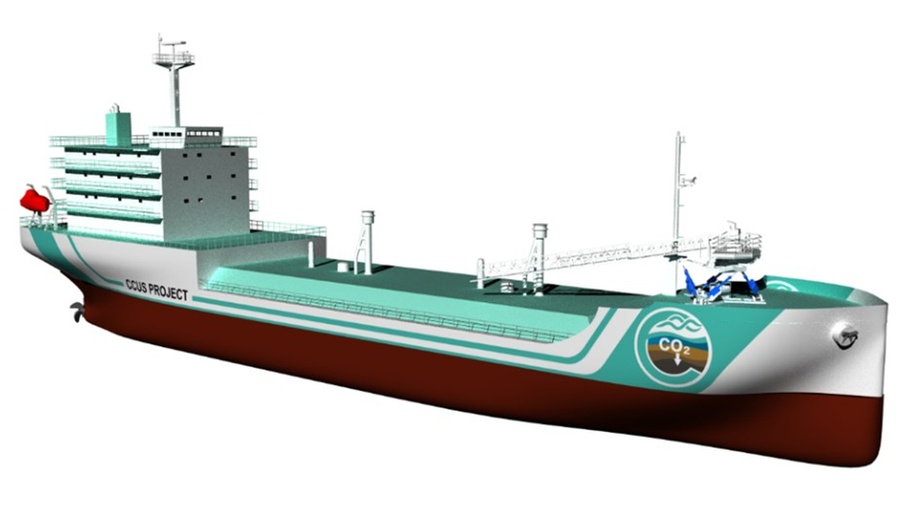
Japan is also supporting a project intended to demonstrate undersea CO2 storage while encouraging development of the related supply chain in line with its 2050 net-zero target. At the end of March, Shin Kurushima Sanoyasu Shipbuilding reported that it had received Approval in Principle from ClassNK for its CO2 transport vessel concept.
The concept links the ship with a Socket SPAR structure at the storage site. The vessel design is similar to offshore support vessels and includes large gangways so the crew can access the Socket SPAR structure. The ship would connect to the structure to pump CO2 for injection. The shipyard said the approval covered the vessel itself and noted that it is an important part of Japan’s CCS development efforts.
This new shipping segment is continuing to develop as demand for CO2 transport and storage is expected to increase. According to the source, scientists project that about 1 billion tonnes of CO2 per year will need to be captured and transported for storage to support net-zero emissions by 2050.