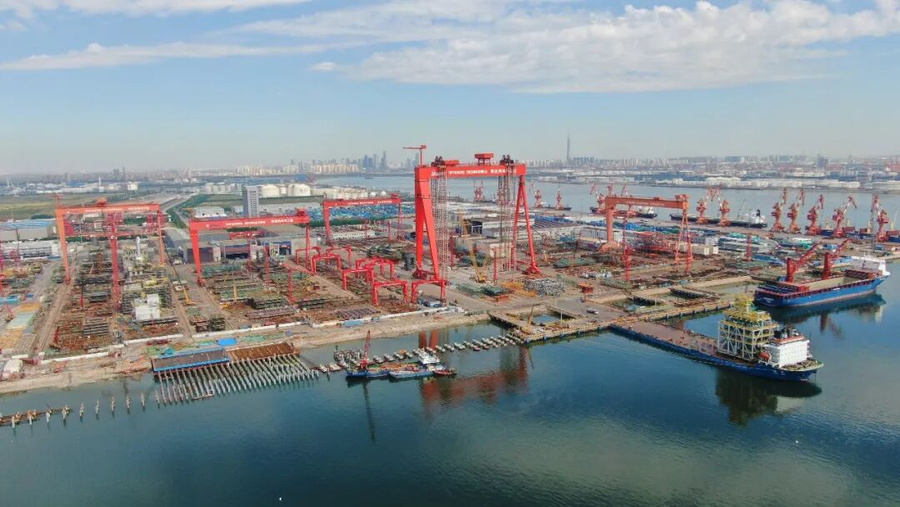
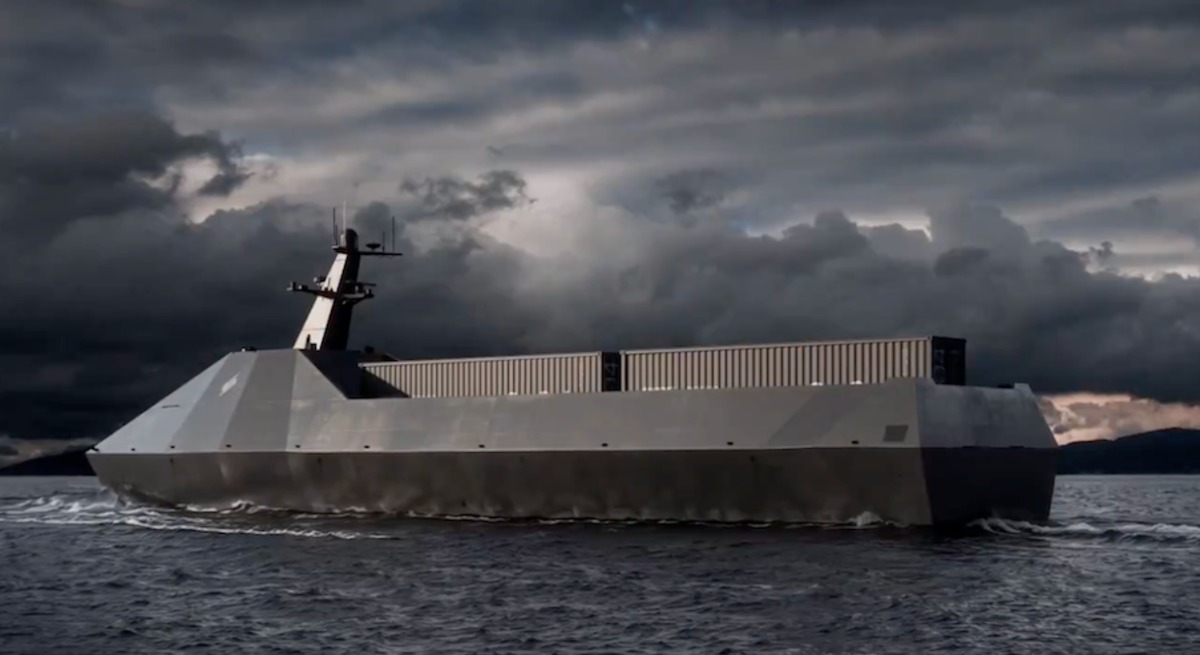
Saronic has selected Samsung Heavy Industries as its production-technology partner for the autonomous vessel company’s planned $3.3 billion shipyard in Brownsville, Texas.
The selection follows Saronic’s announcement earlier this month of plans to develop a facility that could become the largest shipyard in the United States. The Austin-based company identified waterfront space, workforce availability, infrastructure and logistics as factors behind its choice of Brownsville.
Under the partnership, Samsung Heavy Industries and Saronic will collaborate on production infrastructure, including robotics-based process automation at Saronic’s shipyards.
The companies will combine Saronic’s autonomous vessel expertise and relationship with the U.S. Navy with Samsung Heavy Industries’ experience in large-scale shipbuilding and industrial production.
Saronic plans to use automation to reduce costs and accelerate vessel production. The company has previously examined robotic welding partnerships. South Korean shipbuilders have developed both fixed production-line systems and portable robotic welders for mobile operations.
Samsung Heavy Industries has tested multiple robotic welding technologies, including a spider-shaped wall-climbing robot developed by the Korea Advanced Institute of Science and Technology. Samsung Electronics, another Samsung Group company, is also the majority owner of Rainbow Robotics.
Dino Mavrookas, co-founder and CEO of Saronic, said the companies would focus on expanding American shipbuilding capacity, training workers and producing autonomy-capable vessels for government and commercial applications.
Saronic is one of seven contractors approved to participate in the next round of the U.S. Navy’s Medium Unmanned Surface Vessel development programme. It is the only approved contractor identified in the source as having a South Korean industrial partner.
The agreement comes as the United States and South Korea expand cooperation in shipbuilding. Following trade talks last year, Seoul committed to invest $150 billion in the U.S. shipbuilding industry over an extended period.
On 23 July, Korean Minister of Trade Kim Jung-Kwan and U.S. Secretary of Commerce Howard Lutnick attended the launch of the Korea-U.S. Shipbuilding Partnership Center in Washington, D.C. The centre will coordinate South Korean investment in U.S. shipbuilding research, workforce training and supply chain improvements.