AAL Shipping is marking 30 years of operations with continued investment in new multipurpose heavy lift tonnage, workforce development and digital systems as project cargo markets face unstable cargo flows, regulatory pressure and geopolitical disruption.
The company said its 2025 Sustainability Report highlights progress in its third-generation Super B-Class vessel programme, stronger operational capability and enhanced reporting standards. For project cargo customers, the focus is on building long-term capacity at a time when cargo sizes are increasing, schedules are tightening and execution risk remains difficult to manage.
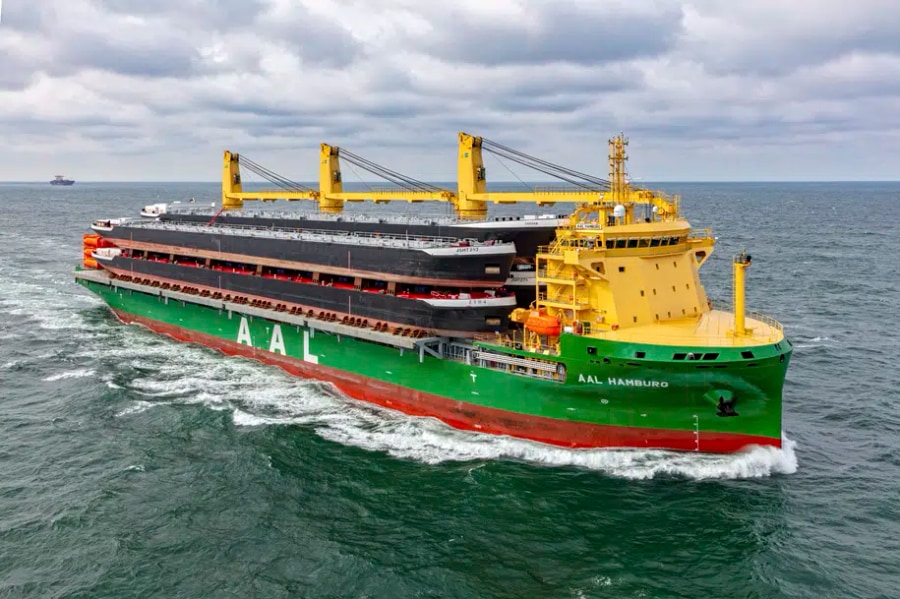
The Super B-Class programme is central to this approach. The vessels are designed to carry more cargo, improve fuel performance and support future fuel flexibility. In project shipping, additional deck space and lifting options can directly affect whether cargo moves within the planned window.
AAL Shipping said the new vessels have already increased cargo intake per voyage and helped deliver a 19% improvement in the company’s fleet-wide Energy Efficiency Operational Indicator since 2023.
The investment comes as heavy lift operators face rising expectations from customers and regulators. Energy, infrastructure, mining and industrial projects require reliable transport capacity, while cargo owners increasingly seek lower emissions, clearer data and stronger reporting.
The Super B-Class ships are built for breakbulk and oversized project cargo, with heavy lift capability and larger deck capacity. Earlier details released by AAL Shipping described AAL Houston as a 32,000 dwt dual-fuel multipurpose heavy lift vessel equipped with three port-side cranes offering a maximum lifting capacity of 700 tonnes. The vessel is designed to carry up to 90,000 freight tonnes of project and breakbulk cargo.
The company also continued to invest in digital and machine learning-based systems for vessel performance monitoring, voyage optimisation and fuel efficiency management. These tools are intended to support decision-making, improve fleet reliability and provide better visibility across AAL Shipping’s global trading network.
For project logistics teams, operational data is becoming a practical requirement. Accurate information on fuel use, vessel performance and voyage planning can reduce uncertainty in complex heavy lift movements.
The report also showed continued workforce expansion, with employees representing 21 nationalities across the company’s operations. AAL Shipping said it kept investing in training, professional development and employee wellbeing.
Despite greater use of digital tools, heavy lift execution still depends on experienced people who understand cargo behaviour, port restrictions, engineering limits and customer requirements.
In 2025, AAL Shipping also strengthened its sustainability reporting framework by aligning disclosures with Global Reporting Initiative standards and including elements of the European Sustainability Reporting Standards. The company is not currently subject to mandatory reporting under the European Union’s Corporate Sustainability Reporting Directive, but said it views these frameworks as benchmarks for transparency, accountability and long-term resilience.
Cargo owners are increasingly asking carriers for emissions data, governance information and sustainability metrics. For operators serving industrial and energy transition projects, reporting quality is becoming part of the service offering.
Kyriacos Panayides, chief executive of AAL Shipping, said the company’s 30-year history has shown the importance of investing beyond short-term market cycles. He said AAL Shipping continues to invest in vessels, people, technology platforms and governance frameworks to strengthen its services and create value for customers.
He added that these investments are designed to keep the company positioned for future requirements as global supply chains become more complex and project logistics demand continues to grow.
Over three decades, AAL Shipping has developed from a regional operator into a global project cargo and heavy lift carrier. Its latest report points to a next phase built around vessel capacity, operational data, workforce capability and sustainability reporting.