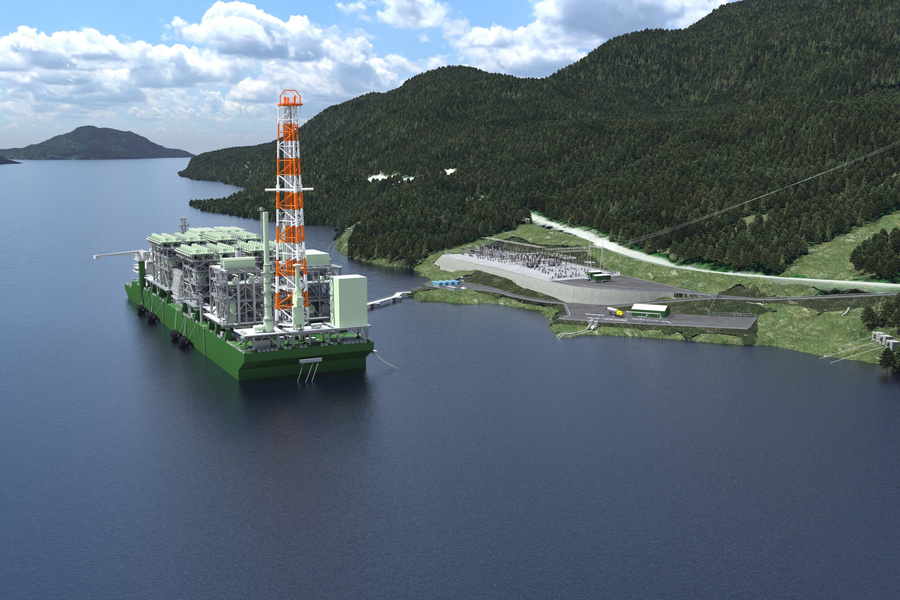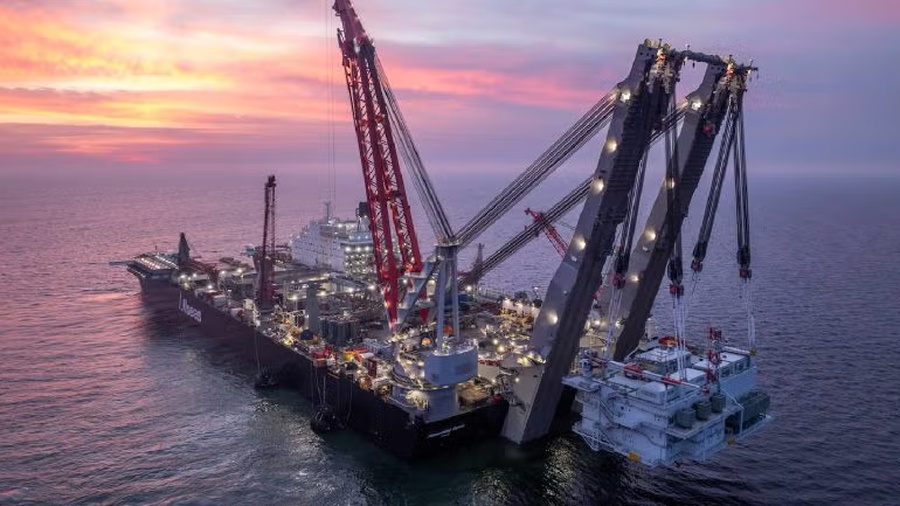
Sarens is carrying out transport, jacking and marine logistics support at the Ridley Island Energy Export Facility (REEF) near Prince Rupert, British Columbia, for client AltaGas.
The facility is being developed to connect Canadian LPG to global markets. Once complete, REEF will have storage capacity of 600,000 barrels, or approximately 48,700 tonnes, of propane and butane.
To date, Sarens has offloaded and installed three 2,532-tonne LPG accumulators, two 700-tonne LPG bullets and 122 pipe rack modules. Of the modules, 85 were transported by vessel and 37 by road.
The work has taken place in difficult coastal conditions near Alaska, including swells and waves often exceeding 10 m, winter temperatures averaging 3–4°C, and frequent rain. Equipment manufactured outside Canada was brought to the site by sea.
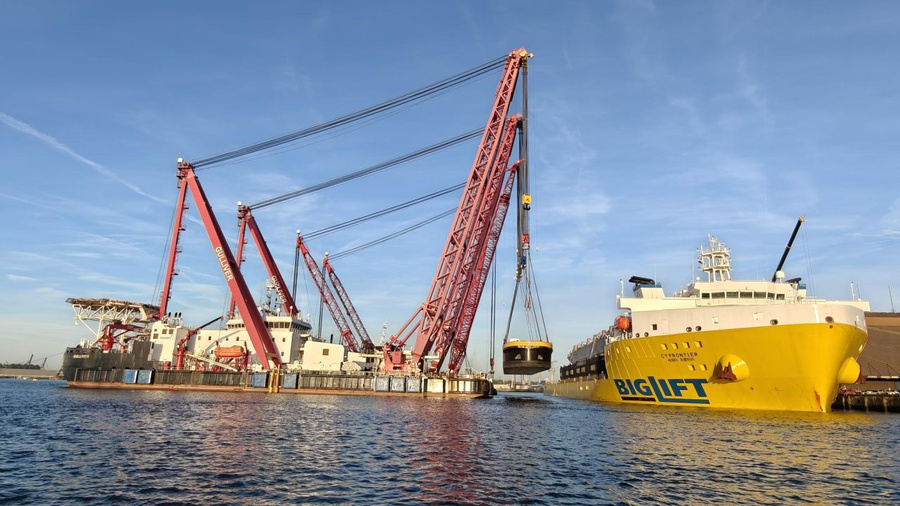
For the operations, Sarens used 96 axle lines of SPMTs and a CS250 crane. The team transported equipment and modular pipe racks under the hook, jacked down the accumulators and bullets onto their foundations, and supported other heavy transport at the facility.
Each LPG accumulator measured 27.5 m wide and 36 m tall. Sarens moved the units more than 3 km from the jetty to their final foundations before lowering them 2.5 m using a CS250 crane and 16 jacks.
The company has also installed the first two spans of a 13-span pipeline section being built to connect super-tankers to the plant. Span 1 weighed 400 tonnes and measured 71 m long, while Span 2 weighed 358 tonnes and measured 66 m long.
For Span 2, Sarens used two 11-axle-line SPMT units placed on a barge with a frame to receive the span from a heavy lift vessel in deeper water. The barge was positioned between the two foundations, and the crew used the tide and SPMTs to install the span. Span 1 was lifted from the vessel onto a double-15 SPMT configuration, transported 3 km, and installed by crane.
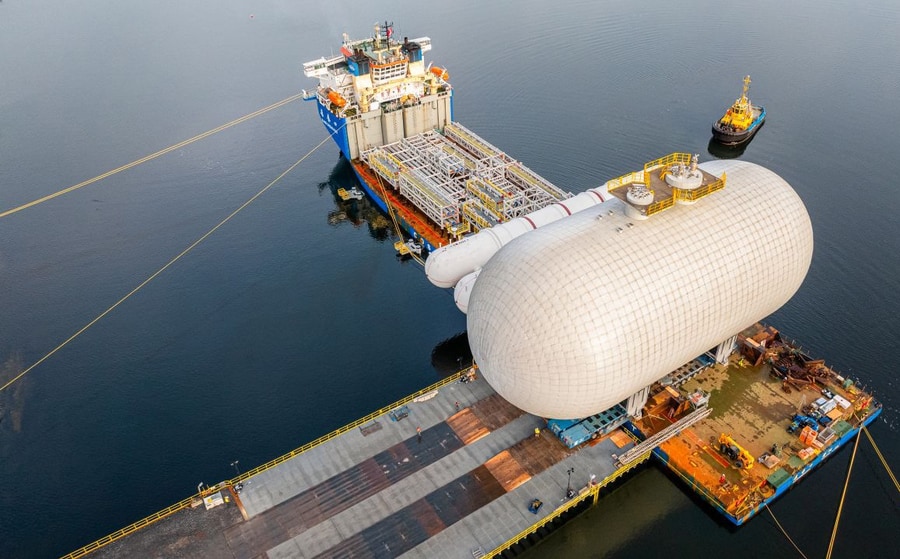
Sarens also transported and installed the two LPG bullets, each weighing 700 tonnes and measuring 62.5 m long and 8.7 m high. Because the units overhung the vessel, they were secured on a 4.5 m-high grillage to avoid contact with the quayside during the tide cycle. The crew placed 2.9 m of packing beneath three temporary saddles, then jacked down the bullets, transported them more than 2 km through a working container yard, and installed them on their foundations.
The current site work is nearly complete. Sarens expects to receive a final heavy lift vessel carrying two accumulators and 11 modules in the coming year. Ground work has also started on a facility expansion, which is expected to add another bullet and about 25 modules in summer 2026, followed by an additional accumulator in 2027.