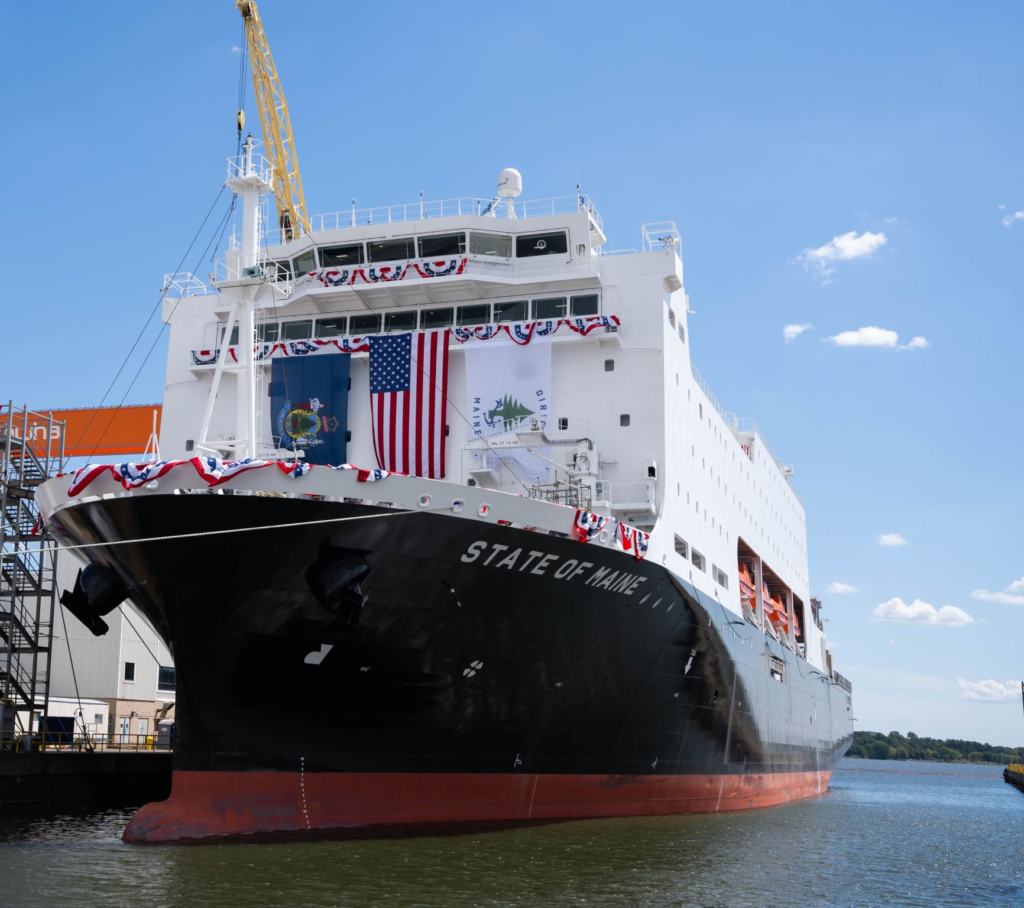
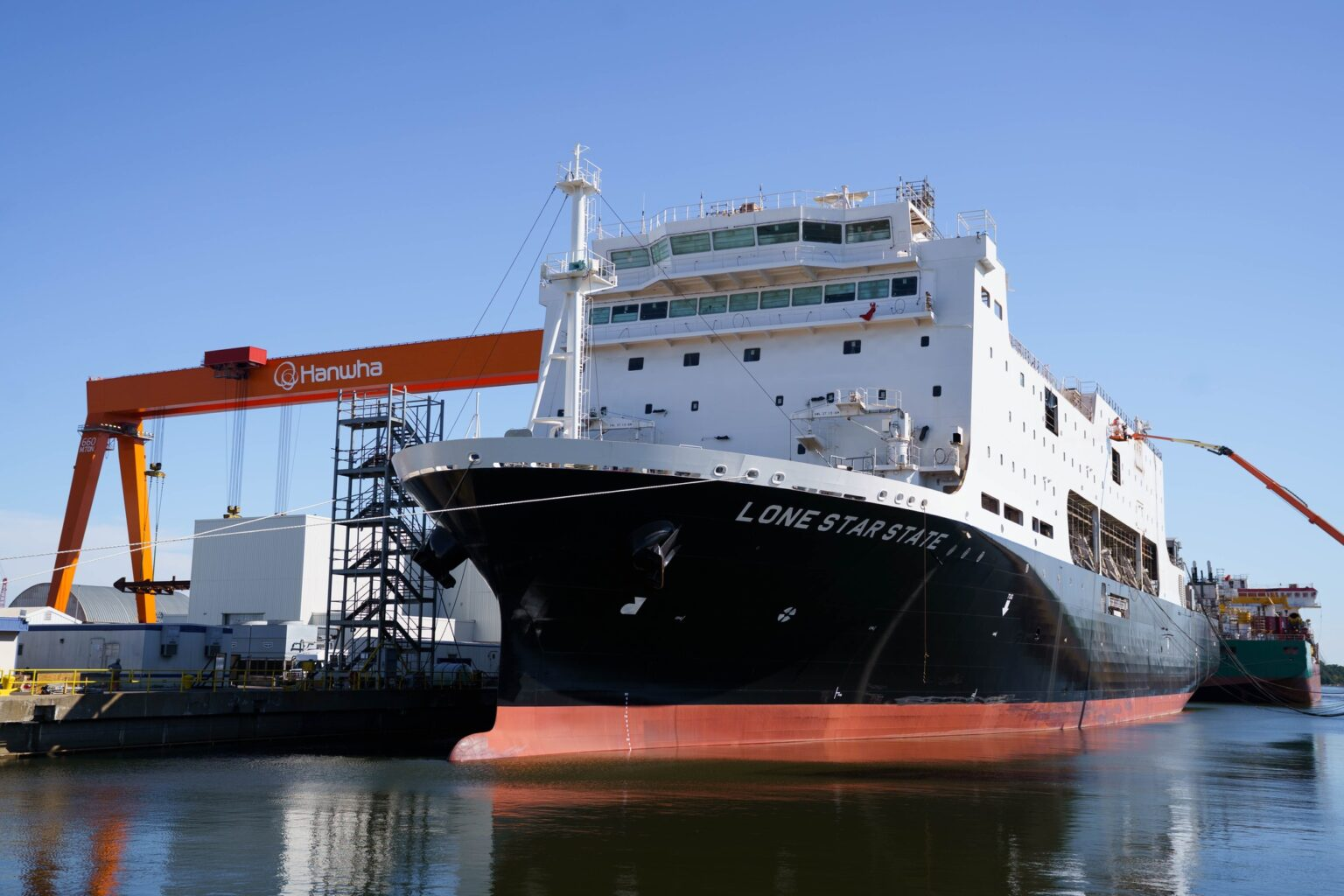
CBS program 60 Minutes and recent industry coverage have both put new attention on U.S. shipbuilding, with Hanwha Ocean’s investment in Philadelphia emerging as a central example in the discussion over output, cost and workforce capacity.
The broadcast focused on Hanwha Ocean’s 2024 acquisition of Philly Shipyard for $100 million. During the program, Lesley Stahl said the South Korean president had proposed a $150 billion investment to support the revival of U.S. shipbuilding and described Philadelphia as the beginning of that effort.
David Kim, chief executive of Hanwha Philly Shipyard, said the Philadelphia yard delivers about one to 1.5 ships a year, while the company’s yard in Geoje in South Korea delivers about one ship a week. He said the goal is to raise output in Philadelphia to as many as 20 ships a year.
The plan also includes workforce expansion from 7,000 to 10,000 through training programs, as the U.S. shipbuilding sector continues to face shortages of skilled workers such as welders and pipefitters. Michael Coulter of Hanwha Aerospace’s U.S. business said building more ships would lower per-ship production costs.
Industry coverage said the scale gap extends beyond annual output. It reported that ships built in Asia in about six months can take twice as long in the United States and cost up to five times as much, while longer build times, higher costs and reliance on imported components continue to weigh on competitiveness.
Coulter also said the company had proposed to the U.S. government that submarines could be built in Philadelphia if requested. He further pointed to the lack of U.S.-built LNG carriers, saying the United States exports LNG globally but does not have compliant ships to move that cargo between its own ports under Jones Act rules. Industry coverage also noted that the U.S. does not build LNG carriers.
The industry report said the current debate is tied to a broader policy push in Washington. It noted that shipbuilding has been placed within the Trump administration’s maritime agenda, while the U.S. Trade Representative’s Section 301 investigation had concluded that China’s state-backed support for shipbuilding and maritime logistics had distorted competition and weakened U.S. capability.
The same report also cited Stephen Carmel, who said maritime strength depends on a wider system that includes cargo, logistics networks, ports, finance, industrial policy and workforce development, rather than shipyards alone.
Against that backdrop, the Philadelphia yard has become a closely watched part of the U.S. shipbuilding discussion, as policymakers and industry participants look at whether higher output, workforce training and production modernization can lift domestic capacity.