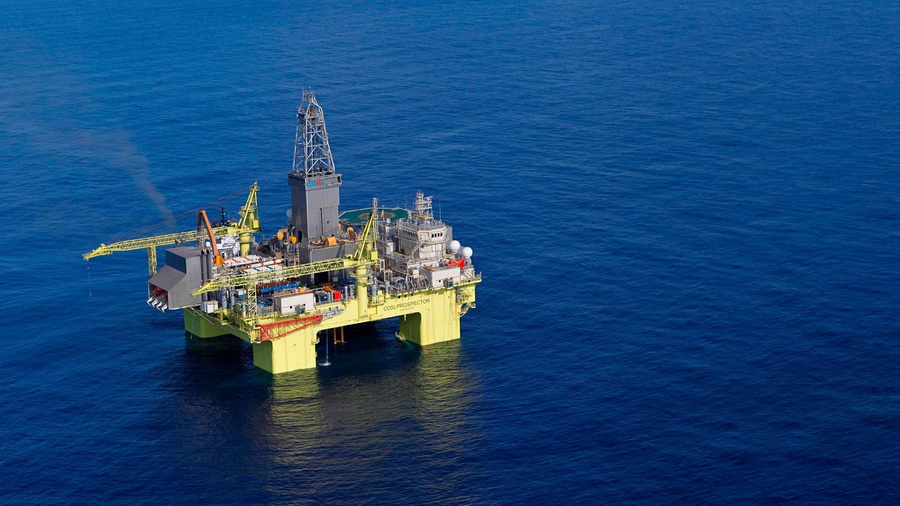
Vår Energi and Equinor have made the Lakris gas discovery in the Norwegian Sea, where preliminary estimates put recoverable gas and condensate resources at 1.3–5.5 million barrels of oil equivalent. The Norwegian Offshore Directorate announced the discovery on 19 October 2026.
The discovery came from wildcat well 6407/5-3 S, the first exploration well in production licence 1002. Vår Energi operates the licence with Equinor as its partner. The Lakris prospect lies in the Gimsan Basin on the Halten Terrace, roughly 170 kilometres northwest of Kristiansund.
Gas and condensate were found within 54 metres of heterolithic reservoir rocks in the upper Tilje Formation. Reservoir quality ranged from moderate to poor, and drilling did not establish the gas/water contact. The lower Tilje interval showed indications of hydrocarbons.
The well targeted the Nise Formation and Lower Jurassic reservoirs in the Tilje Formation. No sandstone reservoir was found in Nise, although gas readings were elevated. Investigations of the Garn, Ile and Tofte formations found water-bearing intervals, also with reservoir quality ranging from moderate to poor.
The semi-submersible rig COSL Prospector drilled the well in water 218 metres deep. Drilling ended in Lower Jurassic rocks, reaching 4,225 metres vertically beneath sea level. Data acquisition and sampling were carried out without a formation test. Permanent plugging and abandonment will follow.
The directorate also expressed its preliminary recoverable resource estimate as 0.2–0.9 million standard cubic metres of oil equivalent. Production licence 1002 was granted on 1 March 2019 through the APA 2018 round.
The discovery follows an earlier exploration collaboration between Equinor, Aker BP and Vår Energi aimed at finding major hydrocarbon resources on the Norwegian Continental Shelf.