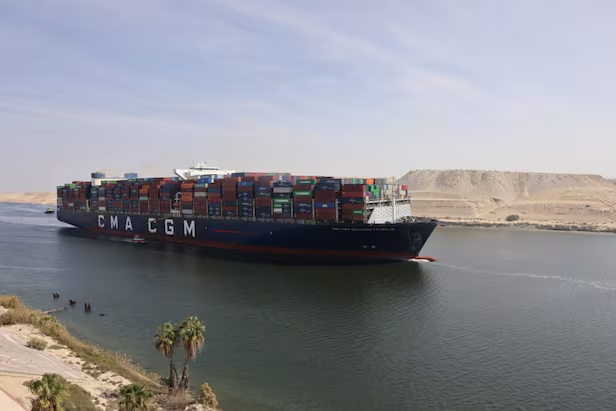
Suez Canal Authority will increase temporary transit surcharges for most vessel classes from 15 July, raising costs for tankers, gas carriers, bulk carriers and containerships using the canal.
The revised fees will apply to vessels beginning transit on or after 15 July. The Egyptian canal operator said the changes reflect current maritime market conditions and may be amended or canceled depending on future developments.
Crude oil carriers and petroleum product tankers will see the sharpest rise. Laden vessels in both categories will pay a 37% surcharge on normal canal dues, up from 25%. Ballast vessels will face a 27% surcharge, compared with 15% previously.
LPG carriers and chemical tankers will move to a 32% surcharge from 20%, while LNG carriers will pay 19%, up from 7%.
Dry bulk carriers will see their surcharge increase to 22% from 10%. Containerships will be charged 12%, while the existing tier-based system for container vessels will remain unchanged.
General cargo, heavy-lift, ro-ro and other vessel categories will pay 26%, up from 14%. Vehicle carriers will face a 26% surcharge on northbound voyages and 12% on southbound transits.
Passenger ships are the only vessel category excluded from the latest adjustment.
The temporary surcharges are applied on top of standard canal dues. The permanent base tariff remains unchanged and has not been adjusted since 2024.