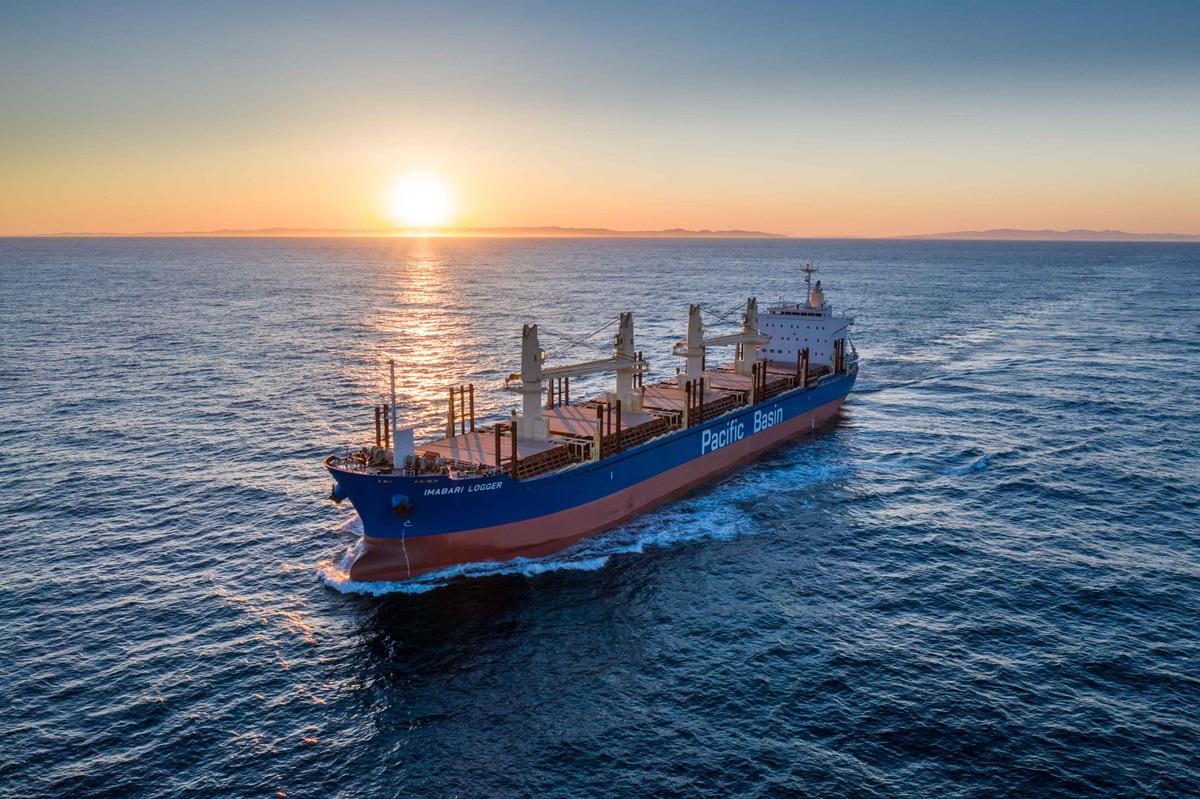
Hong Kong–based dry bulk carrier operator Pacific Basin Shipping announced it will relocate its strategic management functions to Singapore and reflag roughly half of its fleet under Singapore registry. The decision, disclosed during an online earnings briefing on October 16, aims to mitigate exposure to the newly introduced U.S. port entry fee system targeting companies based in China, including Hong Kong and Macau.
Chief Executive Martin Fruergaard said the shift allows Pacific Basin to designate Singapore as its “effective headquarters,” thereby avoiding potential restrictions under the U.S. classification of “Chinese shipowners.” Under this rule, firms with at least 25 % ownership or directorship links to China, Hong Kong, or Macau are subject to reciprocal port fees. A similar 25 % threshold now applies under China’s new policy toward U.S.-linked companies.
Pacific Basin reduced the ratio of U.S.- and China-based executives below the 25 % level to comply with both regimes, confirming that no shareholders from either side exceed the threshold. Fruergaard added that the Singapore entity will manage all contractual operations to ensure regulatory compliance.
As of September 2025, Pacific Basin’s controlled fleet comprised 121 vessels—108 owned and 13 on long-term charter. The company plans to renew its fleet with four methanol dual-fuel Ultramax bulkers to be delivered from Japan starting in 2028, alongside two new chartered vessels in 2026.
About 70 % of Pacific Basin’s vessels are Japanese-built, which Fruergaard credited for their fuel efficiency and long-term asset value. While the company prefers Japanese-built ships for its core fleet, it will continue to charter Chinese-built vessels where commercially appropriate.
The CEO expects sustained demand for grain and minor bulk cargoes, while coal shipments are projected to decline structurally. With new ship deliveries peaking in 2025 and International Maritime Organization (IMO) rules tightening from 2026, Fruergaard warned of effective supply constraints in the dry bulk market. He also noted that U.S.-China reciprocal port fees could further restrict vessel availability and lift freight rates in the near term.
Source: The Japan Maritime Daily (JMD)