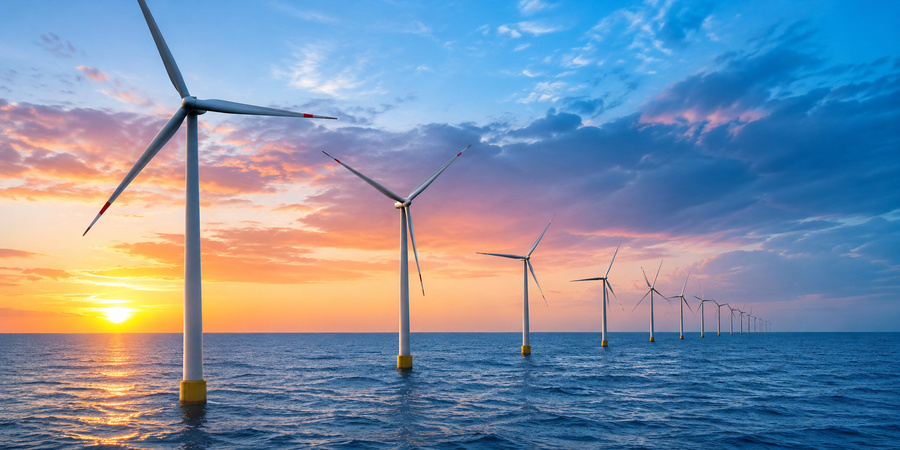
The Netherlands launched the IJmuiden Ver Gamma offshore wind tenders on 26 November 2026, opening competition for the development of two 1 GW wind farms in the North Sea.
The application window runs until 10 December, with developers able to pursue permits either through a subsidy-free auction or under a government financial support scheme.
Both procedures will run in parallel, but the Netherlands Enterprise Agency (RVO) will give priority to subsidy-free applications. Among eligible bids submitted without a request for financial support, the highest monetary offer will receive the top ranking.
If no qualifying subsidy-free application is received, RVO will assess bids seeking government support, ranking applicants according to the lowest subsidy requested.
The Netherlands Enterprise Agency has set the maximum subsidy budget for Gamma-A at €4.758 billion, with a maximum tender amount of €117/MWh. For Gamma-B, the corresponding limits are €4.698 billion and €116/MWh.
Financial support will be available through the Temporary Support Mechanism for Offshore Wind Energy (TOWOZ), following European Commission approval of the Dutch state aid scheme.
TOWOZ serves as an interim arrangement ahead of the Dutch government’s planned introduction of a contract for difference (CfD) model for offshore wind from mid-2027.
Gamma-A and Gamma-B will share an offshore energy platform for their grid connections.
RVO expects to issue the permits in the first quarter of 2027. Both wind farms are expected to become operational in 2032.