The KEPCO WTIV project faces growing uncertainty after Korea Electric Power Corporation (KEPCO) reportedly suspended its feasibility study contract, while private companies pursue the acquisition of large wind turbine installation vessels for South Korea’s offshore wind market.
According to a 23 November 2026 report by South Korean newspaper Asia Today, the utility suspended the study contract on 29 October. An application for a preliminary feasibility study has yet to be submitted, leaving the original target of deploying the vessel in 2029 uncertain.
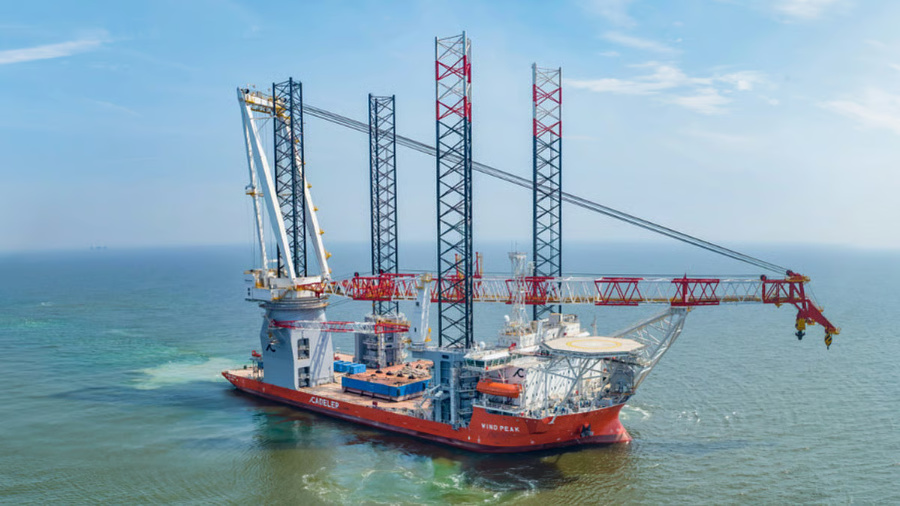
Meanwhile, South Korean private-sector companies are pursuing the introduction of around four vessels capable of installing offshore wind turbines rated at 15MW or above.
The prospective additions include a WTIV planned for domestic offshore wind developments by Hanwha Ocean, two newbuilds under construction at Chinese shipyards and a vessel previously exported to Denmark.
Domestic shipping companies are also examining opportunities to acquire second-hand installation vessels overseas. The deployment of Chinese-built vessels in domestic projects would require compliance with South Korean vessel registration and applicable regulatory requirements.
However, the proposed acquisitions could be delayed or abandoned depending on the progress of domestic offshore wind developments.
The public-sector WTIV proposed by KEPCO was designed to accommodate 15–20MW turbines, with an estimated construction cost of KRW700 billion and a shipbuilding period of 36–42 months.
The investment was intended to support an increase in South Korea’s annual offshore wind installation capacity from 1.75GW in 2028 to 2.5GW in 2029.
KEPCO initiated its feasibility assessment in June 2025, targeting an investment decision by the end of 2026. Since August 2026, the utility has been reviewing project construction schedules, turbine installation requirements and private-sector vessel acquisition plans to assess whether sufficient work would be available.
The Korea Ocean Business Corporation (KOBC) has reportedly not entered detailed financing discussions, maintaining that an investment decision by KEPCO must precede any assessment of funding arrangements.
Industry representatives have raised concerns that the absence of a publicly owned WTIV could leave offshore wind developers more dependent on private vessel availability and charter terms, particularly when installation schedules overlap.
Conversely, a South Korean government official reportedly raised concerns about potential excess installation vessel capacity if both public and private acquisition programmes proceed.
Industry sources also identified vessel operating experience and the recovery of investment costs as considerations for the utility.
KEPCO has not established a timetable for its final investment decision, and no formal cancellation of the vessel project has been confirmed.