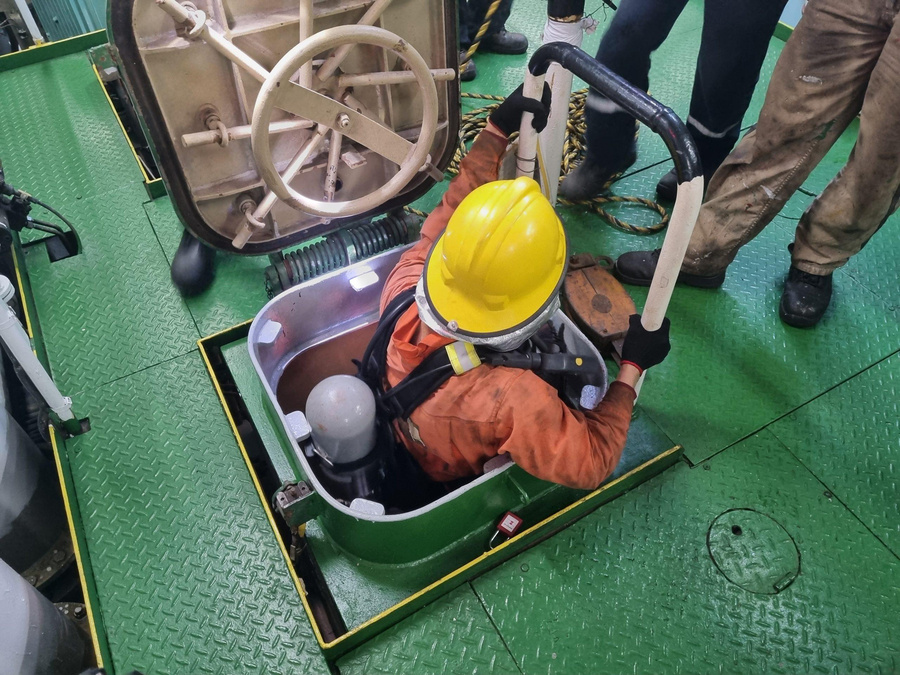
InterManager is seeking changes to enclosed space safety procedures and training following a survey that received responses from over 900 seafarers, Marine Log reported. The findings raised questions about whether crews have sufficient resources to carry out the procedures required of them.
According to the report, respondents identified complicated documentation, staffing constraints, limited time, commercial demands and gaps in practical instruction. They also questioned whether inspections test the effectiveness of precautions or place excessive weight on documentary compliance.
The association wants seafarers involved in developing the systems they use, supported by practical instruction throughout their careers. Its proposals include repeated drills, refresher courses, dependable gas detectors and rescue arrangements suited to conditions aboard ship.
InterManager secretary general Captain Kuba Szymanski said procedures should be judged against the personnel, equipment and time available to carry them out. He argued that shortcomings in those resources should prompt changes to the system rather than blame directed at individual seafarers.
Marine Log reported that InterManager had documented 354 enclosed space accidents during 1996–2026. The records cover bulk carriers, tankers, passenger ships, general cargo vessels and containerships, among other vessel categories.
Technology and ship design are also part of the association’s proposals. Wearable gas detectors, electronic entry permits, hands-free communications and remotely controlled inspection equipment could reduce personnel exposure. InterManager also pointed to equipment positioning, better coatings and more durable piping as ways to reduce the frequency of entry into hazardous compartments.
The association called for more effective accident reporting and information exchange. It warned that investigations leaving questions unanswered, together with delayed publication of findings, obstruct the sharing of lessons between operators.
The International Maritime Organization adopted revised enclosed space entry recommendations on 27 June 2025 through resolution MSC.581(110). The recommendations address hazard identification, risk assessment, entry procedures and planned rescue responses. Separately, gCaptain reported that enclosed space training is among the subjects under consideration in the broader review of the STCW Convention.
InterManager and The Nautical Institute are scheduled to discuss the survey at a joint webinar on 27 October 2026 at 10:00 GMT, according to Marine Log. Specialists in maritime safety and human factors will examine changes needed aboard vessels and within shore management.