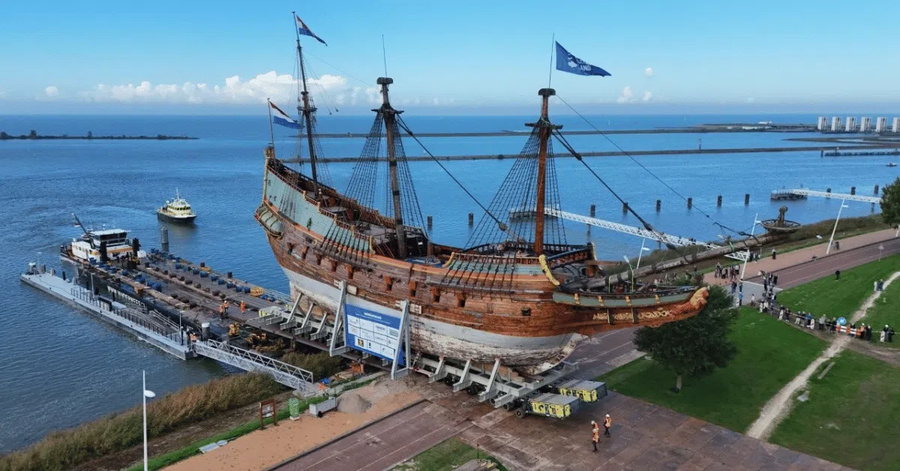
The historic wooden replica Batavia has been moved permanently ashore at Museum Batavialand in Lelystad, the Netherlands, as part of efforts to improve its long-term preservation.
The 56.6 m vessel, a full-scale reconstruction of the Dutch East India Company ship built in 1628, had remained at its waterside berth for 31 years. Museum Batavialand decided to move the ageing wooden ship onto land as its structure required extensive maintenance.
The museum said keeping Batavia ashore will allow its timber to dry more effectively, provide better protection from weather exposure and make future maintenance easier. The relocation is intended to preserve the vessel for future generations.
Batavia was built between 1985 and 1995 using traditional materials, tools and shipbuilding techniques. Because of its wooden construction, the vessel required careful engineering as its support changed from water buoyancy to a land-based transport and foundation system.
The final phase of the relocation began on 19 September 2026, when Batavia was towed from Lelystad to Amsterdam. At Damen Shiprepair Amsterdam, the vessel was positioned in a purpose-built support structure in preparation for the move ashore.
Temporary steel supports were installed inside the ship before transport, while some ballast and cannons were removed. These measures were taken to manage loads on the wooden hull during the transition between different support conditions.
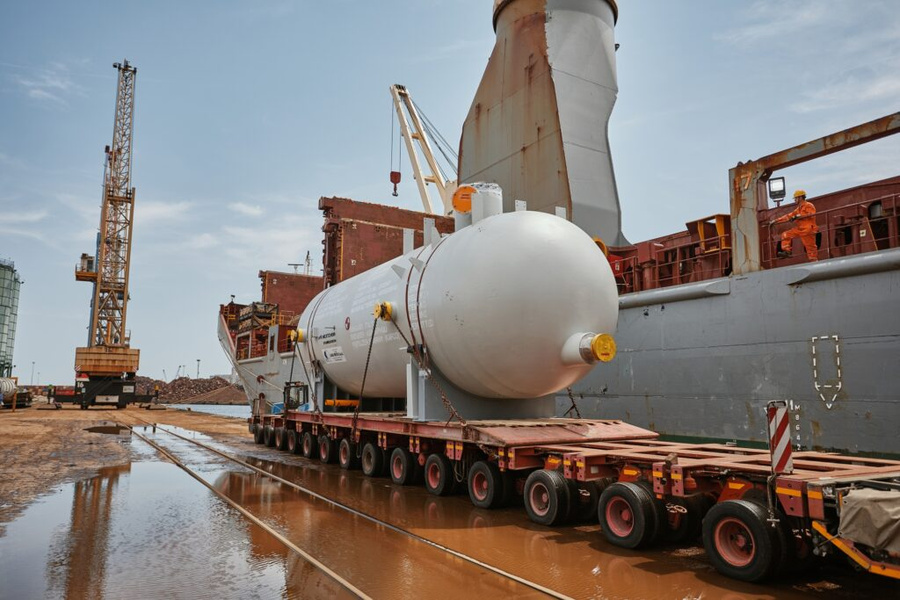
On 2 October 2026, the approximately 646 t Batavia returned to Lelystad on a pontoon for the final land transport. Q3 Heavy Lift deployed two SPMT trains with 28 axle lines each to move the vessel approximately 250 m to its new position at Museum Batavialand.
The SPMT configuration was selected not only to carry the transport weight but also to spread loads over a longer section of the supporting structure. Limiting deflection was an important part of protecting the wooden hull during the move.
Around 10 months of engineering work was carried out to assess load paths and determine suitable support positions for the vessel. The transport planning also considered ground pressure, subsoil conditions and underground services along the route.
Trans Global Projects coordinated the wider relocation, including engineering interfaces, risk assessment, permits and public-safety planning. Preparations for the overall operation had been under way for around 15 months.
After completing the heavy transport operation, Batavia was placed on its permanent foundation at Museum Batavialand. The new location stands more than 8 m above the level of its former waterside berth.
The move changes how Batavia will be preserved after more than three decades afloat. On land, the wooden vessel can dry more effectively, receive easier maintenance and gain greater protection from weather exposure while remaining part of Museum Batavialand’s maritime heritage collection.