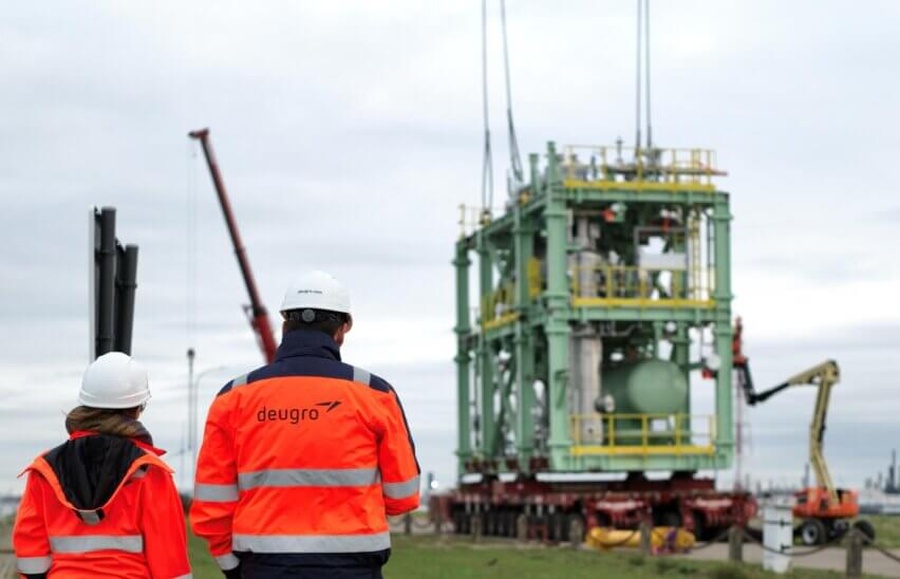
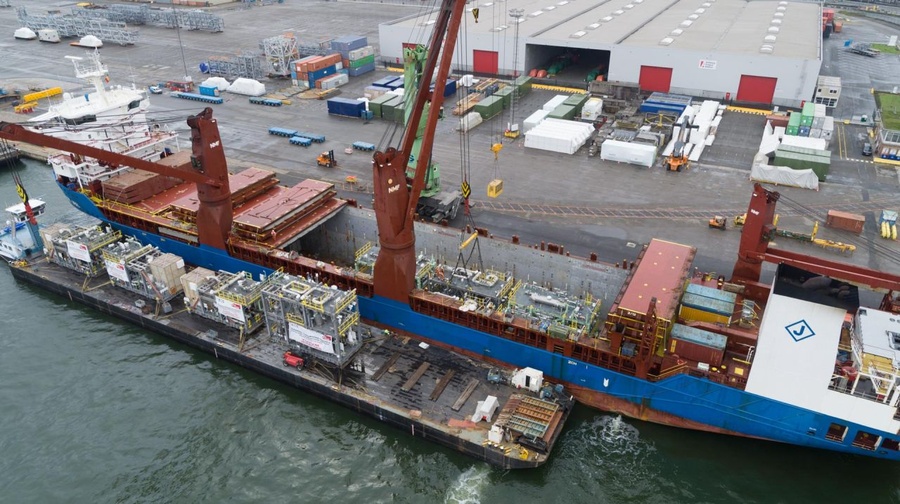
deugro has completed the transport of critical equipment from Oman to Belgium for the INEOS Terminal Expansion Project on behalf of Worley, working with its teams in Belgium, the Netherlands and Oman, and in coordination with dteq Transport Engineering Solutions.
The shipment covered more than 7,324 cu m of cargo and over 1,441 t of equipment. It included nine oversized and heavy units: three ethylene vessel skids measuring up to 13.1 x 6.1 x 10.8 m, three refrigerant chiller skids of up to 13.5 x 6.0 x 9.9 m, and three refrigerant compressor skids with dimensions reaching 14.4 x 7.0 x 7.5 m. Individual units weighed more than 200 t.
The cargo was collected at the supplier’s site in Sohar Industrial Estate using SPMTs and hydraulic trailers. During an early inspection, dteq found that several units had been positioned too close to surrounding obstacles, making direct self-loading impossible. Those skids therefore had to be handled twice before final loading could proceed in line with the approved road transport arrangement.
After loading, securing, inspection and testing, the units were moved 18.5 km to an intermediate storage area at Sohar Port. Because of their dimensions, weight and local road restrictions, the move was carried out at walking speed during nighttime hours. deugro’s local teams and escort vehicles supported the transport inside the industrial and port areas, while the Royal Oman Police guided the convoy on public roads. The route had already been reviewed through a detailed survey performed by dteq on behalf of deugro.
Transport engineering was developed around the local limit of 14 t axle line load for road movements. The ethylene vessel skids were carried on a conventional trailer with four files x 15 axles and on SPMTs with four files x 12 axles. The refrigerant compressor skids were moved on two files x 15-axle trailers, while the refrigerant chiller skids were transported on SPMTs with four files x 12 axles. After 15 days, all units reached the storage area safely. The refrigerant chiller skids remained on the trailers until lifting operations began.
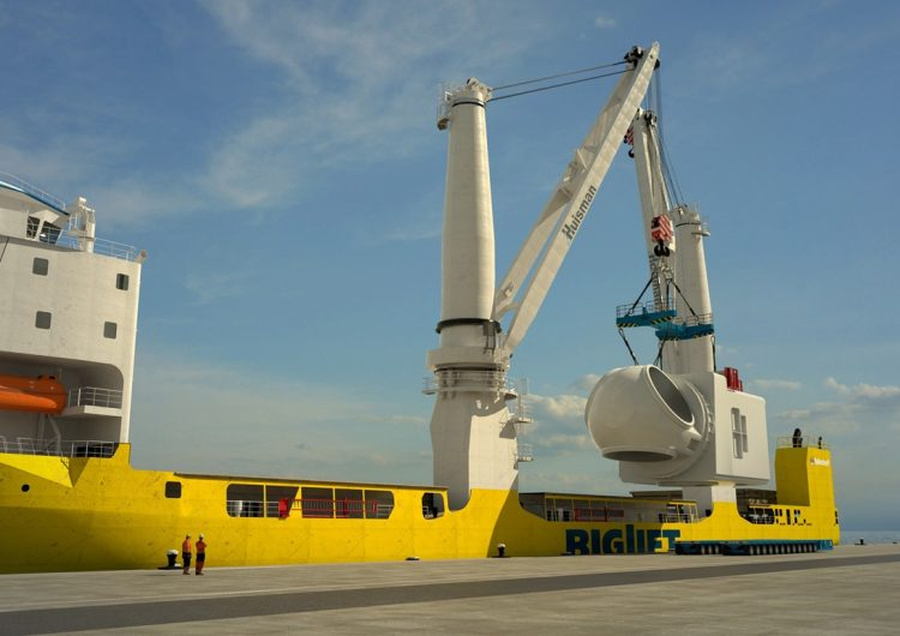
At the load port, the cargo was transferred at controlled walking speed to the designated quay. To meet the lifting height required for the tallest units, the vessel was moored portside with its cranes facing the quay and the gangway positioned for direct berth access. A preliminary jetty survey and a review of earlier operations at the same location confirmed that the quay offered sufficient clearance for safe cargo handling within the vessel’s gear range. The skids were then lifted directly from the trailers by the vessel cranes and placed on board in accordance with the lifting drawings, while avoiding lifts over already stowed cargo.
Before loading, deugro and dteq also addressed a lifting safety issue linked to the original cargo design. The skids had been built with lifting lugs for 300 t shackles, but six of the nine units had top-positioned lifting lugs, creating a height-related handling risk. Because the lugs could no longer be modified and the lifting arrangement had to comply with the DNV standard required by the marine warranty surveyor, tailored spacer rings and sleeves were designed, manufactured and procured for each unit. These were installed on the existing lifting lugs to bridge a difference of more than 6 mm between lug openings and the intended shackle pin diameters, allowing the safe use of 120 t shackles during loading and later discharge.
For sea fastening, vertical H-beams were welded around the lower skid frames to prevent horizontal movement, while wire lashings were used to prevent tipping. Once loading was completed and inspections were accepted by the Chief Mate, Vessel Master, deugro and the marine warranty surveyor, the vessel sailed for Antwerp. The voyage covered 10,794 nautical miles over 38 days via the Cape of Good Hope.
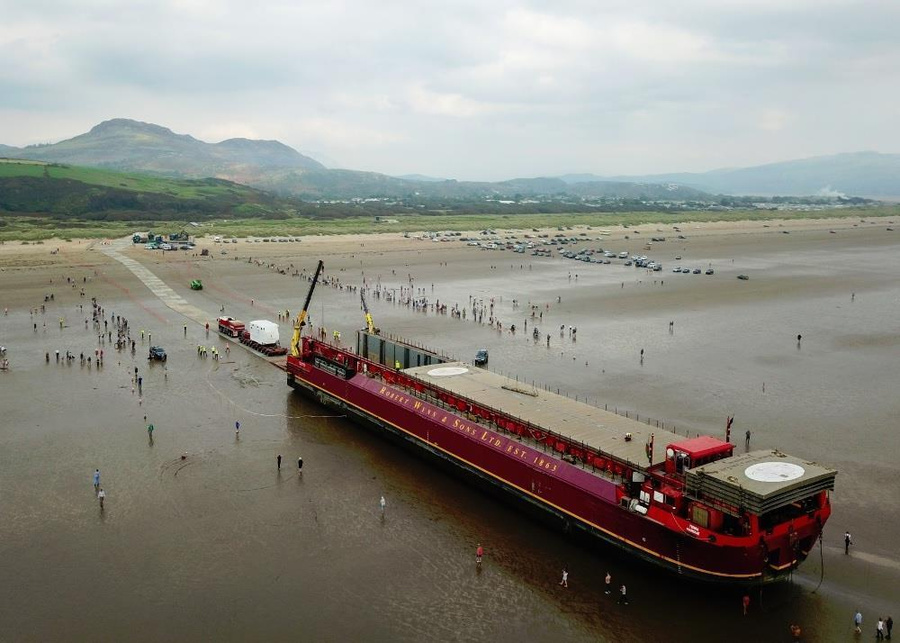
After arrival at PSA Breakbulk terminal in Antwerp, discharge operations were arranged with the vessel moored starboard side and the cranes facing away from the quay because of the planned double-banking lifting method. deugro Antwerp secured two RO/RO flat-top pontoons, which were positioned alongside the vessel one after the other. After the cargo was secured on the pontoons, they were moved by tug to Singelweg Quay, 4 nautical miles away.
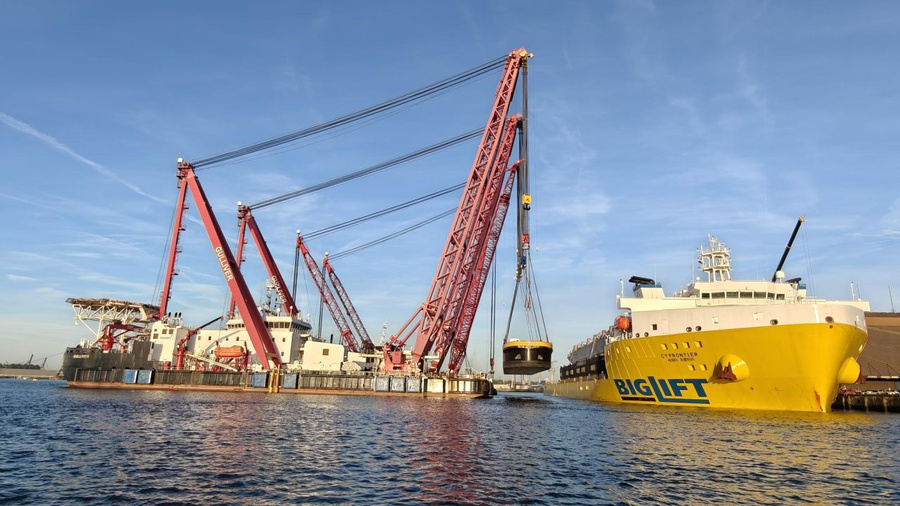
Because of limited ground bearing capacity and restricted maneuvering space at the quay, deugro arranged a floating crane to transfer the cargo from the pontoons onto SPMTs and hydraulic trailers. To improve efficiency, units of the same type were lifted before the rigging was changed for the next cargo group. The operation was planned for the lowest tide condition, when sea level can stand as much as 11 m below the quayside, to ensure that sufficient lifting height was available throughout the discharge sequence. The entire operation was closely coordinated by deugro’s project teams on site.