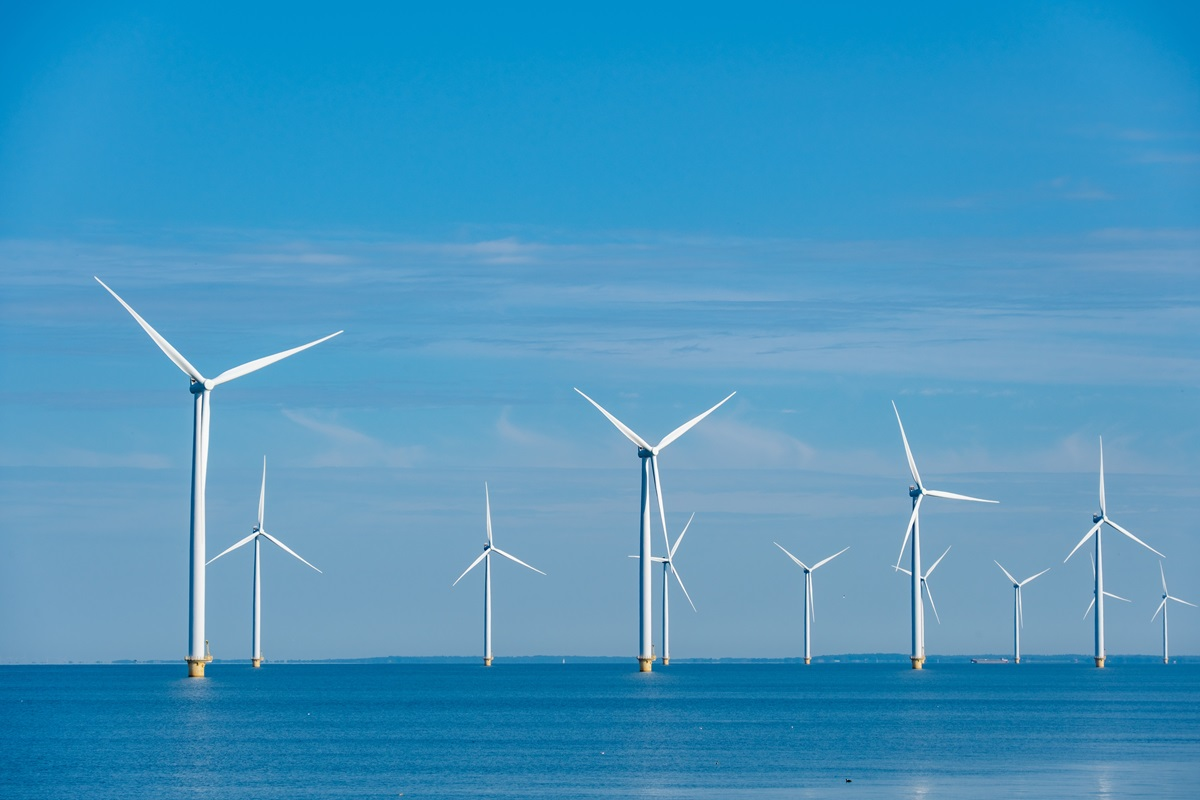
China is targeting more than 100 GW of cumulative offshore wind capacity by 2030, alongside plans to begin construction on approximately 100 GW of new projects during the 2026–2030 period, under its national renewable energy development programme.
The targets were established in July 2026 under the 15th Five-Year Renewable Energy Development Plan, issued jointly by the National Development and Reform Commission (NDRC) and the National Energy Administration (NEA). They were highlighted again at an offshore wind industry conference held on 11 November.
According to the NDRC’s official policy explanation, the programme calls for continued development of nearshore wind farms and the progressive construction of offshore wind bases in deeper waters farther from the coast.
The two capacity targets refer to different stages of development. The 2030 target covers cumulative installed capacity, while the separate 100 GW construction target concerns projects beginning construction during the five-year period. It does not mean that all projects starting construction will be completed or connected to the grid by 2030.
China’s cumulative grid-connected offshore wind capacity reached 49.84 GW by the end of September 2026, according to figures presented at the Offshore Wind Modern Industrial Chain Conference. New grid connections during the first nine months of the year totalled 2.27 GW.
Industry figures presented at the conference also showed that China accounted for more than half of global offshore wind capacity. Annual electricity generation from offshore wind exceeded 100 billion kWh, equivalent to 100 TWh.
The country’s offshore wind industry is extending beyond conventional nearshore development. Conference participants reported that China has established the technical capability to develop offshore wind bases of at least 1 GW more than 100 km from shore.
Data from China’s National Climate Centre, previously published by China Three Gorges Corporation, estimate the country’s technically developable offshore wind resources at approximately 2,780 GW. The assessment covers waters within 200 km of the coast, with water depths below 100 metres, using wind resources measured at a height of 150 metres above sea level.
Of that estimated potential, approximately 1,230 GW is classified as deeper-water and more distant offshore resources. The figures represent technical resource potential rather than approved projects or installed generation capacity.
The national development plan also calls for coordination between offshore wind generation projects and supporting electricity transmission infrastructure, including the planning of offshore wind bases and their grid connections.
At the 11 November conference, industry representatives introduced an initiative for deeper-water offshore wind development and a list of technical research priorities for 2026. The initiative addresses cooperation across the supply chain and technical challenges associated with development farther offshore.
The July policy targets and the latest industry figures establish the scale of China’s planned offshore wind expansion, while the November conference focused on the technical and industrial cooperation required to support that programme.