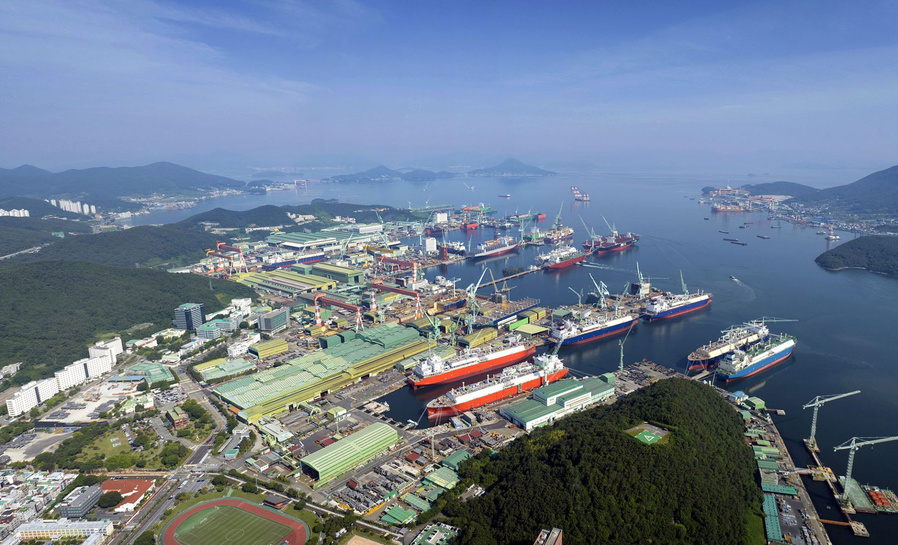
Samsung Heavy Industries has secured a KRW 342.4 billion LNG carrier order from an undisclosed shipowner in Oceania, bringing its total order intake for 2026 to $12.7 billion, equivalent to 91% of its annual target.
The South Korean shipbuilder disclosed the contract on 16 November 2026, following its signing on 13 November. The vessel is scheduled for delivery by 15 July 2029.
According to the company’s regulatory filing, the contract value represents approximately 3.2% of Samsung Heavy Industries’ consolidated revenue in 2025. Payment arrangements include advance payments and collections linked to construction progress.
The latest agreement brings the shipbuilder’s commercial vessel orders for 2026 to 47 units worth $8.3 billion. This represents 146% of its annual commercial shipbuilding target of $5.7 billion.
Samsung Heavy Industries’ reported commercial order tally comprises 21 LNG carrier-related units, including one floating storage and regasification unit (FSRU), alongside two ethane carriers, six other gas carriers, four container ships and 14 crude oil tankers.
The company has also secured contracts for two floating liquefied natural gas (FLNG) production facilities worth a combined $4.4 billion in its offshore business.
Including these offshore facilities, Samsung Heavy Industries has recorded 49 vessel and offshore facility orders valued at $12.7 billion this year, against an overall annual target of $13.9 billion.
The latest contract follows stronger third-quarter financial results. Samsung Heavy Industries reported revenue of KRW 3.1504 trillion and operating profit of KRW 338.4 billion, increases of 19.6% and 42.1% year on year, respectively.
The shipbuilder attributed its improved profitability to higher revenue contributions from high-value vessels, including LNG carriers.
Looking ahead, Samsung Heavy Industries expects LNG carrier demand to remain firm as North American LNG export projects enter operation. The company said it intends to strengthen its competitiveness by offering more energy-efficient LNG carriers.