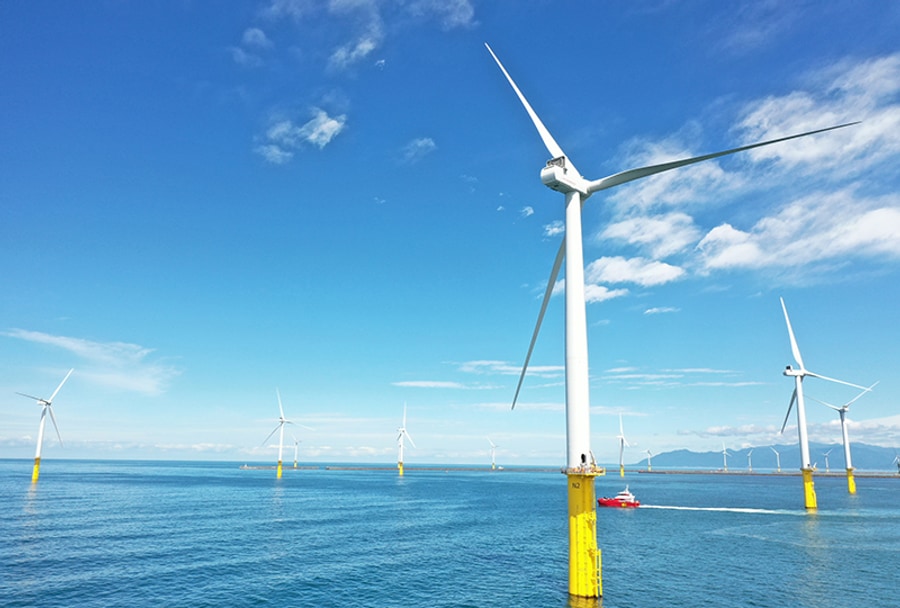
BP is considering withdrawing from the 450 MW Yamagata Yuza offshore wind project off northern Japan, according to Nikkei Asia, as the company keeps most of its offshore wind activity within its joint venture with JERA.
The project remains outside JERA Nex bp, the 50-50 offshore wind joint venture formed by BP and JERA. The development rights for Yamagata Yuza were awarded in December 2024, before the joint venture was incorporated.
The Yamagata Yuza consortium is led by Marubeni Corporation. Other partners include Kansai Electric Power, Tokyo Gas and Marutaka Corporation.
The project structure created complications for a transfer into JERA Nex bp because Kansai Electric Power, a major Japanese utility, was already part of the consortium. Adding JERA would have placed two rival utilities in the same project group.
According to Nikkei Asia, BP has started discussions with its partners on a possible withdrawal. BP said no decision has been made on Yamagata Yuza. Nikkei Asia reported that the remaining consortium members are likely to take over BP’s 25% stake.
The Yamagata Yuza offshore wind farm is scheduled to start operations in June 2030.
The project is among Japan’s Round 2 and Round 3 offshore wind developments facing slower progress while government support terms are reviewed. The review followed the decision by three Mitsubishi-led consortiums to return three projects awarded in Japan’s first offshore wind auction in 2021.
Those withdrawals were linked to higher supply chain costs, currency depreciation, rising interest rates and uncertainty over vessel access.
The Yamagata Yuza consortium has continued early development work while awaiting any additional government support. Marubeni Corporation recently reached a preliminary agreement to acquire 15 MW wind turbines from one of Europe’s two largest turbine manufacturers, according to Recharge.
A possible BP exit would follow Equinor’s decision to leave Japan’s offshore wind market and close its Tokyo office. Equinor said its decision reflected a reassessment of its strategic direction and a stronger focus on integrated power markets.
Japan has continued to place domestic renewable energy at the center of its energy policy. Prime Minister Sanae Takaichi has said little publicly about offshore wind since taking office in October 2025, but she supported offshore wind cooperation and joint investment with the UK during a June visit.
The Japanese government has said it will resume a longer-term offshore wind auction calendar. It has also signalled a shift toward placing more weight on project deliverability and less on price, while moving offshore wind projects toward the feed-in premium model.
Mika Ohbayashi, director of the Renewable Energy Institute, said the change should support better contracting and risk management, while also increasing the requirements for project finance.
Source: RECHARGE