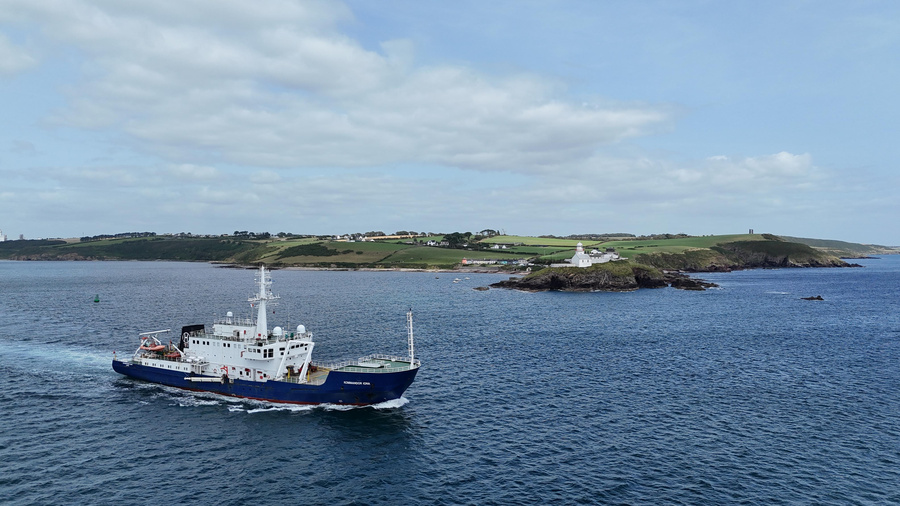
Fugro has finished its 2026 Tonn Nua grid surveys for EirGrid under the Powering Up Offshore – South Coast programme. The marine and coastal investigations will support transmission planning for the proposed 900 MW wind development, together with other prospective offshore wind projects along Ireland’s southern coast.
EirGrid reported a survey distance of 2,337 kilometres, with nearly 70,000 hours devoted to the campaign. The data will be used in engineering and environmental assessments and in planning work for potential offshore substations, subsea cable corridors and connections ashore.
A public consultation lasting 12 weeks is examining infrastructure options. Open until 8 December 2026, it addresses possible landfalls, offshore cable corridors and substation sites, as well as grid connection points and onshore transmission cable routes in Cork and Wexford. EirGrid said responses from fishing interests, residents, landowners and other sea users would help shape the next development stage.
The assignment falls under Fugro’s seven-year survey framework with EirGrid, with subcontractors contributing specialist services. It follows the 2025 investigations, which recorded more than 40,000 person-hours over a seabed survey distance of 3,770 kilometres.
Marine mammal monitoring is covered by a separate environmental services agreement lasting two years. Its scope includes eight seabed monitoring units with underwater acoustic sensors for recording whales, dolphins and porpoises. Fugro is contracted to install and maintain the units, with the resulting data supporting environmental assessments under the South Coast programme.
Tonn Nua is situated off the coast of County Waterford. In November 2025, a joint venture of ESB and Ørsted won the project in the second Irish offshore wind auction. The wind farm remains in early development under the two partners, while EirGrid has responsibility for its transmission infrastructure at sea and on land.
A final investment decision is expected around 2031. The target for initial electricity generation is the mid-2030s, with anticipated output sufficient to supply close to a million homes.