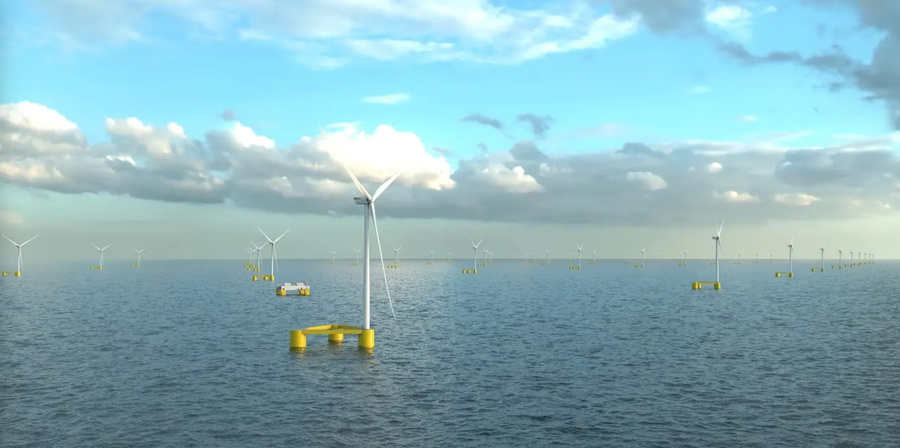
Norwegian state-owned energy company Equinor is ending its offshore wind activities in South Korea after 12 years, following setbacks across three proposed developments, including the 750MW Firefly floating offshore wind project off Ulsan.
The company has confirmed that it will not pursue further offshore wind opportunities in South Korea. Its withdrawal comes after commercial difficulties affected projects it had pursued since establishing a Korean presence in 2014.
According to South Korean energy industry reports on 15 October 2026, Equinor Korea plans to close its local office before the end of the year. Its employees have also reportedly left the company.
A major factor in the withdrawal was the failure to establish a commercially viable revenue arrangement for the Firefly project, which had been selected in South Korea’s 2024 offshore wind tender.
Despite securing a place in the government tender, the 750MW development did not obtain a renewable energy certificate (REC) sales agreement. Without that agreement, the project was unable to establish the long-term revenue arrangements needed to support the investment.
Equinor returned the project’s electricity generation business licence to the government in early 2026. The company had previously undertaken development work, including environmental assessment preparations for Firefly.
Rising supply chain uncertainty also raised concerns about whether the investment could be recovered under the agreed fixed contract price. The project’s estimated investment had been reported at approximately KRW 10 trillion.
Equinor’s departure also affects the proposed 200MW Donghae-1 floating offshore wind project, which was being developed with Korea National Oil Corporation (KNOC) and Korea East-West Power (EWP).
The project was intended to establish a floating wind farm near the former Donghae gas field off Ulsan, where natural gas production has ended.
However, the development has yet to begin its environmental impact assessment, a required permitting stage before construction. Equinor has decided to transfer its entire ownership stake to the consortium, according to the report. Completion of the transfer has not been confirmed.
Equinor had previously withdrawn from another offshore wind development near Chuja-do, with a planned capacity of 3GW covering fixed-bottom and floating offshore wind.
That development faced requirements to connect generated electricity exclusively to the Jeju power grid and provide more than KRW 130 billion annually in community benefit-sharing payments. These conditions were among the obstacles to moving the project forward.
The withdrawal comes as South Korea continues to develop its offshore wind sector, including other projects progressing through government tenders.
Equinor has also decided to discontinue its offshore wind business in Japan. According to an industry official cited in the report, the company announced its withdrawal from its Tokyo office in June 2026, with the move seen as part of a greater focus on European offshore wind markets.
The company has separately confirmed its decision to end offshore wind activities in Japan.
Equinor has experience developing and operating floating offshore wind facilities outside Asia. Its projects include the 30MW Hywind Scotland wind farm, which began operations in 2017, and the 88MW Hywind Tampen development in the Norwegian North Sea, commissioned in 2023.
The decision ends Equinor’s pursuit of offshore wind opportunities in South Korea, while the remaining participants in Donghae-1 face decisions over the future of that development.