Fifteen Chinese heavy lift vessels shifted into overseas markets during 2022–2025, according to Spinergie. Included in that figure are four units which had joined China’s market in 2020–2021 and later returned overseas.
In its analysis dated 15 October 2026, Spinergie counts 101 active vessels in the Chinese fleet and 86 internationally. For this study, the Chinese category comprises vessels operated by Chinese companies mainly in China’s offshore wind sector. All remaining vessels make up the international category. Undelivered newbuilds are excluded.
The study covers vessels, barges and jack-ups dedicated to heavy lifting, including turbine and foundation installation, with aggregate crane capacity of at least 500 mT. Fleet comparisons are organised by vessel manager, not ownership, and relevant subsidiary fleets are consolidated at parent-company level.
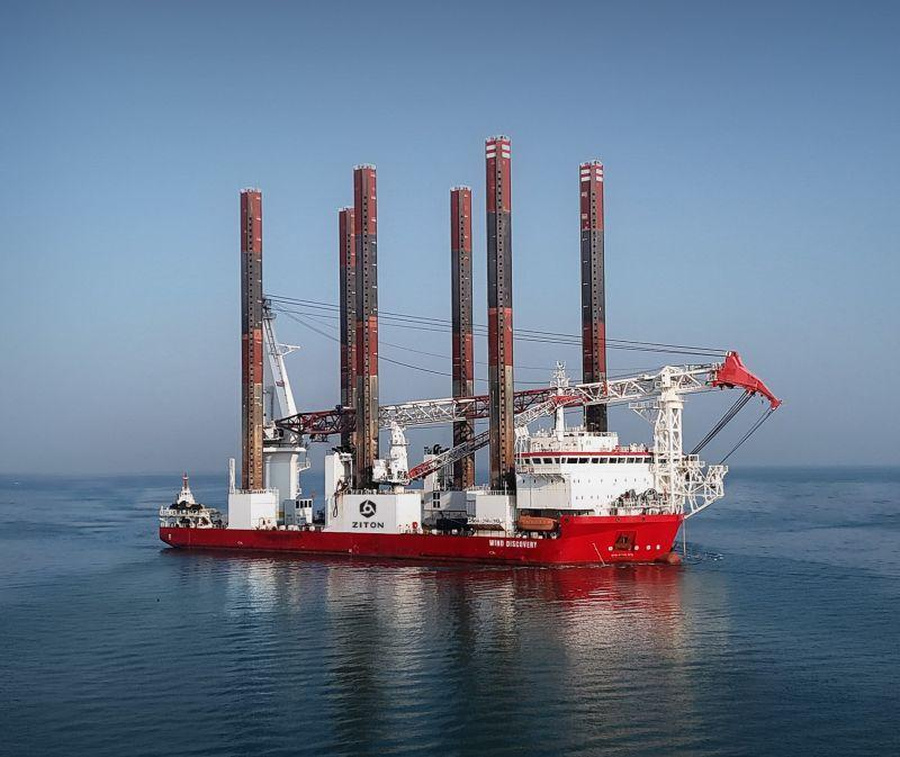
Among the transfers cited are Bo Qiang 3060, subsequently Wind Keeper, and Shun Yi 1600, subsequently Hansan 1, which were acquired for international operations. Another vessel, Taillevent, was bought by HuiHai 1 Wind Power in 2021 and became Hui Hai Yi Hao. Ziton later acquired it, renaming it Wind Discovery, and it returned to overseas operations in 2024.
Spinergie links the change in vessel flows to the end of China’s subsidy-related construction surge. The working utilisation of China’s HLVs declined from 83% in 2021 to 52% in 2022. Subsequent levels have been broadly comparable with those outside China.
The earlier peak coincided with 16.9 GW of offshore wind connections in China in 2021. Chinese vessel utilisation that year was roughly 30 percentage points higher than the corresponding overseas rate.
The analysis traces the surge to two policy measures. A 2019 offshore wind pricing decision by the National Development and Reform Commission made year-end 2021 connection a condition for projects already holding approval to keep existing feed-in tariffs. Under the 2020 subsidy changes, qualifying projects needed full grid connection by the end of 2021 to keep central government subsidy support.
Fleet deliveries followed a different timetable. Chinese newbuilding activity gathered pace from 2018, and deliveries reached 27 HLVs in 2023. Spinergie says installation vessels have historically taken two to four years from order to delivery. The analyst links fleet expansion to high utilisation in 2019–2021. When deliveries peaked in 2023, China’s utilisation rate had already returned to a level similar to that recorded internationally.
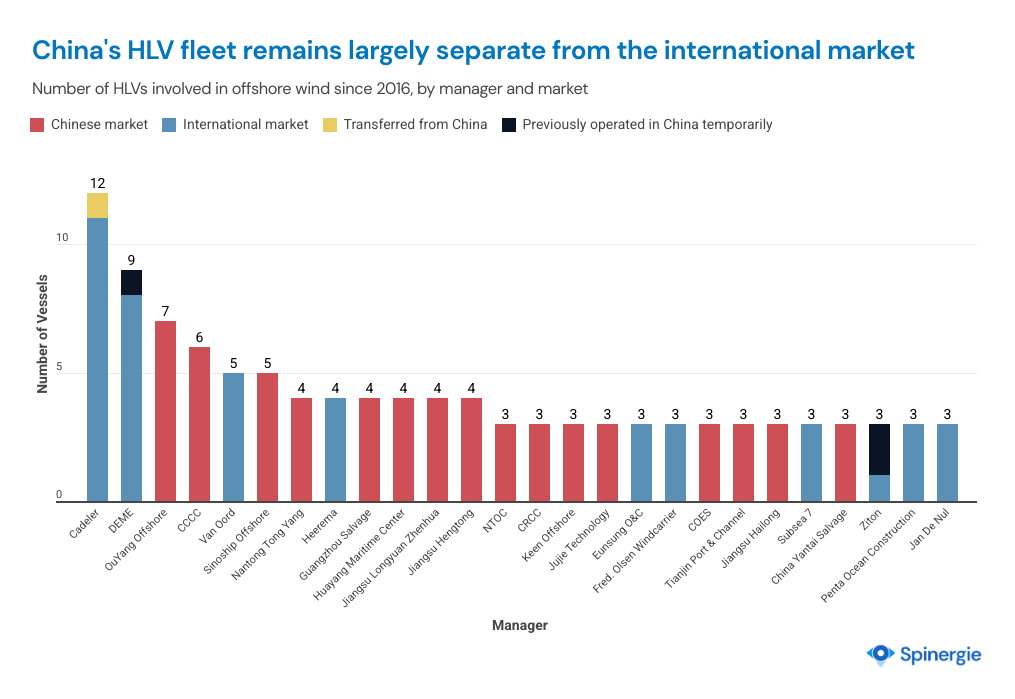
Fleet management is less concentrated in China, the study indicates. OuYang Offshore and CCCC lead China’s market by fleet size. SinoShip Offshore follows, alongside a number of operators managing three or four units apiece. Internationally, Cadeler and DEME have the biggest fleets, whereas China’s vessels are spread across a wider group of operators.
Further overseas sales or redeployment remain possible, Spinergie concludes, although China’s offshore wind project pipeline continues to support domestic demand. With support moving towards provincial programmes, the analyst considers a repeat of the nationwide 2021 utilisation surge less likely. It identifies South Korea as an example of an Asia-Pacific market where cabotage rules and limited installation-vessel availability make selective transfers relevant.