Marine insurer The Swedish Club has warned shipowners to assess weather, navigation and liability risks before considering routes around South America as an alternative to capacity-constrained Panama Canal transits.
Cape Horn and the Strait of Magellan provide alternatives between the Atlantic and Pacific, but each presents different operational challenges. The Drake Passage offers a relatively direct open-ocean route, where vessels can face severe seas, heavy motions, cargo shifting, slamming and machinery strain.
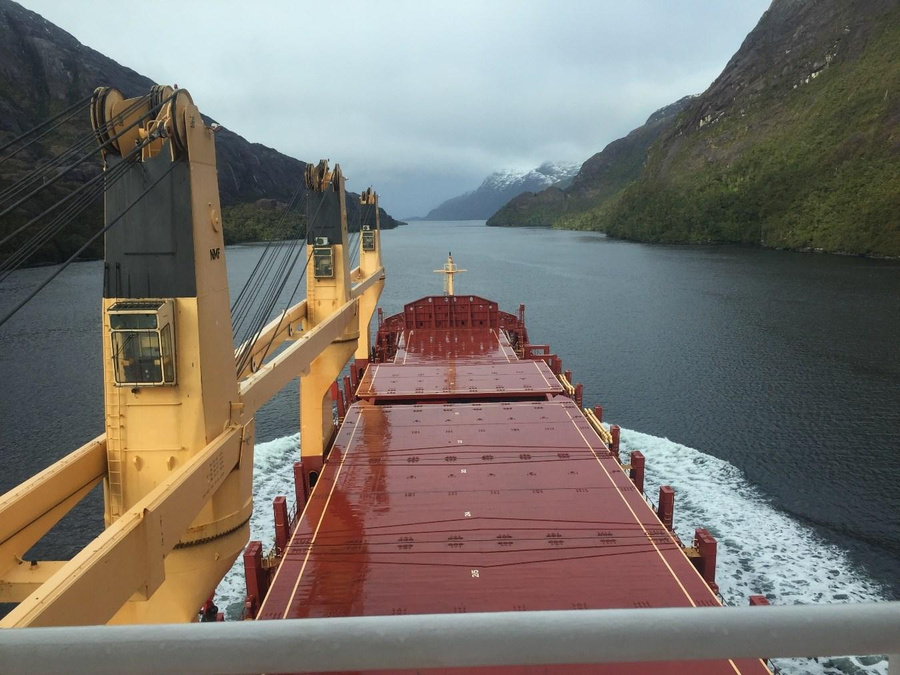
The Strait of Magellan provides greater shelter but requires vessels to navigate restricted waters with narrow channels and strong currents. Chile generally requires pilotage through the strait, with exceptions for certain ocean-to-ocean transits between Bahía Félix and Punta Arenas.
Pilotage can also raise contractual questions. Where its use is recommended rather than compulsory, responsibility for the cost can depend on charterparty terms. The Swedish Club said there is no universal rule and advised owners and charterers to agree on routing and pilotage costs before using the passage.
Cold-weather operations present another consideration, particularly for vessels without adequate bunker heating systems for prolonged periods at low temperatures. Salvage and emergency response resources are also more limited in southern Chile than along major shipping corridors.
The warning comes as the Panama Canal Authority reduces transit capacity to conserve water during a strengthening El Niño. Neopanamax vessels are currently limited to a maximum draft of 48 feet of Tropical Fresh Water, while daily Neopanamax capacity has been reduced to nine slots.
Panamax capacity was set at 25 daily slots from 3 September and is due to fall to 23 slots from 15 September. The canal has postponed a planned reduction in the Neopanamax draft to 47.5 feet on 1 October after reviewing Gatun Lake levels and updated weather forecasts.
According to The Swedish Club, rainfall across the canal watershed between May and August was about 34% below historical averages, while inflows were around 44% below normal. The conditions remain less severe than during the 2023-2024 drought, when daily transits fell into the low 20s and draft restrictions reached the mid-40-foot range.
The potential duration of El Niño is also being monitored. Former Panama Canal Administrator Ricaurte Vásquez said in August that authorities were preparing for the possibility of around eight months of unusually low precipitation.
Security conditions affecting the Suez Canal, Red Sea, Gulf of Aden and Strait of Hormuz have also constrained other routing alternatives. This has brought greater attention to southern South American passages for some voyages.
The Swedish Club stressed that the master remains responsible for the safety of the vessel, crew and cargo. A decision to use the Strait of Magellan rather than the Drake Passage should be supported by weather forecasts, routing advice and detailed voyage records.
The insurer said current Panama Canal restrictions remain manageable for most vessels and do not by themselves justify the additional risks associated with Cape Horn. It added that routing considerations could change if rainfall remains weak, draft restrictions increase or waiting times rise.