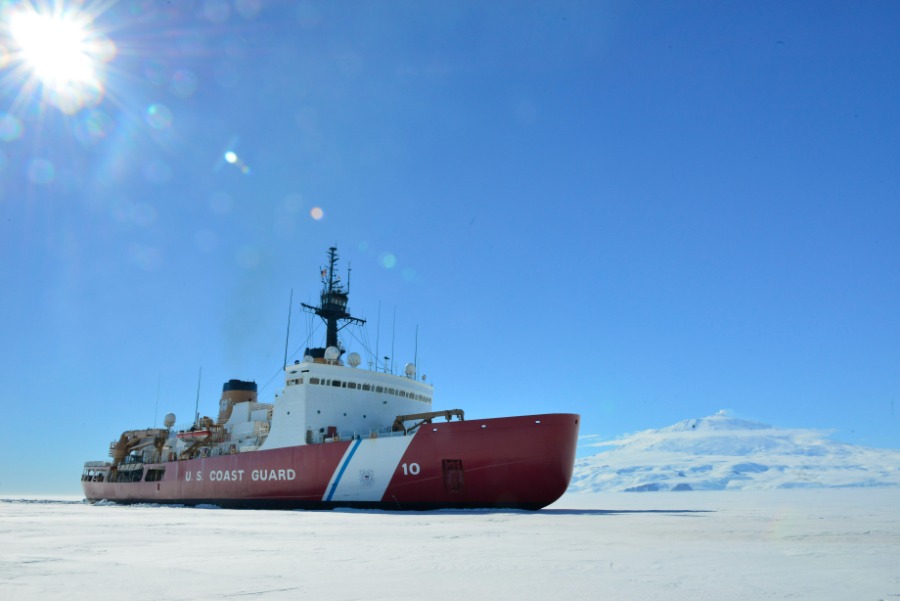
President Donald Trump’s plan to expand the U.S. Arctic icebreaker fleet has resulted in nearly $6.8 billion in shipbuilding contracts being awarded without competitive bidding.
The programme covers 11 new polar icebreakers, although the U.S. Coast Guard had previously assessed that four or five vessels would meet its operational requirements.
Trump has argued that the United States needs a stronger presence in the Arctic as declining sea ice opens shipping routes and access to natural resources. He has also pointed to Russia’s larger icebreaker fleet when discussing U.S. capabilities in the region.
The agreement followed discussions between Trump and Finnish President Alexander Stubb. According to The New York Times, Trump contacted Stubb at his summer residence in Finland and expressed interest in acquiring large vessels capable of operating in Arctic ice.
Two months later, the two presidents announced an agreement for 11 icebreakers valued at almost $7 billion, with the vessels to be built in the United States and Finland.
The contracts were awarded through a rarely used public-interest exemption that allowed the administration to select shipbuilders directly without conducting a competitive tender.
Under the plan, Davie Defense, the U.S. subsidiary of Canada’s Inocea Group, is expected to build five vessels. Finnish shipbuilder Rauma will construct two ships, while Bollinger Shipyards will build up to four at facilities along the U.S. Gulf Coast.
The administration described the programme as intended to strengthen U.S. shipbuilding. However, the first four icebreakers are expected to be built in Finland after Trump waived rules that generally require national security vessels to be constructed in the United States.
U.S. officials said the expanded fleet would support Coast Guard operations in Arctic waters, military activities and access to shipping routes becoming easier to navigate as sea ice declines.
The plan has also faced questions over whether the proposed fleet exceeds the Coast Guard’s stated requirements.
Some analysts said Russia’s larger icebreaker fleet reflects its geography and Arctic population, making direct comparisons with the United States difficult.
The programme’s total cost may extend beyond vessel construction. Additional spending could be required for infrastructure, maintenance, and the recruitment and training of crews.
Those future operating expenses were not included in the initial procurement announcement.
The funding structure has also attracted attention because part of the money comes from legislation that provided billions of dollars for border security, giving the administration flexibility over how those funds are allocated.
For Finland, the agreement provides work for its shipbuilding industry and strengthens defence ties with the United States. The country is regarded as one of the world’s leading builders of icebreakers.
Supporters of the programme said the larger fleet would strengthen U.S. national security and maritime capabilities. Critics said the administration had proceeded without competitive bidding while committing substantial funds to a programme whose long-term costs and fleet requirements remain under discussion.